- Air Homepage
- Employment
- Career in Meteorology
Explore the possibility of a career in meteorology
Search for more career info.
Building a career in meteorology? Could be fun. Take a look at some of the business opportunities, job requests, and satisfaction this area offers.

Why meteorology?
- People who pursue careers in meteorology are often fascinated by the weather. Their favorite thing is tracking storms, analyzing weather patterns, and predicting the future.
- Meteorology is a field with a lot of career options. A meteorologist can work for the government, a private company, or a research institution. You can specialize in forecasting, climatology, or atmospheric science.
- The challenge: Meteorology requires a deep understanding of complex physical processes. Meteorology can be incredibly rewarding for those who like challenges.
- Weather affects everything from what we wear to how we travel. Forecasts and warnings from meteorologists can make a real difference in people's lives.
- Meteorology is constantly evolving, with new technologies and techniques being developed all the time. Using cutting-edge technology to improve weather forecasts and predictions, meteorologists are on the cutting edge of innovation.
Meteorology is an exciting and constantly changing career choice since it depends on nature's temporary, permanent and sometimes unexpected changes. It's why this career requires an interest in nature.
You've got to be a weather enthusiast with a vivid curiosity and an active desire to research, observe, analyze, and predict things. It takes curiosity and knowledge to understand how weather systems form, evolve, and interact. Researching weather processes and components, such as air pressure, temperature, humidity, and wind speed, along with their historical interactions, can give you this knowledge.
The weather is another thing meteorologists keep an eye on besides studying the past, present, and predicting the future. It's all about reading the weather equipment, radar scans, and satellite photos and watching what's happening around you.
Scientists in meteorology also have to participate actively in understanding the natural phenomena. Take a look outside for visual cues, like what you might see during a tornado chase. It's still important to apply the data and principles you learn to solve problems. It's hard to forecast.
Observing and analyzing weather patterns can also help you better understand weather systems. And in the end, predicting weather requires understanding the current conditions and how they're likely to change.
Options for your Career in Meteorology
By reading about meteorology careers, you can learn about education paths, job prospects, and the variety of roles and opportunities within the field. In case meteorology aligns with your interests and aspirations, it can help them make informed decisions, set career goals, and take the necessary steps. Who might read about pursuing a career in meteorology:
- Young adults and students interested in weather and atmospheric sciences can learn about pursuing a career in meteorology. In order to make informed decisions about their academic and professional goals, they might want to look into the educational requirements, career paths, and job prospects in the field.
- Individuals who are considering a career change and are interested in meteorology may seek information to understand the steps needed to get into the field. They might want to find out what education or training they need, as well as job opportunities.
- Parents and guardians of students interested in meteorology can find out about career opportunities in the field to support and guide their kids. It's important for them to understand the academic pathways, potential job prospects, and overall viability of a meteorology career.
- Teachers, professors, and career counselors may want to know about careers in meteorology to guide their students or clients. Stay on top of the latest information about educational requirements, career options, and resources for aspiring meteorologists.
- Weather enthusiasts: Those who are passionate about weather and meteorology as a hobby can read about pursuing a career in the field to deepen their knowledge and explore the possibility of turning their passion into a career. To better understand meteorology, they might want to learn about meteorologists' educational and professional paths.
- Meteorologists may be interested in expanding their career options if they're already working in related fields, like environmental sciences, climate research, or atmospheric physics. You might want to know the requirements and opportunities for transitioning into a meteorology-related career.
- There's a chance that the general public is curious about meteorology and might read about pursuing a career in meteorology to find out what meteorologists do, what weather forecasting is all about, and how weather affects daily life.
Are you interested in meteorological jobs? On specialty websites, you can find a wide range of meteorological jobs. There are entry-level data collectors, who may read weather maps and satellite information, to highly educated and experienced meteorologists.
Among these guys, some supervise weather observers; others issue weather warnings, prepare forecasts for a variety of agencies, predict both long- and short-term forecasts, and run weather centers.
As well as operational meteorologists, who prepare routine forecasts, there are climatological meteorologists. This person analyzes weather reports and uses historical information to make predictions, dynamic meteorologists study hydrodynamics and thermodynamics, and physical meteorologists study physical properties.
Satellites and radars collect, analyze, and interpret atmospheric data. On the basis of current conditions and historical data, they also use mathematical models to predict changes in the atmosphere. Floods, droughts, and hurricanes are also analyzed by physical meteorologists.
Meteorologists who monitor or predict air quality can be included in this subcategory. Air pollution is assessed and pollutants are measured. They also use computer models to predict air quality so people and industry can plan their activities accordingly.
Before you start a career in this field, you should have a background in mathematics, chemistry, physics, geography, oceanography, and maybe astronomy. Studies in things like naval engineering, environmental dynamics, and database software could be more specialized.
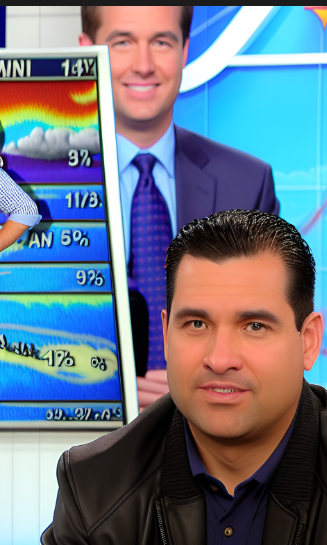
Radio and TV are also great careers. The best thing you can do is keep in mind that a meteorological career is really for those who like weather and air pollution. It's all about that.
You might also be interested in radio and TV if you're like me. Staying up to date on news and current events is easy with radio and TV. Plus, it's a great way to learn about different cultures. Also, it's great for entertainment.
For the right person, this business sector might bring many sunny days.
...find more of these on my Youtube channel homepage.
It could be exciting and rewarding to pursue a meteorology career.
Search this site for more information. There's a weather and meteorology section with forecasts, current conditions, and radar for different places. Also, we have articles about weather-related topics and links to other resources.
...Or go back from Career in Meteorology to
Environmental Health and Safety Jobs now.
Recent Articles


-
Data Quality Assessment Report Template to Report emissions accurately
Apr 19, 24 12:49 AM
 You can use this data quality assessment report template to make sure your emissions reports are accurate and compliant.
 -
Prevention of air pollution assisted by data with the Alberta AEIR
Apr 18, 24 12:29 AM
Check out the AEIR Standard 3.0, which guides industrial operations in reporting emissions, compliance and prevention of air pollution. -
Consistency in data quality - Accurate Industrial Emissions Info
Apr 06, 24 11:32 AM
Follow these concluding steps to ensure consistency in data quality and accurate air emission reporting.


Develop your interest in science by pursuing a career in meteorology
A career in meteorology - a great choice for those keen on physical sciences, the air and natural phenomena.
Weather and climate phenomena are predicted and explained by meteorologists. Data is analyzed and predictions are made using sophisticated equipment and mathematical models. It's a great field for people who want to make a difference.
Do you have concerns about air pollution in your area??
Perhaps modelling air pollution will provide the answers to your question.
That is what I do on a full-time basis. Find out if it is necessary for your project.
Have your Say...
on the StuffintheAir facebook page
Other topics listed in these guides:
The Stuff in the Air Site Map
And,
Thank you to my research and writing assistants, ChatGPT and WordTune, as well as Wombo and others for the images.
GPT-4, OpenAI's large-scale language generation model, helped generate this text. As soon as draft language is generated, the author reviews, edits, and revises it to their own liking and is responsible for the content.

By Barry Lough, P.Met., EP (Environmental Professional)
Text copyright © 2003-2023 Stuff in the Air.com
BACK TO TOP - Hit your 'Home' Key
New! Comments
Do you like what you see here? Please let us know in the box below.