- Air Homepage
- Upper Atmosphere
- Tornado Chasing
We are going tornado chasing
Search for more about severe storms.
Tornado chasing is an adventurous, exciting, and risky activity.

Why would anyone chase tornadoes? This may seem dangerous, but there are several reasons why people do it:
- Some storm chasers chase tornadoes for scientific reasons, especially those with meteorology or atmospheric science backgrounds. They can study tornado formation, behavior, and structure up close, which helps improve our understanding of severe weather systems.
- Storm chasers have a passion for weather and want to see nature's most powerful displays. It's thrilling and awe-inspiring to chase tornadoes because of the adrenaline rush. They get to see the raw power of nature up close.
- Some storm chasers use their experiences to teach others about severe weather and tornado safety. Sharing their knowledge and insights through photography, videography, or writing is how they document their chases. They want to raise awareness, promote preparedness, and provide accurate information about tornadoes.
- Meteorologists, weather researchers, photographers, journalists, and documentary filmmakers can chase storms for a living. They can use it to capture visuals, conduct field research, or document severe weather events.
- In some cases, storm chasers help the community during severe weather. To warn and protect communities in the path of a storm, they may relay real-time storm information to emergency management officials. They can contribute to early warning systems and information dissemination.
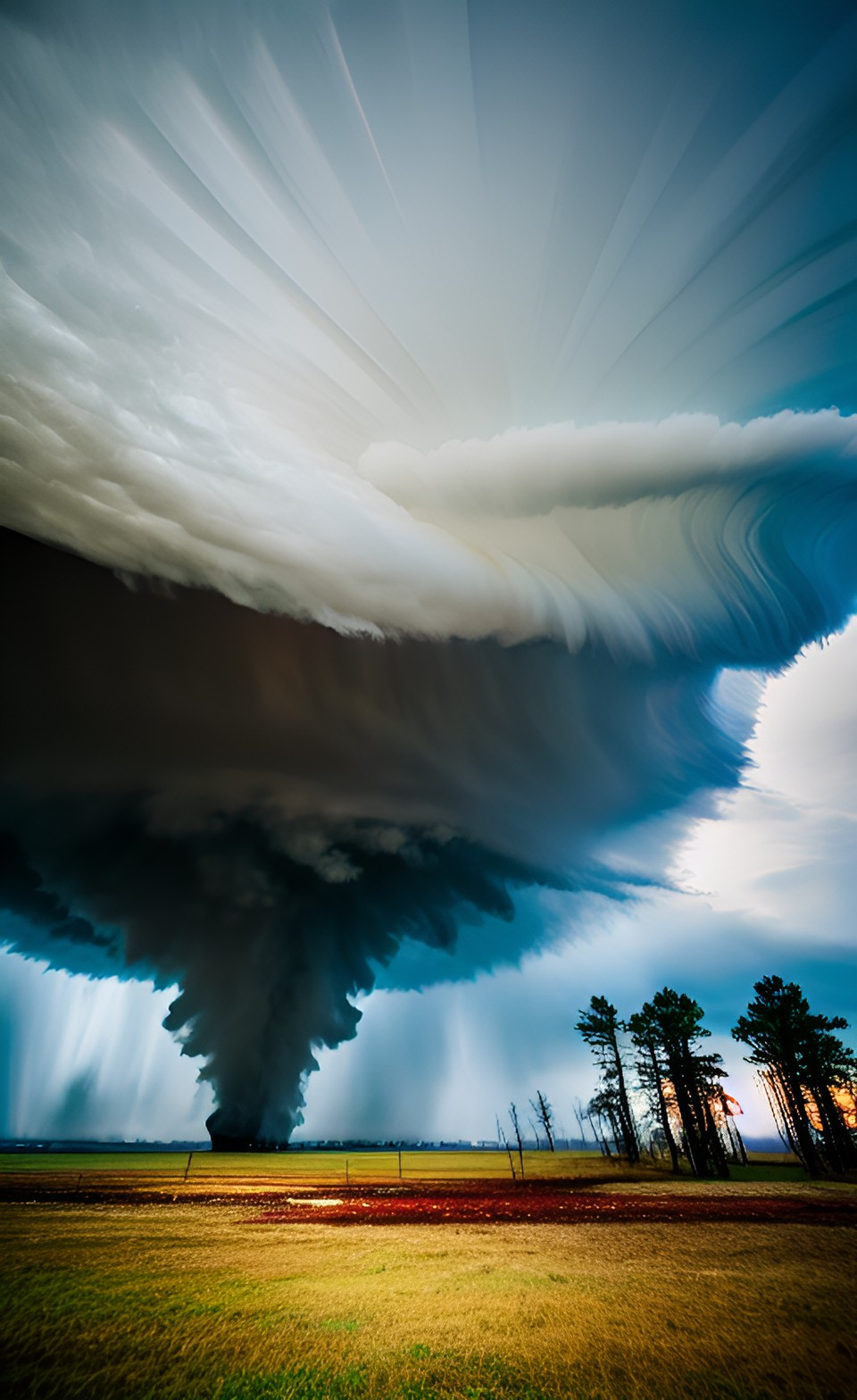
It's important to acknowledge the risks and dangers associated with storm chasing, despite its motivations and benefits. Tornadoes are highly unpredictable unless you have the expert knowledge and can pose serious hazards to people nearby. It's a must for storm chasers to prioritize safety, follow best practices, and know tornado behavior and storm avoidance strategies. We need to respect these natural phenomena and prioritize our own safety and the safety of others.
In case this phenomenon appeals to you, you should be aware of the risks that this activity entails and how to minimize them. There were even different colors and sizes.
Tornadoes are aggressive wind twisters. A column of spinning air connects a cloud base to the surface of the earth. Some are easy to recognize, but not all. We've got:
- the classic funnel,
- the half funnel,
- dissipating tornados,
- some with suction spots (not exactly a pleasant surprise),
- a discontinuous tornado,
- the wedge tornado and
- other, more rare, types.
They're all violent manifestations of nature and the weather, and we should take them into consideration before taking action. Dust devils and waterspouts are weaker vortices. They're less of a threat, but still interesting to watch.
The term tornado chasing refers to finding and watching a tornado-producing supercell thunderstorm. Despite being considered insane, participation in this behavior has increased significantly in recent years.
Here's something strange...
When volcanoes erupt, tornadoes can happen. Under certain conditions, volcanoes can indirectly cause tornadoes. Here's how it works:
- Volcanic eruptions expel ash, gases, and volcanic debris from volcanoes. Explosive eruptions can generate powerful convective updrafts, like severe thunderstorms.
- Volcanic eruptions can produce fast-moving flows of hot ash, gas, and rock fragments called pyroclastic density currents. Like turbulent and rapidly rotating thunderstorm downdrafts, these currents can race down volcano slopes and spread out in different directions.
- When a volcanic plume interacts with pre-existing thunderstorms or convective weather systems, it can create a tornado-friendly environment. A volcanic eruption combined with thunderstorm dynamics can intensify rotating updrafts within a storm system because of the strong updrafts.
- In this scenario, tornadoes can form within or near a thunderstorm that's influenced by the volcanic eruption. Tornadoes are more likely to develop when there are rotating updrafts and wind shear in the storm system.
Tornadoes caused by volcanoes are relatively rare compared to tornadoes caused by severe thunderstorms. In most cases, they happen close to volcanic eruptions and affect areas around the volcano. Variables like the size and intensity of the eruption, atmospheric conditions, and the interaction between volcanic plumes and existing weather systems can all affect tornado formation in a volcanic setting.
Tornado chasing involves what types of risks?
Problems with traffic and weather. Wet conditions on highways can cause hydroplaning when tornadoes are accompanied by heavy rains. Storm chasers usually chase tornadoes in their cars, so driving in severe storms isn't a good idea.
Chasing a tornado can also be hard because of the weather hazards and chaos caused by the storm. These result from high winds, reduced visibilty and flying debris and other stuff in the air.
You shouldn't get too close to the vortex to avoid these risks. Observe it from a safe distance, at least 1 km away.
Since unexpected weather might happen, it's better to stay away from trees, windows, and other vulnerable spots like hilltops and open fields. These measures should reduce the risk of lightning near these storms.
Follow these precautions and storm chasing can be an adrenaline rush of a lifetime. That might be worth it.
Air quality and tornadoes
Tornadoes don't directly affect air quality, but they can have some secondary effects on localized air quality. Tornadoes can indirectly affect air quality in a few ways:
- As tornadoes move across the ground, they kick up a lot of dust, dirt, and debris. Localized airborne particles can result, which can temporarily worsen air quality in the immediate vicinity. Dust and debris can include soil, vegetation, building materials, and other particles that become suspended in the air.
- Tornadoes can damage industrial facilities, storage tanks, or other sources of pollution. There are times when tornadoes release hazardous materials or pollutants into the air. Chemicals, gases, and other substances can negatively affect air quality, posing health and environmental risks.
- Contaminants are dispersed by tornadoes: Contaminants can be dispersed by tornadoes. When a tornado passes over an area with agricultural activities or livestock operations, it can lift and spread contaminants like pesticides, fertilizers, or animal waste, which can affect local air quality.
These effects on air quality are localized and short-lived. Air quality usually returns to normal relatively quickly after a tornado passes and dissipates, unless something gets damaged and becomes a source of emissions.
Regulations concerning air quality generally address normal conditions, however, when modelling dispersion for air quality assessments, up to five years of hourly weather data is typically used to capture the extremes of normal conditions. Tornadoes can be viewed as events that fall outside of these limits.
As a whole, tornadoes don't affect air quality significantly, but the immediate vicinity of a tornado and areas affected by dust, debris, and pollutant releases can. Individuals in affected areas can benefit from monitoring and addressing these localized air quality problems.
Also, monitoring volcanic eruptions and associated weather patterns is crucial for local authorities and scientists to provide accurate warnings and make sure people in affected areas are safe.
Go back from this page to the general Chasing Storms web page, or visit the Stuff in the Air homepage now.
Search this site for more information now.
Recent Articles


-
Methodology Handbook to Master Your Emissions Report
Apr 23, 24 09:24 PM
 Make sure your Quantification Methodology Handbook is clear and compliant. Find out what to include, from data sources to calculations.
 -
Prevention of air pollution assisted by data with the Alberta AEIR
Apr 22, 24 08:33 PM
Check out the AEIR Standard 3.0, which guides industrial operations in reporting emissions, compliance and prevention of air pollution. -
Data Quality Assessment Report Template to Report emissions accurately
Apr 19, 24 12:49 AM
You can use this data quality assessment report template to make sure your emissions reports are accurate and compliant.


Is there a safe way to chase tornadoes? Do you know how to do so?
It is an exciting and unique experience for observers to chase tornadoes, but some elementary safety precautions need to be taken.

By Barry Lough, P.Met., EP (Environmental Professional)
Text copyright © 2003-2023 Stuff in the Air.com
BACK TO TOP - Hit your 'Home' Key
New! Comments
Do you like what you see here? Please let us know in the box below.