- Air Homepage
- Global Warming
- Buoyancy Experiment
Dive into Science: Floating Ice and Buoyancy Experiments!
Search for more science experiments.
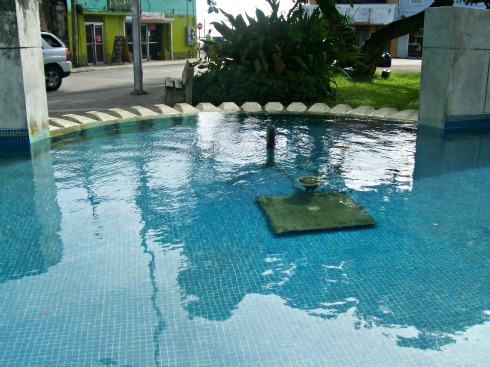
You can do a buoyancy experiment for a competition or just for fun. Are you planning a science fair project? Try it out.
Explore the fascinating world of experiments and the fascinating wonders of floating ice. Learn why ice floats, how it affects Earth's climate, and how it has shaped human culture.
The secrets behind melting icebergs and saltwater mysteries are revealed in this article. Join us on a journey that will leave you amazed by the hidden depths of ice's significance, whether you're a science enthusiast, a curious mind, or planning a science fair project.
You don't need a life jacket to set sail on a sea of knowledge.
Why does it matter? There are a lot of reasons to explore ice floating. Here's a few:
- Ice is the only substance on Earth that gets less dense as it freezes, so it floats. As other materials solidify and sink, they become more dense.
- The fact that ice floats regulates Earth's climate. Ice would accumulate on the ocean floor if it sank rather than floated.
- Life on Earth has also been impacted by the fact that ice floats. There are a lot of species that live on and around ice, and ice melting affects ocean currents, which affect climate.
- Throughout history, ice has played an important role in many cultures, especially in cold climates. Ice fishing, ice skating, and ice hockey all rely on the fact that ice floats.
Why does ice float, for example? It's fun to experiment with ice. If ice didn't float, life on earth would be impossible.
How come? A pond or lake's ice would sink to the bottom when it formed. If the ice didn't get sunlight, it would freeze permanently. Instead, ice forms a layer on top of a lake that protects fish and other water animals from freezing underneath.
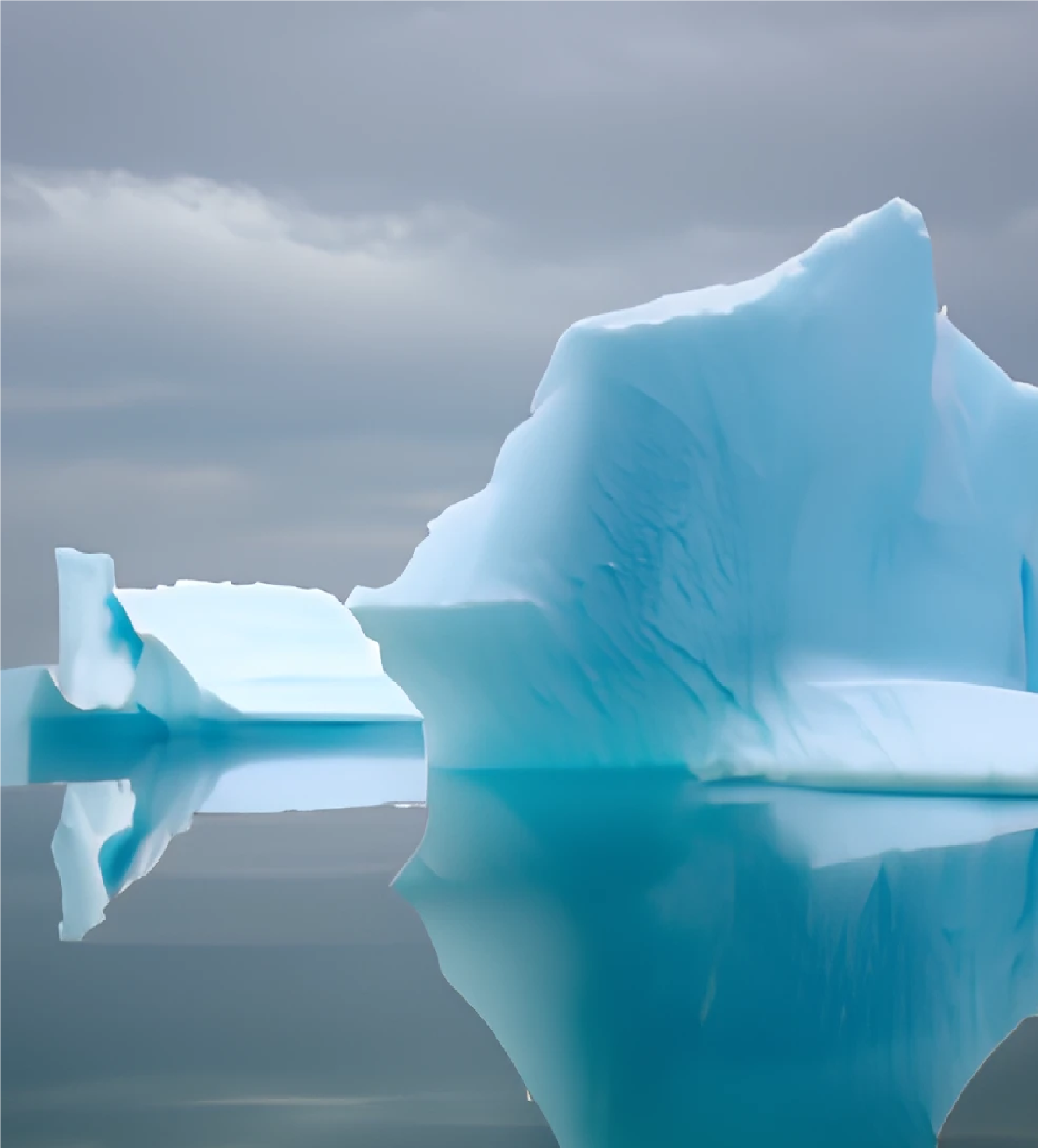
Let me clarify this. Life on Earth would be different if ice didn't float. Here are some potential effects:
- Ice regulates Earth's climate. The ocean floor would be covered in ice if ice didn't float. The planet would cool, possibly causing more glaciation and a cooler climate.
- Sea levels: Ice floats, so it takes up more space than if it sank. Sea levels would be significantly different if ice didn't float, since most of the world's ice would be submerged.
- Melting ice drives ocean currents, which impact climate. There would be less melting if ice didn't float, so ocean currents wouldn't be affected.
- Polar bears and penguins have adapted to life on and around ice. Without ice, these species might not have evolved the same way, and different species might have dominated cold places.
As I hinted at before, there's something special about water. When it freezes into a solid, it has a lower density than when it's liquid. How do you define density? It tells us how much weight is in a given volume. It's often measured in grams per cubic centimeter.
Ice is lighter than water. How? As water freezes, the molecules spread out a bit as they form crystals. Because they spread out, the resulting solid, ice, has a lower density, so it weighs less than water of the same volume.
Make a homemade iceberg by freezing a container of water and dropping it in a bathtub or wading pool. The majority of your iceberg will float below the surface. Those boys in the Titanic didn't know what was coming.
You'll only see a little bit above the surface. The beginning of a problem or challenge is often called the tip of the iceberg. You'll find a lot more than you think!
The fact that ice floats is interesting because it's a unique property that's had a significant effect on the planet, life on it, and human culture. Without floating ice, the planet and its life would suffer a lot.
Children love comparing things that float and sink. An impromptu science lesson can be turned into a water game by explaining and demonstrating the shape and weight!
Fun for your buoyancy experiment
To vary your buoyancy experiment, add salt to the water. Make the water look milky with salt. Because you won't want to fill a wading pool with salt water, you'll want to do this on a small scale, like an ice cube in a glass.
Due to salt's density, items float higher in the water. You can do this experiment with things you'll find around the house, and it's fun too. You'll keep bobbing along if you explore buoyancy! It's the perfect day for a daydream.
Here I sing a song about that:
...and on my Youtube channel homepage has more of more great song videos.
Go back from Buoyancy Experiment to the Solution Global Warming webpage.
Search this site for more information now.
Recent Articles


-
Methodology Handbook to Master Your Emissions Report
Apr 23, 24 09:24 PM
 Make sure your Quantification Methodology Handbook is clear and compliant. Find out what to include, from data sources to calculations.
 -
Prevention of air pollution assisted by data with the Alberta AEIR
Apr 22, 24 08:33 PM
Check out the AEIR Standard 3.0, which guides industrial operations in reporting emissions, compliance and prevention of air pollution. -
Data Quality Assessment Report Template to Report emissions accurately
Apr 19, 24 12:49 AM
You can use this data quality assessment report template to make sure your emissions reports are accurate and compliant.


What causes ice to float?
Demonstrate a few principles of buoyancy with this buoyancy experiment. How does it apply to air?
Do you have concerns about air pollution in your area??
Perhaps modelling air pollution will provide the answers to your question.
That is what I do on a full-time basis. Find out if it is necessary for your project.
Have your Say...
on the StuffintheAir facebook page
Other topics listed in these guides:
The Stuff in the Air Site Map
And,
Thank you to my research and writing assistants, ChatGPT and WordTune, as well as Wombo and others for the images.
GPT-4, OpenAI's large-scale language generation model (and others provided by Google and Meta), helped generate this text. As soon as draft language is generated, the author reviews, edits, and revises it to their own liking and is responsible for the content.

By Barry Lough, P.Met., EP (Environmental Professional)
Text copyright © 2003-2023 Stuff in the Air.com
BACK TO TOP - Hit your 'Home' Key
New! Comments
Do you like what you see here? Please let us know in the box below.