- Air Homepage
- Upper Atmosphere
- Science Experiments
A Variety of Science Experiments
There's no denying the importance of science experiments. What makes the experiments we try fun?
Search for more about science and school.
You know that feeling when a simple question leads to a mind-blowing, hands-on realization? Explore this exciting guide that celebrates the power of science experiments-from growing a balloon to designing a solar power demonstration-and get inspired! The Ultimate Scientist's Guide: From Hypothesis to Hands-On
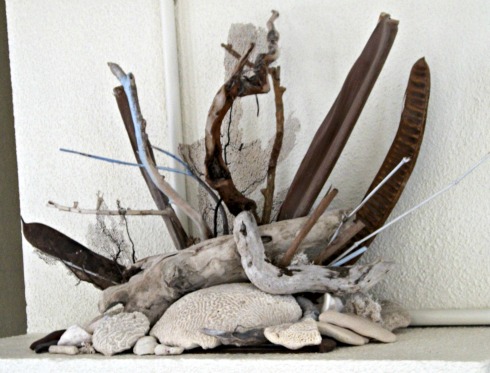
Here's what I think:
- Experiments let us explore the world around us and discover new things. Experiments help us observe phenomena, test hypotheses, and learn more about nature.
- Solving problems is a big part of these experiments. Using the scientific method, we can develop a hypothesis, test it, and draw conclusions. There's a lot of satisfaction and reward in this process.
- Science experiments often involve hands-on learning, which can be more engaging and memorable than passive learning. Experiments help us see how concepts and theories work in the real world.
- Science experiments are fun and fascinating to many people. It's fun for them to learn about science and explore new concepts.
- Applications: your experiments can have practical applications in our lives, such as helping us solve everyday problems or developing new technologies and treatments to improve our health.
Through empirical data, all sciences, from physics and chemistry to weather and ecology, expand their horizons.
There's a strong connection between today's problems and energy, weather, the atmosphere, and the economy. By understanding the foundations, we'll be able to overcome them.
Experiments help us learn to understand about the world around us and acknowledge its problems. As a result, we're able to protect the environment better.
There are science careers at universities, meteorological weather stations, energy laboratories, and research groups. In order to improve the quality of our lives, earth, and nature, consultants use principles they learn along the way.
Where do science experiments take place?
We have the National Renewable Energy Laboratory, which focuses on energy. In the southern part of the United States, the National Renewable Energy Laboratory is working on solar power technology.
To replace older technologies with solar power, they conduct experiments. That'd be a big deal. Sometimes first-world societies seem to know little about our planet.
Experimenting with computer modeling
A computer model can be considered a scientific experiment. The goal of computer modeling is to simulate real-world phenomena like weather patterns, disease spread, and material behavior.
A scientific method involves developing a hypothesis, testing it with experiments or observations, and analyzing the results. Scientists use computer simulations to test hypotheses about a system or process' behavior.

This kind of modeling involves creating a mathematical or computational model, running simulations, and analyzing the results to see how the system or process behaves under different conditions. Model parameters can be adjusted and multiple simulations can be run to test different scenarios and predict behavior.
As a scientific experiment, computer modeling depends on the accuracy of the model and the reliability of the data used to calibrate and validate it. Simulators must also take into account the model's limitations and the potential sources of error.
My full-time job is to provide environment consulting services through Calvin Consulting Group Ltd. in Calgary. Take a look at this overview of a typical modeling assessment we might perform.
In general, computer modeling can be a great tool for scientists to simulate complex systems and processes that might be hard to study directly. By testing hypotheses and making predictions, computer simulations can help scientists understand natural phenomena.
What was your science project?
Got a great science project idea? Maybe you enjoyed one of these or found a successful one you enjoyed. Did it work? Was it something to do with weather?
Maybe you screwed it up like I did...and can laugh about it now. I'd like to help.
Was it fun? What grade were you (or your child) in? We'd all like to hear about it. That way you can re-live the memory.
Here are some examples
See contributions from other visitors to this page...

The Telegraph 
A spark that woke up the world - Imagine holding a tiny spark that can send a message across the ocean or predict a giant storm before it even happens. …

Grow a Balloon
Inflating the sky's secrets - Think balloons are just for birthdays? You're missing out on the chance to control a mini storm. We're going to turn bubbles …

Designer Vaccine Carrier Protein Complex
Here's how to biohack your world with tiny trucks and stormy skies - Science isn't just about old books and boring labs because we're building microscopic …

Testing PH of Houshold Liquids
Atmospheric Secrets: The Sky Detective's Guide - Ever wonder if the rain in your backyard is a chemical soup or a secret code? We're about to outsmart …
finding level of pollution in a drainage system at different location in a town
A Rebel's Guide to City Sludge and Under the Pavement - You can't ignore the metal grates under your feet because they're a secret diary of your neighbors' …

Effects of laundry soap with and without phosphates
The Dirty Secret to Getting Clean: Bubble Trouble - Find out how your washing machine bubbles can actually suffocate a whole lake. Here's why getting …

Ways To Use Sunpower Everyday 
Here's the Ultimate Free Cheat Code for Sunpower - Join the secret club of hackers who are smarter than their teachers and stop paying for stuff the …

big fan of science
It's just a giant beaker in the sky - One thing's clear from the feedback from our "Big Fan of Science" readers: everyone's tired of bookish knowledge. …

Butt Out
Small science is actually big science - We're not just being sassy when we tell parents to "butt out." We're protecting the scientific method. It's not …
How do plants grow in different conditions
How to hack your garden and the sky with Root Rebels - Plants are actually tiny green geniuses who know how to hack the atmosphere and use chemistry …

burglar alarming latch
Atmosphere's light-speed guardian - Stop worrying about perfect grammar and start worrying about light disappearing before your eyes. Here's how a simple …

How gender affects memory
Big Secrets and Brain Clouds - Opening: Ever feel like everyone just reads from the same script? Let's tear up that script to show you how your mind …

ozone smoke dispenser demo
From garage startups to Ozone hacks, THE REBEL'S LAB - Here's how a messy garage turns into a billion-dollar empire or how a five-dollar gizmo can create …

Robotic Future
Ghosts, gears, and gasses in the Robotic Future - The truth feels weirder than a movie about robots taking over the world. Some machines don't just sit …

the power of erosion
Earth's Extreme Makeover courtesy of Erosion - Imagine the wind turning into a giant sandpaper that rubs mountains away. It's possible to predict where …
Rain Water Harvesting Project
Harvesting the Sky: The Outlaw's Guide - Think of storm clouds as massive flying batteries full of free energy and liquid gold instead of big pipes. …

wind and air
The Rebel's Guide to Wind and Air: Invisible Giants - Imagine a world where the air around you isn't just empty space, but an invisible machine that …
Galaxy
Where comfort ends, thinking begins - Ever looked at something and thought, "I don't get it," but kept looking anyway? Here's where real science starts, …
water purifier
Reality Filtering by Your Mind and the Earth - Get ready to hack your own brain and forget everything you've been told. You're about to discover how …
You've heard it before...
...Our future lies with the youth.
Any science fair project that mixes disciplines (astronomy, biology, chemistry, earth science and physical sciences) generates interest from professionals. It shows them that young people can be clever. Keep them healthy and young.
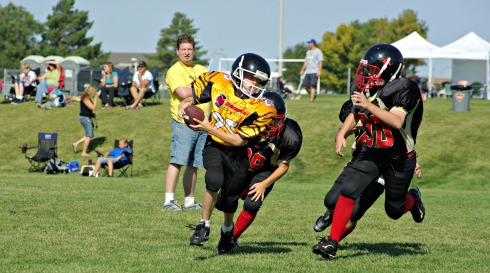
Projects for meteorological science fairs deal with weather situations like:
- Tornadoes, hurricanes, and other storms observed and analyzed,
- Understanding ocean-atmosphere interactions, and
- Observing the weather with weather stations.
Natural life on land and in water is what ecological subjects are about. These subjects are studied in interdisciplinary studies along with pollution, ecosystems, arctic environments, mountain barriers, and extreme climates.
As a result of useful scientific research, both people and nature can adapt to changes in their surroundings, such as deserts or colder climates. Taking part in these subject areas helps students realize how important it is to preserve nature and the environment.
Experiments in weather and energy have proven to be not only educational, but crucial to improving, or at least maintaining, the environment.
Search this site for more information now. There's info on biology, chemistry, and physics. You can also find resources to help you with science-related projects. Explore now!
Overall, science experiments can be fun, educational, and enjoyable. Using scientific experimentation, we can learn more about the natural world and develop new insights.
Go back from this Science Experiments
page to the Chasing Storms page or visit the Stuff in the Air homepage.
Recent Articles


-
Ambient Air Monitoring Equipment Specifications
Oct 25, 26 05:01 PM
 Chapter 4 of Alberta's Air Monitoring Directive, specifying ambient air monitoring equipment and technical requirements for good air quality data.
 -
Alberta Air Monitoring Directive - AMD Compliance Guide
Oct 22, 26 03:21 PM
Understand the Alberta Air Monitoring Directive, monitoring requirements, quality assurance, audits and reporting. Practical guidance for industrial facilities. -
Weather Man | Do YOU Need One of These?
Oct 20, 26 06:47 PM
Take a look at some fresh ideas with interesting content, resources and guidance about meteorology and possible careers as a weather man.
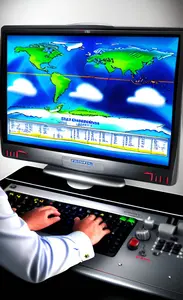

Are you interested in helping to preserve our planet through scientific experiments?
In order to understand and protect life, the air, nature, and the earth, scientists conduct experiments. Additionally, they assist us in improving our own quality of life.
Do you have concerns about air pollution in your area??
Perhaps modelling air pollution will provide the answers to your question.
That is what I do on a full-time basis. Find out if it is necessary for your project.
Have your Say...
on the StuffintheAir facebook page
Other topics listed in these guides:
The Stuff-in-the-Air Site Map
And,
Thank you to my research and writing assistants, and the author remains responsible for the content.

By Barry Lough, P.Met., EP (Environmental Professional)
Text copyright © 2003-2026 Stuff in the Air.com
BACK TO TOP - Hit your 'Home' Key