- Air Homepage
- Global Warming
- Air Pollution Diesel Emissions
Air pollution Diesel emissions: The Smelly Truth
More about air pollution.

Air pollution Diesel emissions come from trucks, trains, ships, and other diesel-burning equipment. They're a major source of air pollution and contain a mixture of toxic gases. Diesel emissions can also contribute to global warming. Electric power plants, industrial engines, and heavy equipment burn these fossil fuels. Vehicles and equipment powered by diesel emit nitrogen oxides (NOx), hydrocarbons (HC), particulates (PM), and carbon monoxide (CO). Asthma and other respiratory diseases can be caused by these pollutants.
In this page I try to combine informative content with an engaging style, addresses a relevant issue, offer practical insights, engage the senses, and encourage thoughtful consideration and action, especially if you care about air quality.
Air pollution diesel emissions: what else is in them? Elemental carbon is in the visible pollution from burning diesel. Polycyclic aromatic hydrocarbons, well-known cancer-causing agents, cause the smell.
Microscopic solid particles are some of the most insidious air pollutants. Can you tell me why? A lot of these particles measure less than a micron in size, and they invade our atmosphere.
They can lodge deep in the lungs and stay there indefinitely because they're so small. What's the point? You might ask... Chronic illnesses can result from them staying in the lungs.
Have you heard of pneumonoultramicroscopicsilicovolcanoconiosis? The longest word in English is also the name of a lung disease caused by inhaling too much silica dust. Diesel emissions don't have much of that substance, but big diesel trucks kick up a lot of road dust.
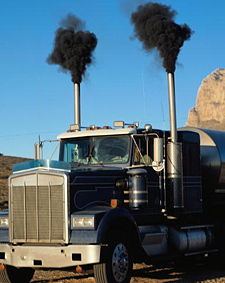
Are air pollution diesel emissions really that bad?
Diesel emissions are one of the worst problems caused by vehicular traffic. As well as particulates, it has poisonous gases. There are gases like nitrogen oxide, carbon monoxide, sulfur dioxide, and formaldehyde. Researchers use formaldehyde as a preservative and it causes tumors in lab animals.
Is diesel worse than gasoline? Both diesel and gasoline have environmental impacts, but they're different. Diesel emits less carbon dioxide (CO2) per gallon than gasoline, but more NOx and PM. NOx and PM are major contributors to air pollution. They're bad for you and the environment.
Diesel engines are also less fuel-efficient than gasoline engines, so they burn more fuel and emit more pollution per mile. Modern diesel engines can be equipped with advanced emissions control technologies, like diesel particulate filters and selective catalytic reduction systems, which reduce emissions of NOx and PM.
Both diesel and gasoline have environmental impacts, and which one is worse depends on the context and the emission control technology. Our reliance on fossil fuels needs to be reduced and we need to switch to cleaner, more sustainable energy sources.
An industrial operation that uses a lot of diesel might need air quality modeling to assess local impacts. Check out my convenient consulting services on the air pollution dispersion modeling webpage.
What kind of fuel do your engines use? Find out how to reach Calvin Consulting Air Quality Dispersion Modelling for determining the environmental effects of your diesel engines. We analyze, model, and report air quality emissions. We can review air quality regulations and identify emissions sources, as well as develop a compliance strategy to reduce emissions, for example.
What's the effectiveness of these emissions as carcinogens? Up to 70 percent of cancer cases are caused by atmospheric pollution.
Let's talk about solid particles. Children and adults with asthma really feel the effects of this smoke because of the particulates in it. Smoke particles are smaller than the width of a human hair, so they're easy to inhale. Inflammation and irritation can make symptoms worse.
A study found that volunteers exposed to diesel fumes reported coughing, sore throats, headaches, and nausea. After exposure, some people got lung inflammation.
Other common symptoms include phlegm and breathing problems. People also complained about odors. An annoyance all the time.
What to tell about the smell.
Diesel fuel and its exhaust have a distinct smell due to their chemical composition and combustion process. Diesel fuel is made up of hydrocarbons, which are organic compounds made up of hydrogen and carbon atoms. Diesel fuel has a different molecular structure than gasoline, so it smells different.

When diesel fuel burns in a diesel engine, it produces exhaust components mentioned earlier, NOx, CO and PM. Diesel odour comes from some of these. Mostly, though...
Diesel exhaust has a strong, pungent odor because of sulfur compounds in the fuel. Sulfur is naturally present in crude oil, which is used to make diesel fuel, and it can react with other sulfur-containing compounds to produce sulfur dioxide and other smelly compounds during combustion.
So, the sulphur makes the biggest smell. With modern diesel engines, emissions control technologies can reduce sulfur and other pollutants in diesel exhaust, which can improve air quality and human health.
It would be wise, economically, to reduce our reliance on diesel given the shortages and costs of burning fossil fuels. Consider the health implications, too, and it seems like finding alternatives to diesel should be a priority for industrial researchers. Let's see if we can improve this.
Go back from Air Pollution Diesel Emissions to the Solution Global Warming webpage.
Search this site for more information now.
Recent Articles


-
Methodology Handbook to Master Your Emissions Report
Apr 23, 24 09:24 PM
 Make sure your Quantification Methodology Handbook is clear and compliant. Find out what to include, from data sources to calculations.
 -
Prevention of air pollution assisted by data with the Alberta AEIR
Apr 22, 24 08:33 PM
Check out the AEIR Standard 3.0, which guides industrial operations in reporting emissions, compliance and prevention of air pollution. -
Data Quality Assessment Report Template to Report emissions accurately
Apr 19, 24 12:49 AM
You can use this data quality assessment report template to make sure your emissions reports are accurate and compliant.

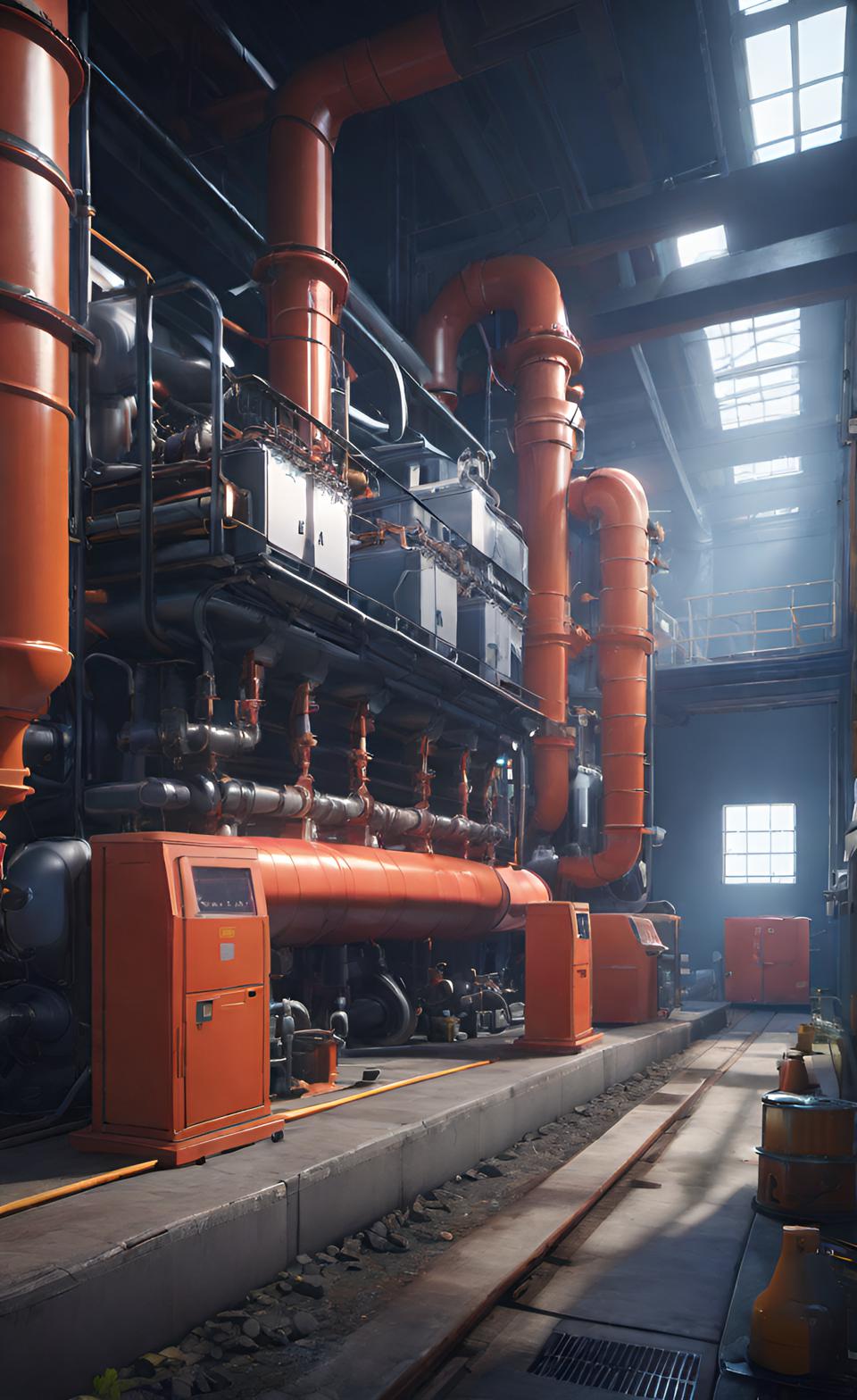

Diesel Emissions: Believe it or not!
We have air quality problems from a wide variety of sources.
See what kind of air pollution these diesel emissions can contribute and what the problems are.
Do you have concerns about air pollution in your area??
Perhaps modelling air pollution will provide the answers to your question.
That is what I do on a full-time basis. Find out if it is necessary for your project.
Have your Say...
on the StuffintheAir facebook page
Other topics listed in these guides:
The Stuff in the Air Site Map
And,
Thank you to my research and writing assistants, ChatGPT and WordTune, as well as Wombo and others for the images.
GPT-4, OpenAI's large-scale language generation model (and others provided by Google and Meta), helped generate this text. As soon as draft language is generated, the author reviews, edits, and revises it to their own liking and is responsible for the content.

By Barry Lough, P.Met., EP (Environmental Professional)
Text copyright © 2003-2023 Stuff in the Air.com
BACK TO TOP - Hit your 'Home' Key
New! Comments
Do you like what you see here? Please let us know in the box below.