- Air Homepage
- About us
About Stuff in the Air: Meet Barry Lough, Your Weather Man
Weather, atmospheric science and air quality explained by someone who has spent much of his career working with them.
Have you ever wondered why the wind suddenly changes direction, how a thunderstorm develops or what happens to pollutants released into the atmosphere? Welcome to Stuff in the Air. I'm Barry Lough, a physicist, meteorologist (weather man), environmental consultant and the weather man behind this website.
I created Stuff in the Air in February 2003 to help students, teachers and curious people understand meteorology. What began as a collection of straightforward explanations has grown into an extensive resource covering weather, atmospheric science, air pollution, climate and environmental topics.
My aim has remained much the same: make complicated science understandable, encourage curiosity and help people discover why the atmosphere behaves as it does. You don't need a physics degree to enjoy the weather. Although, as it happens, I have one.
From Physics to Meteorology
My formal education began at the University of Alberta, where I earned a Bachelor of Science specializing in Physics in 1989, followed by an Undergraduate Science Diploma in Meteorology in 1994.
Physics provides a foundation for understanding how the atmosphere works. Meteorology applies those principles to the remarkable and sometimes unpredictable behaviour of air, moisture, temperature and wind.
For example, warm air often rises because it is less dense than surrounding air. As it rises, it cools and may eventually form clouds. Under other conditions, warmer air can sit above cooler air near the ground, creating a temperature inversion that restricts vertical mixing.
These simple principles help explain fog, thunderstorms, air pollution episodes and many other atmospheric phenomena.
My interest in meteorology grew during an internship involving air traffic control. Aviation depends heavily on weather, and the connection between atmospheric science and practical decision-making was appealing.
I subsequently worked as a meteorologist in the federal government's weather forecasting service, now part of Environment and Climate Change Canada.
Weather forecasting gave me practical experience interpreting atmospheric observations, studying changing weather patterns and using scientific information to anticipate what might happen next.
It also reinforced a valuable lesson: the atmosphere doesn't always behave as expected. That makes it an endlessly interesting subject.
From Weather Forecasting to Air Quality
Many people associate meteorologists with television weather forecasts. The profession is considerably broader.
 Part scientist, part entertainer.
Meteorologists work in aviation, agriculture, research, emergency management, renewable energy and environmental science. Some investigate past weather events while others use atmospheric models to predict the movement of air pollutants.
My professional career eventually moved toward environmental consulting, particularly air quality dispersion modelling.
This work uses atmospheric science to estimate how contaminants released from industrial sources travel through the air and what concentrations may occur at surrounding locations.
The connection with weather forecasting is direct.
Wind transports pollutants. Atmospheric turbulence mixes them. Temperature gradients influence their vertical movement. Terrain and buildings can change wind patterns and affect ground-level concentrations.
A calm morning with a strong temperature inversion can behave quite differently from a windy afternoon with vigorous atmospheric mixing.
The same meteorology that helps explain the weather outside your window also helps explain how industrial emissions behave.
And that is where my background as a weather man becomes particularly useful.
What Does an Air Quality Consultant Actually Do?
Industrial facilities release substances into the atmosphere through exhaust stacks, heaters, engines, flares, storage tanks and other sources.
Before a new facility is built or an existing operation is modified, regulators may require an assessment of its potential effects on surrounding air quality. The work begins by identifying emissions and understanding how the facility operates.
A dispersion modeller then uses information such as emission rates, stack dimensions, exhaust temperatures, meteorological data, terrain and nearby buildings to predict ambient concentrations.
Those predictions can help engineers and operators determine whether a facility meets applicable air-quality requirements and whether changes are needed.
A model is only as useful as the assumptions behind it.
For example, several pieces of equipment may have maximum emission rates listed in their specifications. That does not necessarily mean every unit can operate at its maximum rate simultaneously. On the other hand, overlooking a credible high-emission operating scenario can underestimate potential impacts.
Similarly, changing the height or diameter of an exhaust stack can affect how pollutants disperse. Nearby buildings may also influence the plume through a process known as building downwash.
These are practical questions requiring scientific interpretation, knowledge of industrial operations and sound professional judgement.
My environmental consulting experience includes emissions inventories, dispersion modelling, regulatory assessments, air monitoring analysis, data validation and recommendations for improving facility designs or operations.
Experience with Industrial Air Quality
Over more than 30 years, my work has involved upstream and midstream energy facilities, petrochemical operations, refineries, power generation, oil storage and other industrial developments.
 Meteorolgists predict the weather and help you plan
Earlier positions included environmental consulting work with SEACOR Environmental in Calgary and work associated with Duke Energy Gas Transmission. My current professional work is with Calvin Consulting Group Ltd.
Some of the more interesting assignments have involved large industrial complexes where many emission sources must be considered together.
The Joffre industrial complex
One example involved air-quality modelling for the Joffre industrial complex in Alberta, which included chemical production, cogeneration, fertilizer manufacturing and associated industrial operations.
The assessment required information about numerous emission sources operating across interconnected facilities.
A key challenge was assembling the correct source information and understanding how the various operations interacted. The work involved consultation with facility personnel, gathering emission parameters and examining the effects of structures and source configurations on atmospheric dispersion.
That is a useful illustration of why air-quality modelling extends well beyond entering numbers into a computer program.
Oil storage and industrial emissions
Other work has involved air-quality modelling associated with the Hardisty oil storage complex in Alberta, where numerous storage and handling operations can create complex emissions assessment requirements.
Industrial assessments may also require an understanding of volatile organic compounds, nitrogen oxides, sulphur dioxide, particulate matter and other contaminants.
Each facility presents its own questions. A useful assessment needs to consider the applicable regulatory requirements, the physical operating conditions and the reliability of the underlying data.
Calvin Consulting Group Ltd.
My professional consulting work is carried out through Calvin Consulting Group Ltd., a Canadian environmental consulting company incorporated in 2000.
Calvin Consulting specializes in air-quality assessments, emissions reporting and environmental regulatory compliance. Its personnel include scientists, dispersion meteorologists and environmental compliance specialists.
The company's work includes:
- Air dispersion modelling for regulatory applications and facility assessments
- Industrial air emissions inventories and reporting
- Flare-stack modelling and air-quality management
- Regulatory permitting and approval support
- Air monitoring and Continuous Emission Monitoring System quality assurance
- Environmental auditing and compliance reviews
The company's project experience includes energy developments and a variety of industrial facilities across Canada.
For operators, the objective is to understand the applicable requirements, produce technically defensible assessments and identify practical ways of meeting environmental obligations.
Stuff in the Air serves a different purpose. It is my public science education website, where I can explain some of the same atmospheric principles in language accessible to a wider audience.
Readers seeking professional assistance can explore the site's technical air-quality articles or contact Calvin Consulting directly.
Calvin Consulting Group Ltd. — Calgary, Alberta
Telephone: 403-547-7557
Email:

Professional Qualifications and Scientific Responsibility
My professional background combines university education, meteorological practice and environmental consulting experience.
My qualifications include:
Qualification
Meaning
B.Sc.
Bachelor of Science, specializing in Physics, University of Alberta
Undergraduate Science Diploma in Meteorology
University of Alberta
P.Phys.
Professional Physicist designation
EP
Environmental Professional designation*
I previously held the P.Met. designation, which was subsequently discontinued by its issuing organization and integrated into the Environmental Professional certification framework.
*The EP designation is administered through ECO Canada and the Canadian Environmental Certification Approvals Board (CECAB).
Environmental Professionals are subject to a code of ethics emphasizing professional responsibility, environmental stewardship, scientific integrity, public welfare and confidentiality. These principles are relevant to my consulting work and to the information published on this website.
Why scientific integrity matters
Science is built around evidence, careful interpretation and a willingness to revise conclusions when better information becomes available.
Atmospheric science involves uncertainty. Weather forecasts are predictions and air dispersion models represent physical processes using mathematical approximations. Measurements can contain errors and regulatory requirements can change. A responsible scientist should be willing to explain those limitations.
Stuff in the Air aims to present established scientific concepts accurately while keeping explanations understandable for beginners.
Where a subject depends on current regulations, readers should consult the latest official documents before making technical or compliance decisions. Educational information on this website cannot replace a project-specific professional assessment.
Some articles were written years ago and are being reviewed and updated as the site develops. Older pages may therefore contain references that have since changed.
My goal is to make the material increasingly useful, accurate and well supported by scientific and regulatory references.
Why I Created Stuff in the Air
When I first started this website, I wanted students to have an accessible place to learn about meteorology without immediately encountering complicated equations.
The atmosphere offers a wonderful introduction to science because so much of it can be observed directly. Watch clouds developing during a summer afternoon. Notice how a Chinook changes winter conditions in southern Alberta. Observe frost forming on a cold surface or consider why fog develops in valleys.
Each observation can lead to questions about temperature, pressure, moisture, energy and movement.
You might begin with a photograph of a thunderstorm and eventually find yourself studying atmospheric instability, upper-air observations or numerical weather prediction. That's the sort of curiosity I hope Stuff in the Air encourages.
The site has expanded considerably since 2003, with articles on weather instruments, atmospheric processes, environmental issues, air-quality science, mathematical concepts and career possibilities.
Some explanations are deliberately simple, while others link to more advanced material for readers who want to investigate further.
Teachers may find illustrations and learning topics suitable for classroom discussion. Students can use articles to explore scientific ideas or develop questions for projects. Professionals can find introductions to related technical subjects and links to more detailed resources.
And for the general reader, there is always something interesting happening in the atmosphere.
What Can You Explore Here?
Here are some useful starting points from around Stuff in the Air.
Topic
What you'll discover
Discover Meteorology
An introduction to clouds, storms, atmospheric phenomena and the science behind everyday weather
Calm Weather and Inversions
Why stable layers of air form and how they influence fog, temperature and pollution
Chinook Winds
The warm, dry winds that can transform southern Alberta's winter weather
Weather Satellites
How observations from space help a weather man monitor weather systems
Weather Radar
How radar detects precipitation and helps reveal the structure of storms
Atmospheric Instability and Lapse Rates
Why some air masses resist vertical motion while others encourage cloud development and convection
What Is Meteorology?
What meteorologists study and how atmospheric science connects with other disciplines
Meteorology Career
Career opportunities involving weather forecasting, research, aviation and environmental science
Atmosphere Lesson Plans for Teachers
Educational ideas for introducing atmospheric science in the classroom
Indoor Air Pollution
Common indoor pollutant sources, sensible precautions and when specialized testing is warranted
Air Pollution from Vehicles
How transportation produces pollutants and how technology has changed vehicle emissions
Air Quality Modelling
Air Quality Dispersion Modelling
A more technical look at industrial emissions modelling and regulatory applications
Alberta Air Quality
These are existing sitemap topics to connect to their respective pages. Use the site's navigation or sitemap to explore additional subjects.
A classroom could begin with clouds and storms, move into atmospheric stability and then investigate how the same physical processes influence air pollution. That progression from simple observation to scientific explanation is one of my favourite aspects of teaching meteorology.
A Weather Man Beyond the Weather
Atmospheric science occupies much of my professional life, but it has some competition.
I'm also a musician. Over the years, I've played keyboards and sung with Back in the Day, a rock cover band performing music from the 1960s, 1970s and 1980s. I've performed solo, participated in duelling piano shows and played pans and drums with Calgary's Calysto Steelband.

Music and science might seem like unrelated interests, although both involve patterns, timing, waves and a certain amount of improvisation.
There is also something enjoyable about explaining a complex subject to an audience and discovering that people are genuinely interested. Whether the audience is listening to a piano or learning why thunderstorms develop, holding their attention matters.
Stuff in the Air gives me another opportunity to combine curiosity, communication and the occasional bit of humour. After all, a weather man should be allowed to have a little fun with the atmosphere.

Recent Articles


-
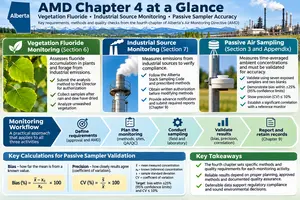
Alberta AMD Fourth Chapter: Fluoride, Stacks & Samplers
Nov 07, 26 04:32 PM
 Explore Alberta AMD Fourth Chapter requirements for vegetation fluoride analysis, industrial stack testing and passive sampler accuracy, with QA guidance.
-
Mobile Air Quality Monitoring | Alberta AMD Guide
Nov 04, 26 11:47 PM
 Learn when mobile air quality monitoring is useful in Alberta, how AMD Chapter 4 regulates mobile labs and what makes survey results reliable and defensible.
-
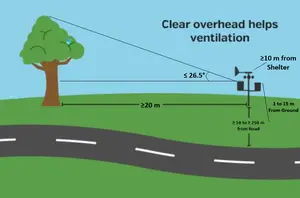
Ambient Air Quality Monitoring Equipment Station Siting: AMD Chapter 3
Oct 29, 26 03:22 PM
 Learn Alberta AMD Chapter 3 siting requirements for ambient air quality monitoring equipment, wind instruments and samplers. Practical guidance.



Stay Curious and Explore the Atmosphere
There is a great deal more to weather than tomorrow's forecast.
The atmosphere influences transportation, agriculture, human health, industry, ecosystems and the everyday decisions we make. Understanding a little more about it can change how we observe the world around us.
If you are a student, choose a weather question that interests you and follow the links until you understand the answer.
Teachers are welcome to use the articles as starting points for classroom discussions and further investigation.
If you work in industry, explore the technical air-quality material and see how meteorology contributes to emissions assessment, environmental monitoring and regulatory compliance.
And if you know someone who enjoys weather, science or unusual natural phenomena, share a page with them. Perhaps a science class would enjoy exploring the connection between clouds, atmospheric stability and air pollution.
Start with Discover Meteorology, explore Air Quality Modelling or find a subject that catches your interest in the Stuff in the Air Sitemap.
For professional environmental consulting enquiries, contact Calvin Consulting Group Ltd. at 403-547-7557.
Thank you for visiting Stuff in the Air.
I'm Barry Lough, your weather man, and I hope you find something here that makes you look at the sky a little differently.
Do you have concerns about air pollution in your area??
Perhaps modelling air pollution will provide the answers to your question.
That is what I do on a full-time basis. Find out if it is necessary for your project.
Have your Say...
on the StuffintheAir facebook page
Other topics listed in these guides:
The Stuff-in-the-Air Site Map
And,
Thank you to my research and writing assistants, and the author remains responsible for the content.
You are here:
Most Popular Pages on this Website:
Pictures of Global Warming
- See photos, cartoons, charts, graphs and a few surprises.
Clouds
- Don't know a cumulus from a stratus? Check here.
Causes of Global Warming
- It's not always obvious.
Calgary Alberta Weather
- Example of Canadian Goodness.
Thermometers
- Our favourite weather instrument.
- Home
- Contact Us
- Free E-zine Back Issues
- Privacy Policy
- Site Map - I'll help find something good.

By Barry Lough, P.Met., EP (Environmental Professional)
Text copyright © 2003-2026 Stuff in the Air.com
BACK TO TOP - Hit your 'Home' Key