Global warming carbon dioxide and the environment
Search for more about the atmosphere.
We have a lot to worry about when it comes to Global warming carbon dioxide and related problems.
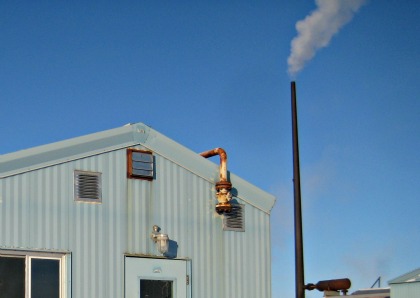
This thought starts with the well-established theory that the mix of gases in the atmosphere keeps the earth warm. Not only do they hold sensible heat, but they also keep long-wave radiation from the earth from getting out.
Check out this environmental bit and learn about carbon dioxide, global warming, and the delicate dance of gases. Explore where science meets controversy. How does CO2 control climate? Explore the interplay of greenhouse gases, and uncover a few unexpected truths. See a few debates, opposition from scientists, and water vapor's surprising role in weather and climate.
That's not all! Find out a some more about CO2 and global temperatures, the oceans' role as carbon storehouses, and the historic Kyoto Protocol. Consider the nuanced factors beyond CO2 and water vapor in the midst of the climate cacophony.
As carbon dioxide levels rise independently of temperature, a new climate narrative emerges. How will this twist surprise you? Explore the complexities of global warming one bit at a time in this short exploration. Are you ready to get more about the environment? Let's get started!
There's a global warming carbon dioxide scare because carbon dioxide is one of those gases - greenhouse gases. Basically, the atmosphere keeps heat near us like a glass covering in a green house, but lets sunlight in.
A change in the amount of carbon dioxide is said to cause climate change. We also have some control over it, so it's a big commercial, political, and moral issue, as Al Gore says.
How does it work? Several wavelengths of the earth's outgoing radiation have been shown to be blocked by CO2. Increased carbon dioxide concentrations in the atmosphere should make this cover more effective.
As a result of the enhanced greenhouse effect, the earth may get a little warmer and emit infrared radiation (IR, which carries heat) at a slightly lower wavelength. Reduced wavelength means more energy, as in a higher temperature at the radiation source. As a result, infrared radiation with a shorter wavelength is associated with a higher temperature at the source, so Earth's increased temperature shifts the peak wavelength of its infrared radiation towards a shorter wavelength.
Infrared radiation is trapped in the Earth's atmosphere by greenhouse gases, which absorb and re-emit it (both upwards and downwards). That's why greenhouse gases, like carbon dioxide, are often blamed for global warming.
Certain wavelengths of infrared radiation get through the "atmospheric window", aren't absorbed by greenhouse gases and can quickly escape into space. Some radiation passes through the atmosphere without being absorbed by greenhouse gases and can exit instead of being trapped by the atmosphere and contributing to global warming.
At some wavelengths, the amount of energy escaping through the atmosphere window is less than what's trapped by greenhouse gases. But at other wavelengths, more of the IR gets through. Greenhouse gases currently absorb and re-emit much of the infrared radiation emitted by the Earth.
Furthermore, increasing the Earth's temperature to emit more radiation at shorter wavelengths wouldn't solve global warming since it would have to get worse first for this to happen. However, radiation from this warmer source will eventually get through the carbon dioxide blanket that's causing global warming and a new energy-balance would be achieved.
The majority of us don't realize that and expect a runaway climate change. All this has led to people trying to convince those in charge of global warming carbon dioxide emissions to find ways to reduce carbon dioxide levels.
Why? To slow down global warming. The world's biggest economic interests depend on carbon-releasing processes. Like those in the oil industry. So it's been a tough sell.
The following video elaborates on the issue of global warming carbon dioxide
Go stream An Inconvenient Truth.
Friends of Science
There's been some opposition from scientists. Some other scientists have pointed out a few things that complicate things.
CO2 isn't the biggest greenhouse gas anyway. Water vapour wins. There's a lot more of it and it's more effective.

They also say that mankind's carbon dioxide emissions are strongly accentuated by nature's CO2 emissions. Things like volcanoes, decomposition, etc.
Even natural carbon sequestration (removal) beats man-made emissions. Check out FriendsofScience.org for more ideas. Here's what else they said
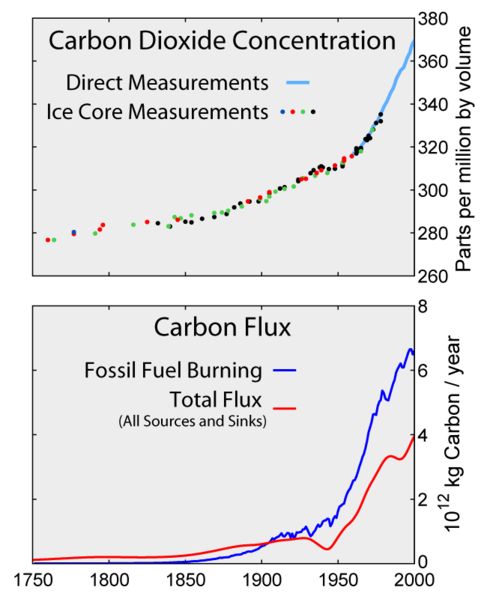
Global warming carbon dioxide levels don't change before global temperatures do. Carbon dioxide concentrations follow temperatures by hundreds of years when graphed.
- CO2 is stored in the oceans. The bigger they are, the better they hold carbon dioxide. Maybe that's why global warming happens before CO2 levels rise.
- Someone here pointed out, "According to the Kyoto protocol's backers, following it would result in almost no lowering of temperatures." - hmmm… This protocol reduces carbon dioxide emissions and slows global warming. According to Hadley Center researchers, curbing emissions could save us about 0.06°C.
- Life depends on carbon dioxide.
- Some climate change can be attributed to the greenhouse effect, but other factors are also at play. Global warming is caused by Changes in the earth's orbit and sunspot activity.
- CO2 and water vapour aren't the only gases contributing to global warming.
- Here's something to keep in mind. We might see a temperature increase due to changes in carbon dioxide concentrations. This is the first time CO2 has increased independently of temperature like this, so the results might surprise you.
Have I got the Wrong Idea?
Maybe you know something I don't. Something the world needs to hear about. This short website cannot include everything and if it's important to you, it's important to me.
So what's really the story with global warming? I'd like to know. If you have a picture, I'll even include it here. Try me.
What have those who came before you said?
Check below to see contributions from other visitors to this page...
CO2 is absolutely insignificant in the climate on Earth 
Yes, I am afraid you have it wrong. The historical data show that CO2 and temperatures on the Earth's surface are independent. This data is what actually …
The Combination of Earth's Tilt and Eccentricity Cause Both Warming and Cooling
The really cold period of the most recent ice age started about 75 kyrs 75,000 years ago when the Earth's eccentricity was approaching the maximum, …
Measure earth temperature from the moon
If the global warming argument is correct you would expect to see a reduction in earth's temperature as measured from a station positioned on the moon. …
global warming the mass destruction
Global warming has become a major concern for the world today. The green house effect is the talk of the world now as every body is concerned by the increase …
www.informatron.biz Not rated yet
There are cycles within the Sun of which some are related to Jupiter's cycle and others are related to the Sun's orbit around the center of mass of the …
What a pile of sh t Not rated yet
CO2 is not a pollutant, it is food for plants. Every commercial greenhouse has CO2 generators to bring the level up over 1000 PPM. This allows the plants …
Reduce heat created by A/c Not rated yet
How can we Reduce heat created by A/c? Nowadays people in different countries require air conditioning (A/c) even in winter. Instead they can just open …
It's all about money, and that's the truth! Not rated yet
"greenhouse gases" in the air (mainly carbon dioxide) are what cause global warming. The greenhouse effect is not a good thing, it keeps heat in the …
Global economics and global warming Not rated yet
With the competitive global marketplace set up the way it is, there has to be a united effort from major economic powers of the world to control the global …
An interesting theory! Not rated yet
Here's an interesting theory. Every few thousand years, the planet regenerates itself. Whether caused by global warming, or other natural disasters. Ice …
There is Only One Option Whether the Evidence is Right or Wrong Not rated yet
Global warming is something that everyone should be concerned about. Regardless of whether a person believes in global warming or does not, a person should …
Global Warming Solutions
Al Gore's suggestions in An Inconvenient Truth are good ones. You know, things like:
- Using energy-efficient appliances and light bulbs
- Increasing fuel economy and emissions standards for vehicles
- Using renewable energy and technology
- Sequestering more carbon
...to list a few.
What makes them so valuable?
- Energy wasted is money wasted.
- Most of the time, the environment benefits in more ways than one. Carbon emissions, for example, are often released along with other, more dangerous, chemicals.
- There's no way to know for sure. But there's a chance it'll make a difference.
Just don't count on it.
Conserving can't hurt at the very least. Go back from Global Warming Carbon Dioxide to the
Air Quality Testers page.
Search this site for more information now.
Recent Articles


-
Methodology Handbook to Master Your Emissions Report
Apr 23, 24 09:24 PM
 Make sure your Quantification Methodology Handbook is clear and compliant. Find out what to include, from data sources to calculations.
 -
Prevention of air pollution assisted by data with the Alberta AEIR
Apr 22, 24 08:33 PM
Check out the AEIR Standard 3.0, which guides industrial operations in reporting emissions, compliance and prevention of air pollution. -
Data Quality Assessment Report Template to Report emissions accurately
Apr 19, 24 12:49 AM
You can use this data quality assessment report template to make sure your emissions reports are accurate and compliant.


Is there a connection between global warming and carbon dioxide?
There are several factors that need to be considered in order to determine what global warming is caused by carbon dioxide emissions in the air. There is no way to predict what will happen with absolute certainty.
Do you have concerns about air pollution in your area??
Perhaps modelling air pollution will provide the answers to your question.
That is what I do on a full-time basis. Find out if it is necessary for your project.
Have your Say...
on the StuffintheAir facebook page
Other topics listed in these guides:
The Stuff in the Air Site Map
And,
Thank you to my research and writing assistants, ChatGPT and WordTune, as well as Wombo and others for the images.
GPT-4, OpenAI's large-scale language generation model (and others provided by Google and Meta), helped generate this text. As soon as draft language is generated, the author reviews, edits, and revises it to their own liking and is responsible for the content.

By Barry Lough, P.Met., EP (Environmental Professional)
Text copyright © 2003-2023 Stuff in the Air.com
BACK TO TOP - Hit your 'Home' Key
New! Comments
Do you like what you see here? Please let us know in the box below.