- Air Homepage
- Weather Maps
- Wunderground Weather
- Bureau Meteorology
Get to know Australia's diverse climates with Bureau Meteorology!
Search for more about weather reporting. 🇦🇺🌩️
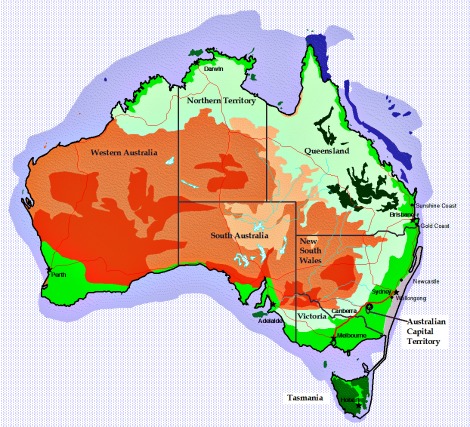
On the Bureau Meteorology website, you'll find weather forecasts and recent temperatures for the major cities. There are a lot of climates in Australia.
Find weather forecasts, temperature updates, and more for Australia's varied weather landscapes. We've got you covered from temperate New South Wales to tropical Queensland. Find out how Aussies use forecasts for everything from farming to beach trips.
Prepare for extreme weather like bushfires and cyclones. Get a real-time look at weather patterns with radar and satellite imagery. Check out our articles about climate change and meteorology careers. Join Bureau Meteorology on an Aussie weather adventure!
For each place listed on their website, you'll see forecast sky conditions, current temperatures, and recent rainfall amounts. You can either see predictions or recent observations for each city. Whatever you want. The climate in each Australian state is as follows:
- New South Wales, including Sydney, has a temperate climate, with warm summers and mild winters. Inland areas have a continental climate with hot summers and cold winters. Droughts are also common in the state.
- The climate in Victoria is also temperate, with warm summers and cool winters. Cold winters and occasional snowfall are common in inland areas. Known for its unpredictable weather, the state can experience four seasons in one day, even in Melbourne
- Brisbane and the rest of Queensland has a tropical and subtropical climate, with hot, humid summers and mild winters. The inland areas are drier and have hot summers and cool winters. During the wet season, the northern parts of the state get monsoon weather.
- Western Australia has a diverse climate, with hot, humid summers and mild winters in the northern regions. Summers are hot and dry in the southern regions, and winters are mild. The inland areas near Perth are arid with hot summers and cool winters.
- South Australia has a Mediterranean climate with hot, dry summers and cool, wet winters. Summers are hot and winters are colder in the inland areas, further from Adelaide
- The climate near Hobart: Tasmania has a cool, temperate climate with mild summers and cold winters. Rainfall is heavy in the state, and snowfall is common in the mountains.
- Canberra Climate: The Australian Capital Territory has a cool, temperate climate with mild summers and cold winters. There are four distinct seasons in this region.
- The Northern Territory has a tropical climate with hot, humid summers and cooler winters. During the wet season, the northern regions around Darwin have monsoonal weather, while the central and southern regions are arid.
Forecast Info when it's needed
🌦️ Australians, like many people around the world, care about weather forecasts because it can affect their daily lives. It's a country with a range of weather conditions, from the hot, dry outback to the temperate coastal regions, and the weather can change quickly.

Weather forecasts help the folks who live here plan outdoor events, travel, and work. Farmers need the forecast to plan their crops and harvests, while beachgoers need to know about sunburn, strong currents, and shark sightings.
Bushfires, cyclones, and floods can also have devastating effects on homes and communities, so Australians need to be prepared. Weather forecasts are also important for safety. Australians need to know about extreme weather conditions, severe storms, heatwaves, and bushfires that could affect their homes and neighborhoods.
Want recent warnings for your state? Check the text codes in the yellow box at the top and you'll see coastal wind warnings, ocean wind warnings, warnings for severe weather in Australia and such.
Perhaps you're interested in satellite or radar imagery. Radar presents a map showing where rain is falling.
Start by hitting Radar then the location on the map that appears. Wait for it and you get an animated radar image which shows what's happening and where.
For Satellite, press the correct spot on the BOM homepage, then your desired type. I like animated infrared loop satellite imagery. It works best day and night. Colour makes it easier to see things as well. Try out a few of the other areas on the page and see what they get you.
What Else does the Bureau Meteorology offer?
The homepage also gives you access to charts. These maps show you a recent weather information analysis, for one thing. Others reveal weather forecast maps. Check 'em out. With "mean sea level pressure analyses" maps and loops, you will see forecasted positions of ground-level highs and low pressure areas.
What are they? Lows rotate clockwise in the southern hemisphere and highs go the other way. Lows may produce rain and highs make it sunnier. The systems still move generally west to east just like in the temperate regions of the northern hemisphere. The colder air is normally to the south.
Also you can choose to read:
- weather
- articles
- Bureau of Meteorology news
- education
- climate change
- jobs and careers
...and other bits of useful information.
It's your Aussie weather website provided by the Bureau of Meteorology. Might as well learn to use it. Australia's climate varies greatly from state to state and even within states. Weather patterns in this country are unique because of its size and landscape.
Australians need to know about extreme weather conditions, severe storms, heatwaves, and bushfires that could affect their homes and neighborhoods.
Go back from Bureau Meteorology to the Site Map web page, or visit the Stuff in the Air homepage.
Search this site for more information now.
You might see special results at the top of the page, above the word WEB. They're ads, but they might be important to you. Happy searching!
Recent Articles


-
Methodology Handbook to Master Your Emissions Report
Apr 23, 24 09:24 PM
 Make sure your Quantification Methodology Handbook is clear and compliant. Find out what to include, from data sources to calculations.
 -
Prevention of air pollution assisted by data with the Alberta AEIR
Apr 22, 24 08:33 PM
Check out the AEIR Standard 3.0, which guides industrial operations in reporting emissions, compliance and prevention of air pollution. -
Data Quality Assessment Report Template to Report emissions accurately
Apr 19, 24 12:49 AM
You can use this data quality assessment report template to make sure your emissions reports are accurate and compliant.



How are you doing down under, Bureau of Meteorology?
From the Bureau Meteorology website, how do you see Australia weather? Can you summarize this complicated air data?
Do you have concerns about air pollution in your area??
Perhaps modelling air pollution will provide the answers to your question.
That is what I do on a full-time basis. Find out if it is necessary for your project.
Have your Say...
on the StuffintheAir facebook page
Other topics listed in these guides:
The Stuff in the Air Site Map
And,
Thank you to my research and writing assistants, ChatGPT and WordTune, as well as Wombo and others for the images.
GPT-4, OpenAI's large-scale language generation model (and others provided by Google and Meta), helped generate this text. As soon as draft language is generated, the author reviews, edits, and revises it to their own liking and is responsible for the content.

By Barry Lough, P.Met., EP (Environmental Professional)
Text copyright © 2003-2023 Stuff in the Air.com
BACK TO TOP - Hit your 'Home' Key
New! Comments
Do you like what you see here? Please let us know in the box below.