- Air Homepage
- Alberta Air Quality
- Alberta Air Monitoring Directive
- Air Quality Consultant
Air Quality Consultant in Alberta: When the Model Told a Different Story
The wind did not care about schedules, budgets, or politics. This air quality consultant did.

The air moved across northern Alberta exactly as it always had, carrying heat, moisture, dust, exhaust, and invisible gases through a landscape crowded with refineries, petrochemical plants, cogeneration units, fertilizer operations, and flare stacks stretching into the prairie sky. Somewhere inside that industrial maze stood a great natural gas liquids fractionation facility, a site preparing for expansion through a proposed new onsite feature.
For this industrial client, the challenge looked deceptively simple: prove the expansion would comply with Alberta’s strict air quality standards. But in Alberta’s Industrial Heartland, simple questions rarely stay simple.
Science in the Crosswinds
The task landed on the desks of the dispersion modellers at Calvin Consulting Group Ltd. The air quality consultant in charge understood immediately what was at stake. A project approval could hinge on a few micrograms per cubic metre. One modelling error could delay construction, trigger regulatory concerns, or create uncertainty around public safety and environmental performance.
The mission was clear. Discover whether emissions from the Facility — especially Nitrogen Dioxide (NO₂) and Sulphur Dioxide (SO₂) — could significantly affect air quality in the surrounding region.
The investigation began with the atmosphere itself.
What did the team of Air Quality Consultants do?
They gathered five years of meteorological data from Alberta Environment and Protected Areas, covering every hour between January 2015 and December 2019. Using the AERMET processor and the U.S. EPA’s AERMOD dispersion model, they transformed raw weather observations into something more powerful: a living map of how air moved across the region.
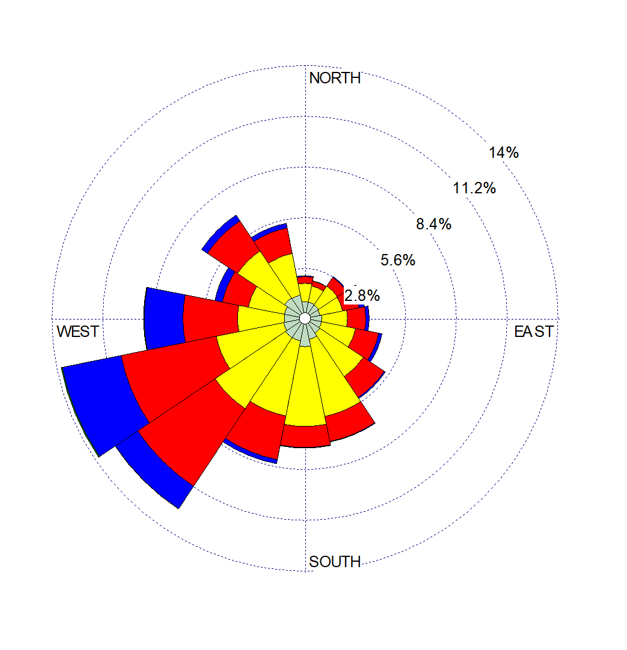
The windrose told an important story. Winds came predominantly from the west and southwest, shaping where emissions would travel and where maximum concentrations might appear. But wind alone was not enough. The terrain mattered too.
Using geospatial elevation data from Natural Resources Canada, Calvin Consulting processed surrounding topography through AERMAP. Hills, subtle elevation changes, industrial structures, and land use categories all influence how pollutants disperse. Air behaves differently over forests than over industrial yards. A valley can trap emissions. Buildings can pull plumes downward unexpectedly.
The Industrial Maze
So the air quality consultant-team built the world digitally, piece by piece.
Thousands of receptors were placed across the landscape. Some sat every 50 metres near the Facility. Others stretched outward to ten kilometres. Additional receptors surrounded predicted concentration hotspots at intervals of only 20 metres. Every possible area of concern had to be captured.
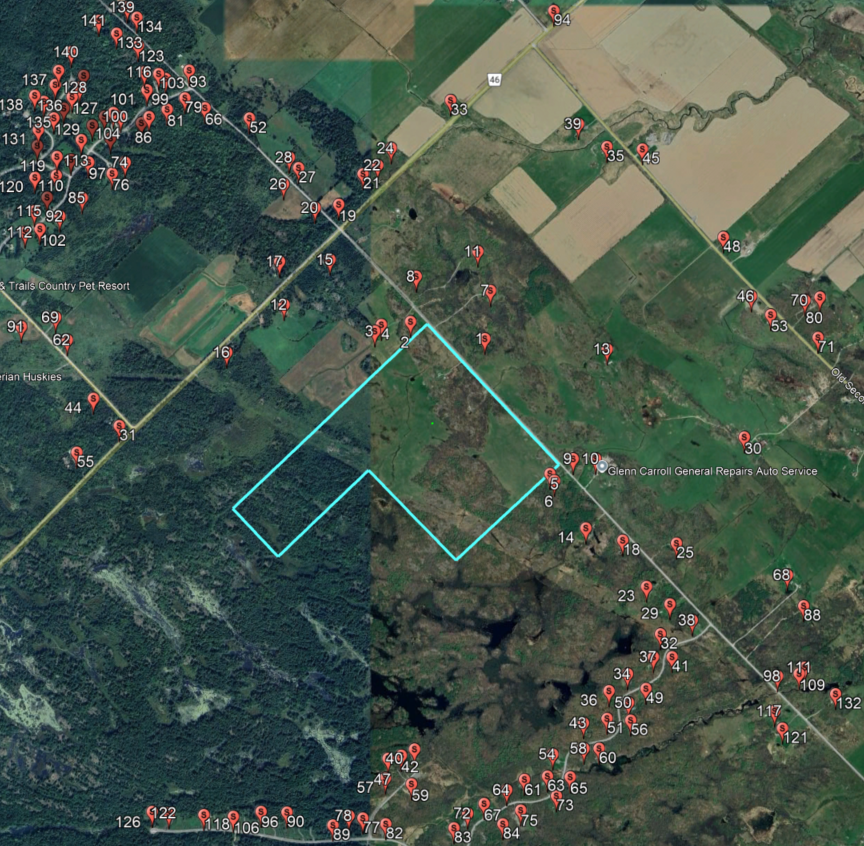 Future plant site and surroundings
Then came the harder realization. The Facility did not exist in isolation.
Within five kilometres stood a dense network of neighbouring industrial operations: refineries, chemical complexes, fertilizer plants, hydrogen manufacturing facilities, cogeneration units, petrochemical operations, flares, heaters, boilers, and stacks reaching over one hundred metres high. Each emitted its own share of NOx and SO₂ into the atmosphere.
Truth emerges from scenarios
The modelling would need to separate truth from assumption.
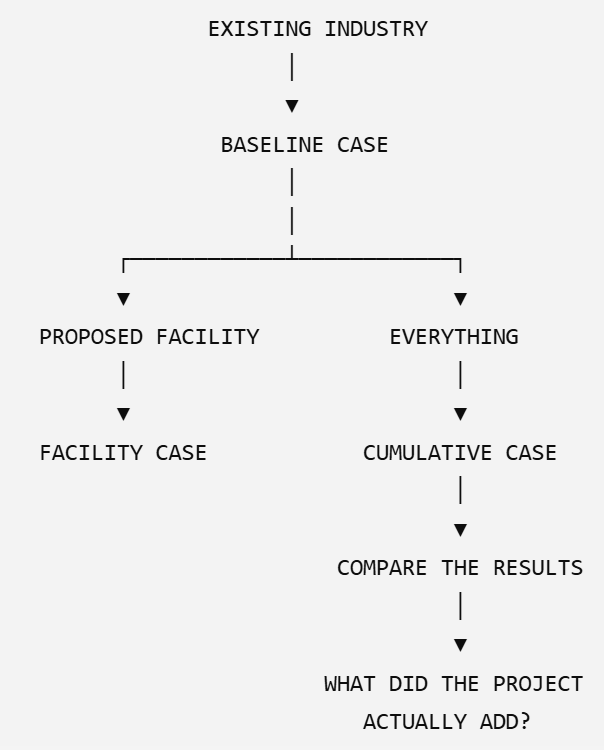
The air quality consultant established three separate scenarios. First came the Baseline Case: neighbouring industrial emissions without the facility itself. Second came the Facility Case: emissions from the target facility alone. Third came the Cumulative Case: everything combined.
The Facility emissions themselves appeared modest. Hot oil heaters and mole sieve regeneration heaters operated continuously, but sulphur dioxide emissions occurred only intermittently when sulphur-gas was combusted. Still, Alberta’s Air Quality Model Guideline demanded rigor.
NOx emissions had to be converted into NO₂ using the Plume Volume Molar Ratio Method built into the model. Background ozone concentrations had to be found and incorporated. Building downwash effects were calculated using client information and the U.S. EPA Building Profile Input Program. Roof heights, structures, heater locations, and neighbouring industrial buildings all influenced how plumes would behave.
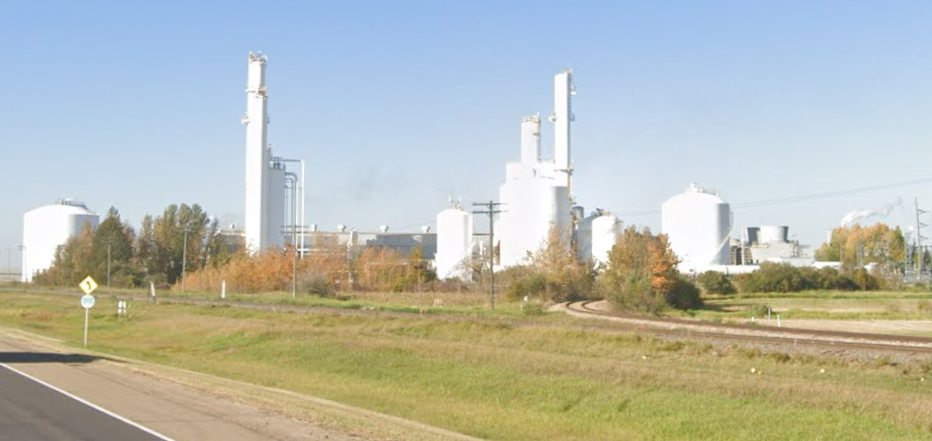 Consider our Neighbours
The modelling systems churned through immense combinations of meteorology, terrain, emissions, chemistry, and operating conditions.
Then the first results appeared. The Baseline Case produced predicted concentrations exceeding Alberta Ambient Air Quality Objectives. So, naturally, did the Cumulative Case.
That moment mattered. At first glance, exceedances can trigger alarm. Headlines form quickly around phrases like non-compliance. But experienced modellers know something important: context changes everything.
The Facility itself was not the primary driver...
What this looked like from our side
One of the easiest mistakes in an assessment like this is to look at a predicted exceedance and immediately associate it with the proposed project. Our job was to separate the facility's contribution from the existing industrial background. That distinction changed the interpretation of the entire assessment.
Tiny impact in a big system
When the air quality consultant isolated emissions from the Their Facility alone, the results told a completely different story. Predicted one-hour NO₂ concentrations were small, even after adding background concentrations. Annual concentrations remained dramatically below regulatory thresholds as well.
The same pattern emerged for sulphur dioxide. Even under conservative flaring assumptions — including six separate flare scenarios combined with simultaneous heater emissions — the Facility Case complied with all applicable Alberta Ambient Air Quality Objectives.
But the regional industrial environment told another story entirely, it seemed. When neighbouring industrial facilities were included, concentrations exceeded objectives under certain meteorological conditions. Massive industrial sources already operating throughout the region dominated cumulative concentrations. Large refineries, upgrader operations, fertilizer plants, and cogeneration units contributed the overwhelming majority of predicted impacts.
The key question became brutally precise: How much additional impact would the Facility create?
Tiny Impacts with Big Decisions
The answer emerged almost quietly... Less than one percent.
When Facility emissions were added to the already elevated regional baseline, predicted concentrations increased by less than 0.5% for NO₂ and less than 1% for SO₂. That changed the meaning of our entire assessment.
The Facility was not creating regional air quality problems. It was entering an industrial environment where existing neighbouring emissions already controlled cumulative outcomes. Under worst-case assumptions, the incremental contribution from the proposed expansion remained extremely small.
The science had done its job. But the story was larger than numbers on a spreadsheet.
Dispersion modelling matters because the results influence far more than air quality predictions. They shape regulatory approvals, industrial development, community confidence, environmental accountability, and millions of dollars in investment decisions.
Long before a facility is built, scientists and engineers may conduct atmospheric analysis, terrain processing, emissions estimation, and regulatory assessments to determine whether a project can move forward.
Most people never see this hidden layer of decision-making. They see the finished facility, not the years of technical work behind it.
Yet invisible emissions can have very visible consequences. A seemingly small release can trigger permitting delays, public concern, or regulatory action if it is misunderstood or improperly assessed. Conversely, sound dispersion modelling helps decision-makers distinguish real risks from perceived ones. This enables them to protect both environmental quality and public confidence while supporting responsible development.
In the end...
The conclusion was clear: the facility complied with Alberta’s air quality objectives.
Our cumulative assessment accounted for emissions from nearby industrial sources under the report’s required operating assumptions. Those existing sources dominated predicted regional concentrations, while the proposed facility expansion contributed only a negligible increase.
The winds crossing Alberta had not changed—but now their impacts were understood. The assessment showed where emissions travelled, how concentrations were distributed, and what the results meant.
With sound science replacing speculation, decisions could move forward with confidence and evidence.
With this example in mind you might be wondering these things:
A. What does an air quality consultant do?
We help companies understand, predict, and manage how their emissions affect air quality. This includes dispersion modelling, regulatory approvals, emission inventories, ambient monitoring advice, and compliance strategies. We do so...so you can operate legally and minimize impacts on neighbours and the environment.
An Alberta air quality consultant helps industrial operators answer questions such as:
- Will a proposed project meet Alberta's air-quality objectives?
- Where will emissions travel?
- What happens under worst-case meteorological conditions?
- How much does a new source contribute to existing regional concentrations?
- Do neighbouring industrial sources affect the result?
- Is AERMOD or CALPUFF appropriate?
- What monitoring or modelling does the regulator require?
- What does the modelling actually mean for the project?
B. Do I need one?
You likely need one if you are:
- Applying for or amending an EPEA approval or registration
- Proposing a new industrial facility, expansion, or process change
- Evaluating a flare or emergency release
- Facing complaints, enforcement, or ambient exceedances
- Required to submit an Air Quality Assessment under Alberta Environment and Protected Areas (AEPA) or AER rules
- Planning a facility near sensitive receptors (residences, schools, hospitals, or parks)
If your project involves combustion, oil & gas, power generation, manufacturing, or data centres with significant emissions, the answer is usually yes.
C. What problems can you solve?
- Predicting ground-level concentrations of pollutants (NO₂, SO₂, PM₂.₅, H₂S, other compounds with regulatory concentration limits.)
- Determining if your facility can meet Alberta Ambient Air Quality Objectives (AAAQOs, the regulatory concentration limits in Alberta)
- Designing stack heights, emission controls, or operating limits
- Supporting regulatory applications and responding to information requests
- Assessing cumulative effects or multi-source impacts
- Helping you avoid costly redesigns or approval delays
D. Do you understand Alberta regulations?
Yes. We work regularly with:
- Alberta Environment and Protected Areas (AEPA)
- Alberta Energy Regulator (AER)
- Alberta Ambient Air Quality Objectives
- Air Quality Model Guideline
- EPEA approval processes
- AER Directive 060 and related oil & gas requirements
We stay current with policy updates and regional approaches (e.g., Industrial Heartland, Peace Region, etc.).
E. Can you model my facility?
Yes. We can model continuous, intermittent, or upset emissions from stacks, flares, vents, fugitive sources, and mobile equipment using Alberta-accepted methods.
F. Can you deal with regulators?
Yes. We routinely prepare modelling reports for submission, respond to technical information requests, participate in meetings, and help navigate the approval process with AEPA or AER.
G. Can you help me before I spend money?
Absolutely. We offer assessments and feasibility reviews early in project design. This helps you understand potential constraints (stack height, emission limits, setbacks) before you commit to detailed engineering or equipment purchases.
H. What information do you need?
Typically:
- Facility layout and plot plan
- Emission source details (stacks, heights, diameters, temperatures, flow rates, emission rates)
- Operating scenarios (normal, maximum, upset)
- Nearby receptors and terrain
- Existing approvals or previous modelling (if any)
- Project timeline and regulatory pathway
We can start with incomplete information and refine as more data becomes available.
I. What models do you use?
Common Alberta-accepted models include:
- AERMOD (preferred for most industrial applications)
- CALPUFF (for complex terrain, long-range, or special cases)
- Specialized tools for flares, odour, carbon capture emissions or cumulative effects when required
All modelling follows the current Alberta Air Quality Model Guideline.
J. What does the deliverable look like?
A typical Air Quality Assessment report includes:
- Executive summary
- Source and emission inventory
- Modelling methodology and meteorological/terrain data
- Predicted concentrations compared to AAAQOs
- Tables, contour maps, and receptor results
- Discussion of uncertainties and recommendations
- Appendices with model input/output files
Reports are written for both technical reviewers and decision-makers.
K. When should I call?
Call early...ideally during concept or preliminary design. Early involvement is far cheaper than discovering modelling problems after detailed engineering or during the regulatory review.
L. What is a Typical Project Flow?
Need an Alberta air quality assessment?
at Calvin Consulting Group Ltd., we provide:
Technical Depth
Complex air quality challenges require more than software. We bring expertise in AERMOD, CALPUFF, AERMET/CALMET, terrain and land-use analysis, building downwash, cumulative source assessments, and Alberta regulatory requirements—supported by decades of dispersion modelling and monitoring experience.
Regulatory Understanding
A model is only useful if it supports a regulatory decision. We understand not just how to run the models, but how the results are evaluated within Alberta’s approval and compliance processes, helping clients reduce uncertainty and move projects forward with confidence.
Decision-Quality Reporting
Our assessments translate complex science into clear, defensible decisions. Every report includes transparent assumptions, professional graphics, concise tables, and practical conclusions that engineers, regulators, investors, and decision-makers can quickly understand and rely on.
The result: credible science, smoother approvals, and greater confidence in important project decisions.
Ask Barry about your project.

and get the answers you need before uncertainty costs you money.
Not ready to contact us? Start with our guide to Alberta air quality modelling.

Recent Articles


-
Energy and Environment: Persuading industry to care
Sep 15, 26 02:47 PM
 What's wrong with Alberta's energy and environment? International media criticize the province and its biggest industry almost every day. Here's the truth.
 -
AERMOD Air Quality Modelling in Alberta
Sep 14, 26 05:58 PM
 Can you tell me which air quality model works best for most Alberta Air Quality Model Guideline regulatory modeling? AERMOD. It's easy, versatile, and recognizable.
 -
Air Dispersion Model - What's an air model?
Sep 14, 26 02:13 PM
How do we help a factory control air pollution? Provide design feedback ahead of time using an air dispersion model.
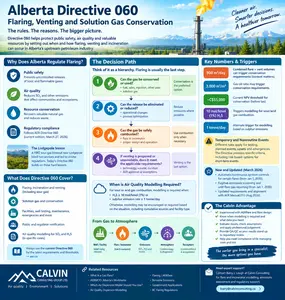
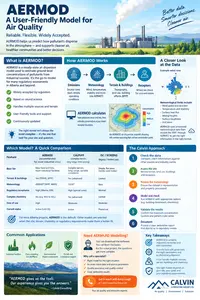
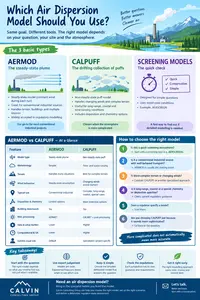
An industrial expansion in Alberta sparked a high-stakes investigation into air pollution, regulatory compliance, and invisible atmospheric risks.
Using advanced dispersion modelling, an air quality consultant tracked how Nitrogen Dioxide and Sulphur Dioxide moved across one of Canada's most industrialized regions. Everyone was surprised by the results.
While the facility itself complied with Alberta's strict standards, surrounding industrial operations had the biggest impact. This story shows how modern environmental science quietly shapes billion-dollar decisions through terrain analysis, meteorological modelling, flaring scenarios, and thousands of virtual receptors. Part engineering thriller, part environmental detective story, and all real.
We show you how an Alberta air-quality problem gets solved.
Air quality consulting isn't about running a model. It's about finding the answer hidden inside the model.
Do you have concerns about air pollution in your area??
Perhaps modelling air pollution will provide the answers to your question.
That is what I do on a full-time basis. Find out if it is necessary for your project.
Have your Say...
on the StuffintheAir facebook page
Other topics listed in these guides:
The Stuff-in-the-Air Site Map
And,
Thank you to my research and writing assistants, and the author remains responsible for the content.
Alberta Air Quality Consultant - Quick Reference
Need to...
Model emissions? AERMOD / CALPUFF
Choose monitoring locations? Monitoring assessment
Demonstrate compliance? Regulatory assessment
Understand cumulative impacts? Multi-source modelling
Evaluate a flare? Flare modelling
Respond to regulators? Technical/regulatory review
Prepare an approval? Air quality assessment
Understand the AMD? AMD guide
Understand Alberta modelling requirements? Alberta modelling guideline
- Home
- Contact Us
- Free E-zine Back Issues
- Privacy Policy
- Site Map - I'll help find something good.

By Barry Lough, P.Met., EP (Environmental Professional)
Text copyright © 2003-2026 Stuff in the Air.com
BACK TO TOP - Hit your 'Home' Key