- Air Homepage
- Upper Atmosphere
- Atmosphere Layers
How many atmosphere layers are there?
Like an onion, atmosphere layers surround the earth.
See more about the atmosphere.
From weather to space: The Five Layers of the Atmosphere - Did you know the planet's atmosphere has five distinct layers, where the temperature can plunge and soar? Discover the hidden vertical world above your head, from the troposphere where the weather happens to the thin exosphere that blends into space.
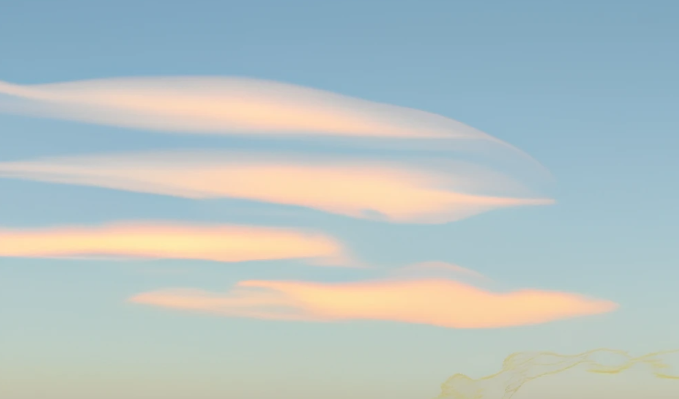
You might be interested in meteorology and air quality if you ask about atmospheric layers:
- Understanding Weather Patterns: Meteorology studies weather and its processes. The different atmospheric layers and how they affect weather patterns can be understood by learning about meteorology. These layers can influence clouds, precipitation, and other weather phenomena by interacting with temperature, pressure, humidity, and wind.
- Understanding Atmospheric Dynamics: Knowing meteorology helps individuals understand complex interactions in the atmosphere. In this class, you'll learn about atmospheric circulation patterns, jet streams, and the influence of different air masses. Weather systems and their movement across different layers of the atmosphere can be better understood by understanding these processes.
- Air quality is closely related to meteorology since it looks at the composition and condition of the air we breathe. Understanding the atmospheric layers can help you figure out how pollutants disperse and interact. A person interested in air quality can learn about vertical distribution of pollutants, atmospheric stability, and weather conditions.
- Meteorology and air quality play a big role in understanding environmental impacts. Individuals can use this knowledge to understand climate change, natural disasters, and human activities. People can help the environment by studying meteorology and air quality.
- Careers and academic pursuits: Meteorology and air quality offer career opportunities and academic research prospects. A comprehensive understanding of atmospheric layers, meteorological processes, and air quality concepts is needed for meteorologists, atmospheric scientists, environmental consultants, and researchers.
Atmospheric layers differ in their characteristics and functions.
Moving outward from the Earth's surface, here are the five primary layers:
- The troposphere is the layer closest to the Earth's surface, extending up to an average height of 12 kilometers (7.5 miles) at the equator and 8 kilometers (5 miles) at the poles. Most of Earth's weather happens here, and the temperature decreases with altitude. Approximately 75% of the Earth's atmosphere is in the troposphere.
- The stratosphere stretches from about 12 kilometers (7.5 miles) to 50 kilometers (31 miles) above the Earth's surface. It's home to the ozone layer, which protects the Earth from ultraviolet radiation. Ozone absorbs solar radiation, so the temperature in the stratosphere rises with altitude.
- Mesosphere: The mesosphere is above the stratosphere, about 50 kilometers (31 miles) to 85 kilometers (53 miles) above the surface. Meteors burn up in the mesosphere when they enter Earth's atmosphere because the temperature decreases with altitude.
- The thermosphere is above the mesosphere, extending from 85 kilometers (53 miles) to 600 kilometers (373 miles) high. As a result of solar radiation absorption, the thermosphere can get up to 2000°C (3600°F). This layer of the atmosphere is where the International Space Station orbits.

- Earth's exosphere extends from about 600 kilometers (373 miles) to 10,000 kilometers (6214 miles) above its surface. There's a thin layer of air here, and it gradually blends into space's vacuum. Also, the exosphere is where the Earth's magnetic field interacts with the solar wind.
Remember this?...
…“Ogres are like Onions – Layers!”
~Shrek
Life on Earth depends on each layer of the atmosphere.
In this sense, does this green guy and Earth's blanket, the atmosphere, resemble those vegetables? You bet. By the way, our Earth, Moon, and Sun all have layered interiors as well.
In the same order, each layer of the atmosphere lies above all parts of the world. Like the planet itself, each one looks like an oblate spheroid (resembling a flattened beach ball once you sit on it). Over some regions, it'll be deeper than others. They're all concentric, though.
What if you went far enough straight upwards? You'd ascend through the troposphere, stratosphere, mesosphere, and thermosphere. It doesn't matter where on the ground you start.
What's the deal with the upper atmosphere layers?
If you're a pilot, you'd care. Or if you're a meteorologist. You'd be interested in what's going on in the sky. Aviation weather services are centered on this undertaking.
There are three dimensions to the atmosphere. To fully understand it, you need complicated computer models and atmospheric diagrams.
What is the purpose of continuous research and modelling of upper air flow? It's because elevated airflow affects what happens down here. Here's a quick rundown:
The upper part of our atmosphere is always being studied by scientists. This helps them understand how it affects air movement and weather. Weather forecasters and climatologists use this info to predict what the weather will be like and how our climate will change. To see how everything fits together and what might happen next, it's like putting together a puzzle!
Weather systems like low-pressure systems, high-pressure systems, and jet streams are affected by upper air flow. Researchers can identify atmospheric features like ridges and troughs that can lead to weather disturbances and extreme weather events like heat waves, droughts, and floods by studying upper air flow patterns.
For aviation and air traffic management, understanding upper air flow is crucial. As I hinted above, it's important for pilots and air traffic controllers to know about upper air winds and turbulence.
Our goal is to improve our understanding of the Earth's atmosphere and how it affects us through continuous research and modeling. With a better understanding of the upper atmosphere, we can make better weather forecasts, mitigate the effects of extreme weather events, and make air travel safer.
Atmosphere pictures
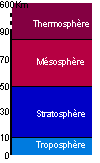
As previously noted, we've got the troposphere, stratosphere, mesosphere, and thermosphere above us. On the left side of this drawing, you can see distances above the earth in kilometers. About 11 kilometers up is the troposphere, the closest layer to Earth. The stratosphere starts after that and goes up to 50 kilometers. After that, the mesosphere then starts and goes up to 80 kilometers. From there up to about 600 kilometers away is the thermosphere, the farthest layer.
The air flows in a nearly frictionless path in the higher atmosphere layers. We make simpler and more accurate predictions at higher elevations because of these near ideal conditions called geostrophic flow. The standard atmospheric pressure levels are given in millibars in the text below. A millibar is about one thousandth of the air pressure at the planet's surface.
In geostrophic flow, the Coriolis effect (a phenomenon that makes air seem to flow in a curve) equals other forces, putting them in balance. The air can flow in a straight line with very little friction. When the air gets higher in the atmosphere, the Coriolis effect decreases while the pressure gradient force stays the same, so there's almost no friction, no turbulence or "noise". At higher altitudes, we can make better predictions because of this.
Air Pressure Science:
1000 millibars (mb) = 100 kiloPascals (kPa) = 14.50 pounds per square inch (psi) and 29.53 inches of mercury. That is approximately 99% of the average air pressure at sea level.
The pressure drops as you go up. These approximate heights above sea level (ASL) illustrate the inverse altitude-atmospheric pressure relation:
1000 mb ~ 360 feet (110 m)
850 mb ~ 5000 feet (1500 m)
700 mb ~ 10,000 feet (3000 m)
500 mb ~ 18,000 feet (5400 m)
250 mb ~ 34,000 feet (10,200 m)
There's one thing, though. There are different heights for these atmosphere layers depending on where you are in the world, the current weather system, and the season.
By subtracting these heights, we can find the difference in heights between two pressure levels - LAYER THICKNESS.
Why is thickness important?
A layer's thickness is proportional to its average temperature. Meteorologists use virtual temperature, which is humidity-corrected.
Temperature and thickness can be compared in a conversion table. Weather forecasters draw a map with lines of equal thickness and interpret them like isotherms, lines of equal temperature.
These lines crowd together in areas called baroclinic zones, which is where storms form. Changes in temperature, stability, wind shear and precipitation then become more predictable.
Towards the top of the troposphere, the pressure drops to about 20% of the surface pressure.
This layer is the most important to meteorologists. At the top of the troposphere is the tropopause, which separates the troposphere from the stratosphere. In a way, it's like a skin, defining the vertical transition between two very different regions.
Overall, learning about meteorology and air quality in the context of atmospheric layers provides a foundation for understanding weather patterns, studying atmospheric dynamics, assessing air pollution, understanding environmental impact, and pursuing related career paths.
Go back from Atmosphere Layers to the Chasing Storms web page. Or you can Search this site for more information now.
Recent Articles


-
The Telegraph
Feb 01, 26 06:23 PM
 A spark that woke up the world - Imagine holding a tiny spark that can send a message across the ocean or predict a giant storm before it even happens.
 -
Robotic Future
Jan 30, 26 10:21 PM
 Ghosts, gears, and gasses in the Robotic Future - The truth feels weirder than a movie about robots taking over the world. Some machines don't just sit
 -
Ways To Use Sunpower Everyday
Jan 30, 26 12:24 AM
 Here's the Ultimate Free Cheat Code for Sunpower - Join the secret club of hackers who are smarter than their teachers and stop paying for stuff the sky


Are you aware of what is above your head?
Multiple layers of the atmosphere and a vertical profile. As explained in this article, air is arranged horizontally.
Do you have concerns about air pollution in your area??
Perhaps modelling air pollution will provide the answers to your question.
That is what I do on a full-time basis. Find out if it is necessary for your project.
Have your Say...
on the StuffintheAir facebook page
Other topics listed in these guides:
The Stuff-in-the-Air Site Map
And,
Thank you to my research and writing assistants, ChatGPT and WordTune, as well as Wombo and others for the images.
OpenAI's large-scale language generation model (and others provided by Google and Meta), helped generate this text. As soon as draft language is generated, the author reviews, edits, and revises it to their own liking and is responsible for the content.

By Barry Lough, P.Met., EP (Environmental Professional)
Text copyright © 2003-2024 Stuff in the Air.com
BACK TO TOP - Hit your 'Home' Key
New! Comments
Do you like what you see here? Please let us know in the box below.