- Air Homepage
- Air Quality Modelling Service
- Air Quality Modeling
- Air Quality Assurance
Air Quality Assurance and Choosing the Right Emission Scenarios for Dispersion Modelling
The highest emission rate is not always the worst air quality case. Air quality assurance begins long before an air quality monitor records a concentration or a dispersion model produces its first contour plot.
It begins with a deceptively simple question: - What operating conditions should we actually model?
 Find fresh-air environmental consulting
An industrial facility does not always operate at one constant emission rate. Production changes. Equipment starts and stops. Exhaust temperatures and flow rates vary. Some sources operate intermittently. A facility may emit more pollutant under one condition but disperse it better because the exhaust is hotter or faster.
That creates an important modelling problem. The scenario with the highest emission rate is not necessarily the scenario that produces the highest ground-level concentration.
Good air quality assurance therefore requires more than finding the largest number in an emissions inventory and putting it into a dispersion model. It requires understanding the facility, the emissions, the source characteristics, the atmosphere, and the regulatory purpose of the assessment.
This page explains how emission scenarios are selected for industrial air quality dispersion modelling and how the approaches used in British Columbia, Alberta, and Saskatchewan can help guide the process.
What is air quality assurance?
In the context of industrial air quality modelling, air quality assurance means building enough confidence that a facility's emissions have been assessed under the operating conditions that matter.
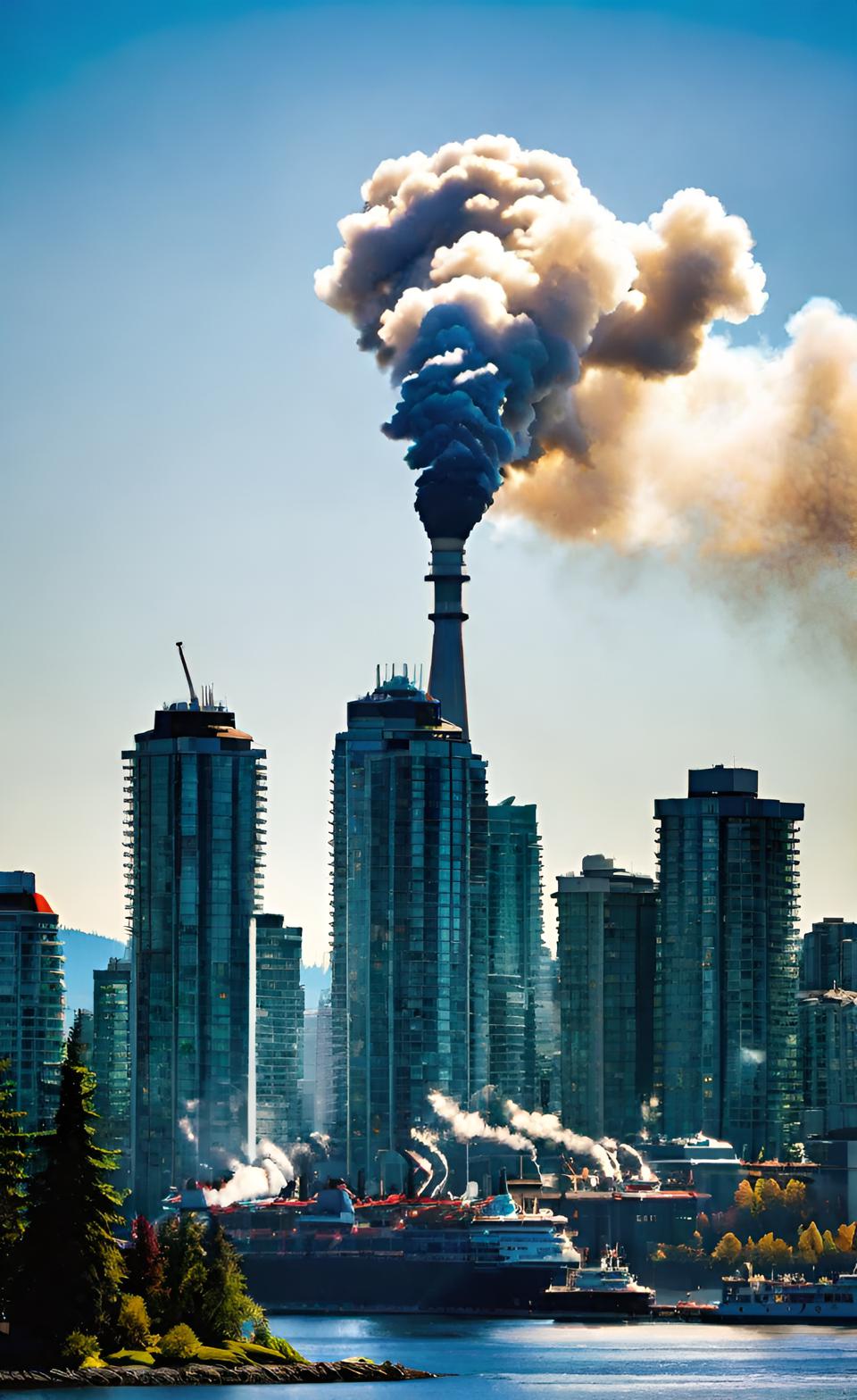 Situations you don't want to happen
Think we could model every imaginable event? That would be impossible.
The goal is to identify the credible and relevant emission scenarios that could affect compliance with applicable air quality objectives and standards.
And depending on the facility and the regulatory requirements, those scenarios may include:
- normal operation;
- typical operation;
- maximum operation;
- reduced production;
- startup;
- shutdown;
- intermittent operation;
- flaring or venting;
- planned maintenance;
- reasonably foreseeable upset conditions; and
- annual-average operating conditions.
The appropriate scenarios depend on the project.
A new facility may require design estimates. An existing facility may have historical operating information, emissions inventories, continuous monitoringdata, stack tests or approval limits.
The modeller's job is to turn that information into a set of scenarios that is technically defensible and appropriate for the assessment.
So let's start with the real question...
What could produce the highest concentration?
It is tempting to assume that the worst air quality case occurs when a facility emits the greatest amount of pollutant.
Sometimes it does. Sometimes it does not.
 Assess startup, shutdown, and malfunctions
Imagine two operating conditions. During full production, a source emits a relatively large amount of pollutant. However, the exhaust is hot and leaves the stack quickly. The plume rises before it begins to mix with the surrounding air.
At reduced production, the emission rate is lower. But the exhaust may also be cooler, slower or have a lower volumetric flow rate. The plume may rise less.
Under the right atmospheric conditions, the lower-emission case could produce a higher ground-level concentration. This is why experienced air quality modelling involves looking at the combination of:
- pollutant emission rate;
- exhaust temperature;
- exit velocity;
- volumetric flow rate;
- stack dimensions;
- source height;
- building downwash;
- operating schedule; and
- atmospheric conditions.
A model can calculate the result. But the modeller first has to decide what is worth calculating.
A practical framework for air quality assurance
When selecting emission scenarios, we generally begin by asking a series of questions.
1. What does normal operation look like?
Determine the representative operating condition for the facility or source. For an existing facility, useful information may include:
- emissions inventories;
- recent operating records;
- stack testing;
- continuous emissions monitoring;
- production information; and
- engineering data.
For a proposed facility, information may come from:
- process design;
- equipment specifications;
- engineering calculations; or
- accepted emission factors.
Normal operation is particularly important for longer-term assessments, such as annual average concentrations.
2. Is there a credible maximum-emission scenario?
A maximum emission rate can mean several different things. It might be:
- the maximum design emission rate;
- the maximum normal operating rate;
- a regulatory or approval limit;
- a historically observed maximum;
- a short-term upset rate; or
- the highest rate physically possible under a particular operating condition.
 Keeping Saskatchewan's communities safe
These are not necessarily interchangeable. For example, an approval limit may represent the upper boundary of what is permitted rather than what normally occurs.
Before using a maximum value in an air quality model, it is worth understanding what that maximum actually represents.
3. Does changing the operating rate also change dispersion?
This is one of the most important questions in scenario selection. A source operating at reduced capacity may have:
- lower emissions;
- lower exhaust temperature;
- lower exit velocity;
- lower volumetric flow; or
- reduced plume buoyancy.
Those changes can affect plume rise and ground-level concentrations. For that reason, it can be useful to compare more than one operating level.
A screening assessment may examine conditions such as:
- 25% capacity;
- 50% capacity;
- 75% capacity; and
- 100% capacity.
Rather than create unnecessary model runs, the purpose is to determine whether the apparently obvious worst case really is the worst case.
The Scenario Selection Test
A useful way to think about air quality assurance is to apply the following test to each important source or operating condition.
Is this a normal operating condition? If yes, determine the representative emission rate and source parameters.
Is there a higher credible emission condition? If yes, determine whether it differs significantly from normal operation.
Does that condition change plume rise or dispersion? Consider changes in:
- temperature;
- velocity;
- flow;
- stack operation; and
- source configuration.
If these parameters change, the highest emission rate may not automatically produce the highest concentration.
Is the condition temporary? Consider whether startup, shutdown, maintenance, flaring, venting or another intermittent activity requires separate assessment.
Is the event reasonably foreseeable and sufficiently defined? Some events can be characterized using engineering information and operating procedures.
A completely undefined failure cannot necessarily be represented as a meaningful deterministic dispersion scenario. However, foreseeable relief, venting, flaring, upset or emergency conditions may be assessable when sufficient information is available.
What averaging period matters? A short-duration event may be important for a one-hour objective but have little effect on an annual average.
What do the applicable guidelines require? Finally, the modelling approach must be consistent with the regulatory requirements applicable to the project.
Air Quality Assurance in British Columbia
British Columbia's air quality modelling guidance recognizes that emissions can vary over time and that operating conditions need to be considered when assessing potential air quality impacts.
Normal and maximum operating conditions - For proposed sources, maximum expected emissions during normal operation may be used for compliance assessment.
However, determining the appropriate operating scenario can require more thought than simply selecting the largest emission rate.
Reduced capacity can sometimes reduce plume rise or change source characteristics enough to increase ground-level concentrations. Where this is possible, multiple operating conditions may need to be considered.
- A screening approach can be useful for comparing different production levels and identifying which combination of emissions and source parameters produces the highest predicted concentrations.
- Startup, shutdown, and abnormal operation
- Startup and shutdown conditions may have different emission characteristics from routine operation.
Where those conditions are relevant to air quality objectives, they may require separate consideration. The important distinction is between:
- expected operating conditions;
- planned temporary conditions;
- reasonably foreseeable upset conditions; and
- completely undefined failures.
The further a scenario moves away from a defined and credible operating condition, the more important it becomes to clearly explain the assumptions used.
Reconstructing an event - Air quality modelling can also be used to investigate a past event.
In those cases, actual or estimated emissions may be developed using information such as:
- continuous monitoring;
- stack testing;
- equipment specifications;
- process information; and
- other available operating data.
The purpose is different from demonstrating future compliance. Instead, the assessment attempts to reconstruct what may have occurred under the conditions that actually existed.
Ensuring Air Quality in Alberta, from Normal Operation to Shutdown
Alberta provides detailed guidance for determining the emission scenarios used in air quality assessments.
The first step is generally to understand the purpose of the assessment. Are you modelling:
- a proposed facility;
- an approval renewal;
- a facility modification;
- an expansion;
- normal operation;
- maximum permitted operation; or
- a temporary or non-routine event?
The answer affects the emission information that should be considered.
Normal and typical emissions - For existing facilities, emission information may be based on sources such as Alberta's Annual Emissions Inventory Report requirements and facility operating information. For proposed facilities, emissions may be estimated using:
- engineering calculations;
- process design information;
- equipment specifications; or
- appropriate emission factors.
Typical operating emissions can be particularly important when calculating longer-term concentrations.
For example, an annual average concentration should generally represent realistic long-term operation rather than assuming that every source operates continuously at an unlikely short-term maximum.
Maximum emissions and short-term concentrations - Short-term assessments may require examination of higher emission conditions. However, the modeller still needs to ask:
Is this a realistic combination of emissions and operating conditions?
A facility may have several sources, each with an individual maximum emission rate. That does not necessarily mean all sources can physically operate at their maximum rates at the same time.
On the other hand, if simultaneous maximum operation is credible or required by the applicable regulatory framework, it may need to be assessed. The assumptions should be transparent.
A useful assessment does not simply produce a conservative answer. It explains why the selected scenario is appropriate.
Startup, shutdown, and malfunction scenarios - These events need to be distinguished.
Startup and shutdown:
These are generally planned or expected activities with known or estimable operating procedures. Their emissions, duration, and source characteristics may differ substantially from normal operation.
Upsets and malfunctions:
These may be less predictable. Some may still be sufficiently well understood to allow a representative scenario to be developed. Others may be too poorly defined to model meaningfully as a deterministic case.
The important question goes beyond: "Can something go wrong?"
Almost anything can...The more useful question is: "Is there a reasonably foreseeable condition with enough technical information to define an emission scenario and assess its potential air quality impact?"
That distinction can prevent both under-modelling and unnecessary modelling.
Saskatchewan's Air Quality Toolbox and the Art of Selecting Emission Scenarios
Saskatchewan's approach also requires consideration of the conditions that could reasonably affect predicted concentrations.
A conservative maximum-emissions scenario may assume simultaneous high operation where appropriate. However, variable and intermittent sources may require separate consideration. Important questions include:
- Does the source operate continuously?
- Does it operate only during certain activities?
- Does startup or shutdown significantly change emissions?
- Does a malfunction create a reasonably foreseeable high-emission condition?
- Would the scenario be important because of its location near communities or other sensitive areas?
Not every unusual event automatically needs a separate model run. But a scenario should not be dismissed simply because it occurs infrequently.
The duration, magnitude, likelihood, regulatory requirements, and relevant averaging periods all matter.
One facility can require several different scenarios
There is rarely one universally correct model run. A facility might require a combination such as:
Scenario
Purpose
Typical operation
Representative longer-term concentrations
Maximum normal operation
Short-term compliance assessment
Reduced-load operation
Evaluate reduced plume rise or changed source characteristics
Startup or shutdown
Assess temporary conditions with different emissions
Flaring or venting
Evaluate defined intermittent releases
Specific foreseeable upset
Assess an identifiable abnormal operating condition
The appropriate combination depends on the facility and regulatory requirements. The important principle is this:
The model should represent the conditions capable of producing the impacts you are trying to assess.
The model calculates. The difficult part is deciding what to model.
Modern dispersion models can perform an enormous number of calculations.
AERMOD, CALPUFF, and other models can evaluate concentrations for thousands of hours and receptors. But the model does not know:
- whether 100% production is realistic;
- whether a lower-load condition reduces plume rise;
- whether two sources can operate simultaneously;
- whether a startup scenario matters for the applicable air quality objective;
- whether an approval limit represents normal operation;
- or whether a temporary release is sufficiently defined to model.
Those decisions require professional judgment. They require an understanding of:
- industrial processes;
- emission inventories;
- stack and source characteristics;
- atmospheric dispersion;
- regulatory requirements; and
- the purpose of the assessment.
That is where air quality assurance becomes more than simply running software.
How Calvin Consulting approaches air quality assurance
At Calvin Consulting Group Ltd., our approach begins before the model is run. We work with available information from:
- process engineers;
- facility operators;
- emissions specialists;
- environmental managers;
- equipment specifications; and
- regulatory requirements
...to determine which operating conditions should reasonably be assessed. We then examine how changes in operation may affect both:
- the amount of pollutant emitted, and
- the way that pollutant disperses.
That distinction is important.
Sometimes the answer is straightforward. Sometimes a screening analysis shows that one operating condition clearly controls.
And sometimes the apparently obvious maximum case is not the case that produces the highest ground-level concentration.
Our objective is not to create the greatest possible number of model runs. It is to develop an assessment that is:
- technically defensible;
- appropriate for the facility;
- consistent with applicable regulatory requirements;
- clear about its assumptions; and
- useful for making real project decisions.
That can include identifying practical options before they become expensive problems. For example, scenario modelling may help determine whether changes to:
- stack height;
- exhaust temperature;
- exit velocity;
- operating procedures;
- source location; or
- emission controls
could improve predicted air quality performance. Let us assess your situation.

Need help deciding what to model?
If you are planning a new industrial facility, modifying an existing operation, preparing an approval application or trying to determine which emission scenarios require air quality modelling, Calvin Consulting Group Ltd. can help assess the available information and develop a practical modelling approach.
Clean air is our Passion...Regulatory Compliance is our Business.
Early involvement can be particularly valuable when:
- a project is still being designed;
- maximum and normal emissions are substantially different;
- operating conditions change stack parameters;
- startup or shutdown emissions are significant;
- multiple facilities or sources may interact;
- flaring or venting is involved;
- an approval application or amendment is being prepared; or
- there is uncertainty about which regulatory scenario should be modelled.
It is usually easier to evaluate scenarios while engineers still have options than after a design has been finalized.
Recent Articles


-
Energy and Environment: Persuading industry to care
Sep 15, 26 02:47 PM
 What's wrong with Alberta's energy and environment? International media criticize the province and its biggest industry almost every day. Here's the truth.
 -
AERMOD Air Quality Modelling in Alberta
Sep 14, 26 05:58 PM
 Can you tell me which air quality model works best for most Alberta Air Quality Model Guideline regulatory modeling? AERMOD. It's easy, versatile, and recognizable.
 -
Air Dispersion Model - What's an air model?
Sep 14, 26 02:13 PM
How do we help a factory control air pollution? Provide design feedback ahead of time using an air dispersion model.
Common mistakes when selecting modelling scenarios
1. Modelling only the highest emission rate
The highest mass emission rate may not produce the highest ground-level concentration.
Changes in plume rise can matter.
2. Assuming every source operates at maximum simultaneously
This may be appropriate in some assessments.
In others, it may create a physically unrealistic scenario.
The assumption should be examined and documented.
3. Using an approval limit without understanding what it represents
An approval limit may be the appropriate modelling rate.
But first determine whether it represents:
normal operation;
a short-term maximum;
an upset allowance; or
another regulatory condition.
4. Ignoring reduced-load conditions
Lower production can sometimes mean lower stack temperature, velocity or buoyancy.
That can reduce plume rise.
5. Treating all averaging periods the same way
A one-hour event and a year of operation should not necessarily be represented by the same assumptions.
6. Trying to model an undefined accident
A completely unknown event cannot always be represented meaningfully.
Where a credible scenario exists, define it.
Where one does not, explain the limitation rather than creating a fictional level of precision.
7. Failing to explain professional judgment
The assumptions used to select scenarios can be as important as the model output.
A good air quality assessment explains why important scenarios were included, excluded or treated separately.
Do you have concerns about air pollution in your area??
Perhaps modelling air pollution will provide the answers to your question.
That is what I do on a full-time basis. Find out if it is necessary for your project.
Have your Say...
on the StuffintheAir facebook page
Other topics listed in these guides:
The Stuff-in-the-Air Site Map
And,
Thank you to my research and writing assistants, and the author remains responsible for the content.
The bottom line
Air quality assurance is not achieved by automatically modelling the biggest emission rate available.
A credible assessment asks:
- What conditions can realistically occur?
- Which of those conditions could produce the highest concentrations?
- How do changes in emissions affect plume rise and dispersion?
- Which scenarios matter for the applicable averaging periods and air quality objectives?
- What does the regulatory framework require?
Answering those questions well is an important part of air quality dispersion modelling.
The software can calculate concentrations.
Choosing the right scenarios is where experience, physics, engineering information, and professional judgment come together.
Most Popular Pages on this Website:
Pictures of Global Warming
- See photos, cartoons, charts, graphs and a few surprises.
Clouds
- Don't know a cumulus from a stratus? Check here.
Causes of Global Warming
- It's not always obvious.
Calgary Alberta Weather
- Example of Canadian Goodness.
Thermometers
- Our favourite weather instrument.
- Home
- Contact Us
- Free E-zine Back Issues
- Privacy Policy
- Site Map - I'll help find something good.

By Barry Lough, P.Met., EP (Environmental Professional)
Text copyright © 2003-2026 Stuff in the Air.com
BACK TO TOP - Hit your 'Home' Key