The Science of Meteorology Online
How permanent is a permanent marker on fabric?
by Anya
(W,Y)


Choose your weapon!
Can you beat a permanent marker? - Do you think that ink stain on your favorite shirt stays there forever? Let's see how chemistry breaks the rules and why nothing sticks in nature.
Anya says: I did this in third grade I took markers and different types of detergents and first I took the fabric and put marker on it then tested it with different detergents.Barry's Response - Interesting premise, for sure. And one with good commercial potential as well. Did any of the detergents remove the marker effectively? Were some markers better than others? Thanks for the idea, Anya.
What if you have a real problem with marker ink in an unwanted area. It just might not come off without some special effort.
For some types of pen, WD40 might just do what you need. Prepare to use a good amount, and have paper towels handy for post cleanup. Spray the lubricant into the towel and work into the affected area using a circular motion, sorta like "wax on...wax off". You might need more to dilute it even further.
Use a second rag to remove the oil and colour residue. One more thing: test this method in a small hidden area first if using this technique on a sensitive item such as clothing, carpets or furniture. This is just to be sure no greater damage results.
Search this website for more scientific information now.
Stains, storms, and secret science in The Ink Link
In the world of chemistry and meteorology, permanent is just a dare.The Chemistry of the Permanent Lie Anya trapped pigment inside a polymer when she smeared that ink on fabric. Most detergents don't work because they can't break the bond. I suggested WD40 heremore . Why? Like dissolves like. As a solvent, WD40 loosens ink's grip.
That's how Air Quality works. As a consultant, I track VOCs, the same stuff that makes markers smell sciencey. These chemicals evaporate, climb into the atmosphere, and dance with the clouds. The sky has its own detergent: rain. We worry that these pollutants will stay permanently.
It's a climate counter-narrative
...the sassy version. Every change we make to the planet is a permanent stain, says the mainstream crowd. There's a picture of a world collapsing. Look at the math! It's like a giant, self-cleaning gallon jug. The atmosphere expands, contracts, and reacts just like hot water.Skeptics and conservatives say the aquatic environment (our oceans) can absorb almost anything, while others like the idea that seed time and harvest shall never cease, but I say let's look at the numbers. We're not dealing with a delicate piece of silk here; we're dealing with a rugged, regenerating engine. Definitely stop dumping ink (pollution) into the air, but we should also stop acting like the Earth can't handle it.
Atmospheric Scrub: A Revolutionary Idea What if we didn't just monitor air quality, but cleaned it using Anya's logic? Drones telegraph data to a hub then release harmless, biodegradable detergent mists into smog layers to bond with pollutants and drop them safely. The sky could be washed.
Anya and the Crew's Expanded Response Your third-grade self stumbled upon something big. The word permanent was yours to challenge. If you test How permanent is a permanent marker on fabric?...you're actually studying persistence.
Don't just wash the fabric if you want to win that science fair. Measure the solvent's evaporation rate. Calculate the detergent's surface tension. Prove why the ink loses its hold with math.
What about the rest of you? Make sure your brain doesn't get stained by the doom narrative. Maybe ideas are the only things that should be permanent, whether you like the logic of economy or the empathy of environmentalism. Make sure the models are right. Keep an eye out for the markers (but don't get too close). Make a yardstick-breaking machine.
Curious, defiant, and not afraid to get ink on their hands, science belongs to you.
The Permanent Truth - The Grand Finale
Back to the big question: How permanent is a permanent marker on fabric? The consensus crowd loves to scare you with the word permanent. Some people say the climate is permanently broken or stains are forever. Permanent is a human lie.We're disrupting everything Permanent markers stay put because their ink is hydrophobic. They just slide off because most detergents use water as a base and a solvent that speaks the language of ink when such as WD40 or rubbing alcohol might provide extra help with cleanup. Solvent shatters the ink's grip, dissolves the polymers, and carries away the pigment.
There's a giant shirt in the sky Pollution affects the Earth the same way. The mainstream narrative says our ink (CO2 and emissions) will last forever. But the planet uses a lot of natural detergents. Carbon is absorbed by the ocean, and plants love it. As much as we should be responsible and keep our fabric clean - after all, air quality consulting exists for a reason — we shouldn't think that we've caused permanent damage.
Here's a revolutionary idea What if clothes cleaned the air? Imagine a shirt where the fibers act as catalysts. Instead of a permanent stain, the fabric could absorb VOCs from the smoggy city air and turn them into salts. You wouldn't just be wearing a hoodie; you'd be purifying the air!
Here's why you should experiment
Whether you value the environment or want to protect every lily in the pond, science unites us. Math measures the world, music celebrates it, and jokes keep us from getting too grumpy.Finally...Don't let the word permanent hold you back. Grab some chemistry and fight back if a marker ruins your shirt. You can question a settled science headline if it ruins your mood. Curiosity is the only thing that should last.
Does this make you want to raid the laundry room? Do you think some stains, and some environmental changes, are forever? Make a comment below and let's start a debate that would make a Junior High science fair look like a nap! How about I show you how to calculate the saturation point of your favorite detergent?
How do you feel about this?
Anya found the ultimate detergent, or is some ink just destined to stay? What do you think of the permanent labels on markers and climate maps? Tell me what you've destroyed that's permanent.Do you want me to make a step-by-step Atmospheric Detergent experiment you can do at home?
Comments for How permanent is a permanent marker on fabric?
|
||
|
||
|
||
|
||
|
||

Recent Articles


-
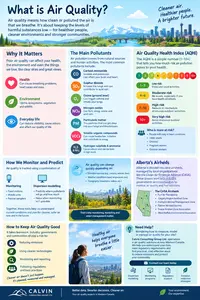
What is air quality and how can we fix it?
Sep 16, 26 11:19 AM
 What is air quality? How do you define good air quality? It's just the opposite of air pollution.
 -
Energy and Environment: Persuading industry to care
Sep 15, 26 02:47 PM
 What's wrong with Alberta's energy and environment? International media criticize the province and its biggest industry almost every day. Here's the truth.
 -
AERMOD Air Quality Modelling in Alberta
Sep 14, 26 05:58 PM
Can you tell me which air quality model works best for most Alberta Air Quality Model Guideline regulatory modeling? AERMOD. It's easy, versatile, and recognizable.

Do you have concerns about air pollution in your area??
Perhaps modelling air pollution will provide the answers to your question.
That is what I do on a full-time basis. Find out if it is necessary for your project.
Have your Say...
on the StuffintheAir facebook page
Other topics listed in these guides:
The Stuff-in-the-Air Site Map
And,
Thank you to my research and writing assistants, and the author remains responsible for the content.
Most Popular Pages on this Website:
Pictures of Global Warming
- See photos, cartoons, charts, graphs and a few surprises.
Clouds
- Don't know a cumulus from a stratus? Check here.
Causes of Global Warming
- It's not always obvious.
Calgary Alberta Weather
- Example of Canadian Goodness.
Thermometers
- Our favourite weather instrument.
- Home
- Contact Us
- Free E-zine Back Issues
- Privacy Policy
- Site Map - I'll help find something good.

By Barry Lough, P.Met., EP (Environmental Professional)
Text copyright © 2003-2024 Stuff in the Air.com
BACK TO TOP - Hit your 'Home' Key