Soil Losses means loss of jobs
by Geoffrey Grant
(Munster, Indiana, USA)


Here's why your future is under your feet: Dirt and Dollars - Do you think dirt is just boring brown stuff? Every time a handful of mud washes away, a piece of your future paycheck goes with it?
Geoffrey brings up a point: As human beings, our job is to preserve our topsoil. The loss of topsoil, however it happens, causes problematic changes in human and animal habitation.Rule 5 of the Clean Water Act in the USA brings this very fact down to earth, so that everyone has a stake in the solution. The "bad" part of the solution to soil loss is that Rule 5 is only preventing soil loss and is not stopping it permanently. Soil loss on one particular spot may be soil gain on another but what's even worse: the same soil may become water- or airborne and disappear forever.
What I have experienced in my implementation and enforcement of Rule 5, is that the developer and his team of contractors perceive this Rule to be a game, where getting away with cheating is the goal. In the end, when such an individual cheats, that person just cheats themselves and all of us from having topsoil on our land or deposited topsoil to be properly integrated with the raw subsoil, which would help protect our land from erosive forces.
For those whom join environmental and/or engineering firms to comply with Rule 5, take on this mission as though your very life is co-dependent on saving topsoil. Once topsoil is gone it takes time, often much too long, to recreate it.
The same idea applies to wetlands. Those two elements in our ecosystem allow us to live away from city lights without polluting the very air that we breath and the very water than we drink.
If we save the topsoil and the wetlands to preserve The Earth, we also save its ability to provide food for humanity and all animals. This job will become your obsession and your recreation. Learn all that you can to preserve farmland from over-farming and irresponsible practices and again, to save the topsoil. That is a lifelong goal.
Earth's Rebellion, Stewardship, and Physics
You've heard "Climate Change" is all about invisible gases. Under your sneakers, the real war happens while "experts" argue about CO2. Topsoil is disappearing at a rate that would make a bank robber blush. Some contractors treat environmental rules like a game of "catch me if you can."Dust Physics
Meteorology starts on the ground; it's not just about the sky. We lose our thermal buffer when soil disappears. Heat is absorbed by healthy, wet soil. Dry, eroded subsoil reflects it, creating "heat islands" that mess with pressure. The problem isn't just global warming; it's landscape dehydration. As soon as the soil gets airborne, it turns into "mineral dust" aerosols. Particles like these don't just make sunsets pretty; they change how clouds form. Dust can actually suppress rain, turning a fertile farm into a dust bowl.Air Quality Consulting: The Career Connection
Here's where the money is. The soil becomes "Particulate Matter" (PM) if it gets airborne. Air Quality Scientists use software like AERMOD to figure out where that dust is going. If you lose the soil, you lose the farm jobs, but you create a demand for environmental health and safety (EHS) experts. There's a "disappearing act" where the farmer loses, and the consultant wins. Wouldn't it be better to keep the dirt where it belongs?Rebel's Counter-Narrative
The mainstream talks about global mandates. Some say: "Get your muddy water off my neighbor's property." It's about property rights. You're essentially stealing the future from your kids if you let your topsoil wash away. We're not really owners; we're stewards. Once we were told to "till and keep" the garden. Cheating Rule 5 isn't just breaking a law; it's failing a divine assignment.Here's why we should be defiant
When developers treat the Clean Water Act like a joke, we should feel insulted. For a quick save on a construction budget, they're trading thousands of years of biological history. Engineering needs a revolution. Why do we still use "silt fences" that fall over? Using fungal networks and native pioneer species, we should try biological engineering.Are you ready to stop our planet's skin from disappearing? Is fooling with Rule 5 worth sacrificing our future food? Let's see if anyone can defend the idiots previously mentioned!
Comments for Soil Losses means loss of jobs
|
||
|
||

Recent Articles


-
Expert Judgement: How do You Apply it to Air Quality?
Oct 11, 26 12:55 AM
 More and more model input decisions require expert judgement as models get more complex. A primer on some of CALPUFF's advanced variables
 -
Aermod Model and Environmental Breakthroughs.
Oct 09, 26 10:28 PM
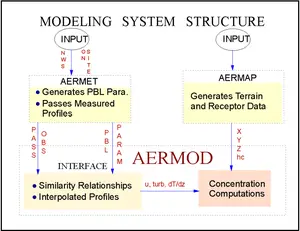
 How the aermod model uses terrain and meteorological analysis (AERMAP and AERMET) to predict pollutant spread, and how ISC3 fails to do so.
 -
Gas Flare Output SO2 – How to control it.
Oct 04, 26 06:37 PM
 What's the best way to handle temporary flaring and its output SO2? In Directive 60, the Alberta Energy Regulator (AER) gives guidance.

Do you have concerns about air pollution in your area??
Perhaps modelling air pollution will provide the answers to your question.
That is what I do on a full-time basis. Find out if it is necessary for your project.
Have your Say...
on the StuffintheAir facebook page
Other topics listed in these guides:
The Stuff-in-the-Air Site Map
And,
Thank you to my research and writing assistants, and the author remains responsible for the content.
Most Popular Pages on this Website:
Pictures of Global Warming
- See photos, cartoons, charts, graphs and a few surprises.
Clouds
- Don't know a cumulus from a stratus? Check here.
Causes of Global Warming
- It's not always obvious.
Calgary Alberta Weather
- Example of Canadian Goodness.
Thermometers
- Our favourite weather instrument.
- Home
- Contact Us
- Free E-zine Back Issues
- Privacy Policy
- Site Map - I'll help find something good.

By Barry Lough, P.Met., EP (Environmental Professional)
Text copyright © 2003-2024 Stuff in the Air.com
BACK TO TOP - Hit your 'Home' Key