Galaxy
by William
(Boston, MA)


You are here.
Where comfort ends, thinking begins - Ever looked at something and thought, "I don't get it," but kept looking anyway? Here's where real science starts, not with answers, but with the itch to figure out what's going on.
William's project... Project review questions & answersa) What did you do in the science fair? Galaxy light show
b) Did it work? Did you do well? I won second place!
c) Are school science fairs a good thing? Very important to learning
d) Would you do it again?
Want my daughter to!
Barry's Response - Good succinct summary of your efforts and your thoughts. Thanks, William.
Search this site for more information now.
Here's where you are in the Galaxy
Take a look at the stars. Don't look at your phone. Don't stare at a screen. Look up...Light is energy moving through space. It started traveling before humans learned to write. Right now, it's landing on your eyeballs.
That's just physics. It's history. It's personal.
Building a galaxy light show for a science fair isn't just playing with LEDs. There's a quiet question: What does light tell us about where we live? It's the same question for weather, air quality, oceans, and even computer models.
Everything from galaxies to weather
Weather is driven by the sun. It's not politics. It's not hashtags.The sun heats the ground unevenly. Air that's warm rises while cold air sinks. Then the pressure changes. There's a wind and the clouds grow while the storm spins. It's meteorology.
Weather isn't guesswork, it's measured. Testing ideas is what we do. Let's argue with data. We're all wrong sometimes. We fix it then.
I don't see that as weakness...instead it's science at work.
Everything from weather to air quality
There's no such thing as empty air. There's dust, smoke, pollen, sea salt, exhaust, and stories about where it's been.Pollution builds up when the wind slows down. Mixing the atmosphere clears the air. Smog sticks around like an unwanted guest when temperatures flip upside down - hello, inversion.
Rather than a moral failure, it's a physical process. By understanding them, we can protect health without pretending humans control everything. Many conservatives make that point - and they're right: There's power in nature. Sometimes we see complex systems. Physics isn't replaced by simple slogans.
Computers and experiments
There's no crystal ball in a computer model. You're playing in a sandbox. Based on math and observations, you build rules. Test “what if?”Change the inputs. Watch patterns form - or fall apart. Scientists argue with their own models. That's original thinking. "Test everything; hold fast to what's good", you may have heard. It works in a lab too.
Here's a counter-narrative
Here's something rebellious: You don't have to panic about the future if you care about the environment.Changes in the climate. It's always been like that.The ice ages came and went without permission. Oceans rise and fall. The species adapted...or didn't.
People matter too. Energy is important too. It's the same with food. Clean air matters today, not just in 2100.
Environmental science balances:
- observation over ignorance.
- adaptation over fear
- curiosity over obedience
Here's why science fairs still matter
...Building a galaxy light show teaches more than facts:- Rules apply to light.
- Work starts with questions.
- Pride comes from work.
- Confidence comes from pride.
- Independence comes from confidence.
It's dangerous in the best way.
When a parent says, "I want my daughter to do it too," that's science spreading - not through policy.
Here you are
You know that galaxy picture with the tiny arrow? Honesty is the best policy. You're tiny and your thoughts aren't.Try it out, disagree politely and don't be afraid to ask questions. Is there anything you don't like about what you read? That's good. That means your mind is working.
Comments for Galaxy
|
||
|
||
|
||
|
||
|
||

Recent Articles


-
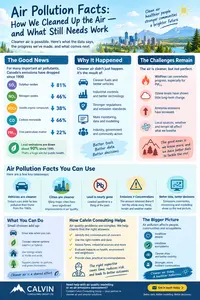
Surprising Air Pollution Facts: It's Not All Bad News!
Sep 17, 26 06:14 PM
 Trying to improve air quality has been a priority. Here are some air pollution facts to show you how far we've come.
 -
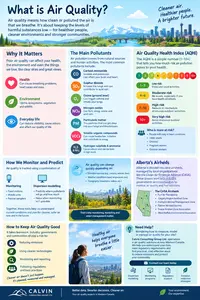
What is air quality and how can we fix it?
Sep 16, 26 11:19 AM
What is air quality? How do you define good air quality? It's just the opposite of air pollution. -
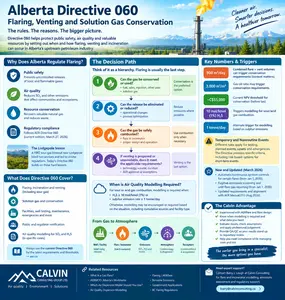
Energy and Environment: Persuading industry to care
Sep 15, 26 02:47 PM
 What's wrong with Alberta's energy and environment? International media criticize the province and its biggest industry almost every day. Here's the truth.
Do you have concerns about air pollution in your area??
Perhaps modelling air pollution will provide the answers to your question.
That is what I do on a full-time basis. Find out if it is necessary for your project.
Have your Say...
on the StuffintheAir facebook page
Other topics listed in these guides:
The Stuff-in-the-Air Site Map
And,
Thank you to my research and writing assistants, and the author remains responsible for the content.
Most Popular Pages on this Website:
Pictures of Global Warming
- See photos, cartoons, charts, graphs and a few surprises.
Clouds
- Don't know a cumulus from a stratus? Check here.
Causes of Global Warming
- It's not always obvious.
Calgary Alberta Weather
- Example of Canadian Goodness.
Thermometers
- Our favourite weather instrument.
- Home
- Contact Us
- Free E-zine Back Issues
- Privacy Policy
- Site Map - I'll help find something good.

By Barry Lough, P.Met., EP (Environmental Professional)
Text copyright © 2003-2024 Stuff in the Air.com
BACK TO TOP - Hit your 'Home' Key