indoor chemical pollution
by Rick
(New York New York)


diazinon insecticide
Why your old pesticides are banned - Did you know the chemical used to kill roaches years ago is toxic to your nervous system? Find out why Diazinon, the powerful pesticide banned from homes, can make you sick.
Rick presents an example here: I have a problem with indoor chemical pollution. I sprayed some diazinon in the basement of my house about a week ago. I still feel a heavy feeling in my chest and am worried that the chemical is in the air and causing the problem. Who can I call to check the air for this.Barry's Response - Rick:
Here is a bit of a rundown on the stuff:
https://en.wikipedia.org/wiki/Diazinon
It's a chemical pesticide used for ants, cockroaches. Keep it away from food storage and preparation areas. The US banned its use in homes years ago. Diazinon is poisonous for people and pets. In addition to the chest feeling, it can change your blood pressure and heart rate, cause your eyes to react and make you anxious and/or sweaty and eat less. It can induce dizziness and nausea, diarrhea, headaches and in severe cases it can cause convulsions and stop your breathing.
To address your problem, you might want to
1) see a doctor.
2) check the yellow pages under indoor air quality (IAQ) or "air monitoring", whatever they call it in your area, and check around. Or even see if a local exterminator may dispense some safety advice for you.
I am not an indoor chemical pollution expert, but I hope this helps.
Search this site for more information now. Here's more...
Your Home is NOT a Clean Room
Rick, I can hear your panic in your words. Feeling heavy in your chest? That's your body screaming at you. It's like you poisoned your own sanctuary by spraying something to kill bugs. It's your fortress, not a toxic dump! You're right to feel betrayed.Reaching out was the right thing to do. Let's dissect this disaster with sassy, defiant intelligence.
Scentless Killers: The Science
It's an organophosphate insecticide. It's designed to mess with pests' nervous systems, and guess what? There's a disturbing similarity between your nervous system and theirs.- Off-Gassing Betrayal: You see, meteorology helps outdoors. The wind blows, turbulence mixes, and the pollutant disperses. Are you indoors? You've got a sealed box with little airflow. The chemical has a measurable Vapor Pressure, so it doesn't just sit there; it off-gasses (evaporates) continuously.
- Because your ventilation's bad (compared to outdoors), the chemical's concentration --the amount of poison per cubic meter of air -- can stay dangerously high for days or weeks. Low air exchange rates equal high pollutant concentrations. It's your body fighting a chemical invader.
Where's Our Focus on the Controversial Truth?
People talk about the mighty global threats-melting ice, disappearing rainforests-and yes, they're real. Here's the kicker, and here's where I get contentious:Most people's biggest chemical threat is not a factory plume miles away; it's the toxic soup we buy, bring home, and spray on ourselves.
We spend billions fighting distant climate battles while ignoring the "everyday poison" we unknowingly dump into our waterways (via sewer drain runoff) and indoor air. The point isn't to deny global shifts; it's to shift the focus of accountability back to the local, immediate, and fixable.
Is it because we're so worried about distant carbon that we ignore the acute toxicity under our own basement stairs? It appeals to both our desire for environmental justice and an appropriate emphasis on personal responsibility and immediate security because it focuses on local, tangible health threats. Care for our own homes is the starting point for responsible domain, as the Good Book surely agrees. Here's an original idea:
Citizen-Science Chemical Mapping (CSCM): The Revolution
For testing, you asked who to call. It might be an expensive air quality consulting firm. However, that's an exclusionary system, denying simple air safety data to the poor and middle class.Enter: Citizen-Science Chemical Mapping (CSCM). We need low-cost, easy-to-use open-source VOC (Volatile Organic Compound) sensor kits that can be networked via an app. It would democratize chemical monitoring. It shouldn't take a PhD to confirm your chest hurts from poison. Citizens should have the freedom to gather data on their own air, making them the chief air quality auditors. Individuals are empowered against big, inaccessible institutions.
Take back your fortress
The first thing we need to do is remove the source safely. Then, increase the air exchange rate, open windows, and crank the fans. For the longer term, hold local air monitoring companies accountable - make sure they explain the science clearly.Indoor Chemical Pollution is a wake-up call
Stop accepting that our homes have to be silent chemical chambers. Take ownership of the air we breathe and demand transparency.What's the weirdest thing you've ever used to clean your house? Let's talk about the surprising things polluting our personal spaces!
Comments for indoor chemical pollution
|
||
|
||
|
||
|
||


Recent Articles


-
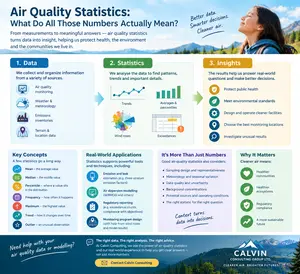
Air Quality Statistics: What Do All Those Numbers Actually Mean?
Sep 21, 26 12:00 AM
 How are air quality statistics used to understand pollution, design monitoring programs, estimate emissions and make environmental decisions?
 -
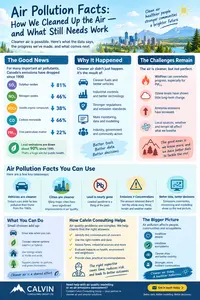
Surprising Air Pollution Facts: It's Not All Bad News!
Sep 17, 26 06:14 PM
 Trying to improve air quality has been a priority. Here are some air pollution facts to show you how far we've come.
 -
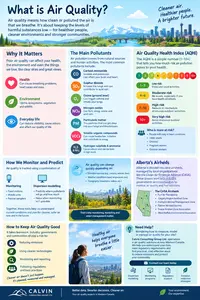
What is air quality and how can we fix it?
Sep 16, 26 11:19 AM
What is air quality? How do you define good air quality? It's just the opposite of air pollution.
Do you have concerns about air pollution in your area??
Perhaps modelling air pollution will provide the answers to your question.
That is what I do on a full-time basis. Find out if it is necessary for your project.
Have your Say...
on the StuffintheAir facebook page
Other topics listed in these guides:
The Stuff-in-the-Air Site Map
And,
Thank you to my research and writing assistants, and the author remains responsible for the content.
Most Popular Pages on this Website:
Pictures of Global Warming
- See photos, cartoons, charts, graphs and a few surprises.
Clouds
- Don't know a cumulus from a stratus? Check here.
Causes of Global Warming
- It's not always obvious.
Calgary Alberta Weather
- Example of Canadian Goodness.
Thermometers
- Our favourite weather instrument.
- Home
- Contact Us
- Free E-zine Back Issues
- Privacy Policy
- Site Map - I'll help find something good.

By Barry Lough, P.Met., EP (Environmental Professional)
Text copyright © 2003-2024 Stuff in the Air.com
BACK TO TOP - Hit your 'Home' Key