Paper Towel Test
by Steven Babiak
(Martinez,CA)
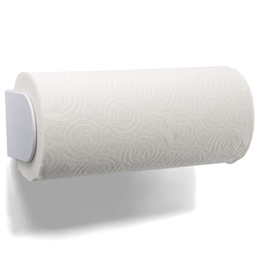

We're on a roll
Big questions about paper towels - What if a paper towel taught you how scientists think? You might find that real science starts right where curiosity lives if you grab some water and ask a few honest questions.
What Steven did... I took many different brands of paper towels and put them through different test.First, I put a measured amount of water in a bowl and sunk the paper towel, till it could hold no more water. I then found the amount of water the towel soaked up.
Second, I did a softness test, where I asked people to rate how soft one towel was. I presented this and let people in the science fair try too.
I did this in 6th grade, but I didn't win. I would do it again just to remind myself of the results.
Barry's Response - I subscribe to Consumer Reports. That is the type of research they engage in and is very useful to the public. More so than your typical scientific project for sure.
The other criterion advertisers tout so famously is paper towel strength. At least that's what I have seen in most of the commercials.
Search this site for more information now.
We'll pretend the paper towels are racers
There's a puddle for each towel. Some people drink fast. There are some that fall apart. Act tough, but quit early.Why? Every paper towel has a tunnel inside. Like rain moves through soil or pollution moves through air filters, water crawls through them. It's called capillary action, but you can call it "water climbing."
This happens in clouds, so meteorologists watch it. Scientists watch it in rivers and lungs. Same thing. On a different scale.
Let's get to the spicy part
It's all about the ads. It whispers and measures. You don't have to hate companies to test them. You don't have to worry about the planet either. Just ask questions and think calmly.People say, "Don't question science." Scientists say, "Don't question, just measure."
It's important to have freedom. That's how we fixed ozone loss. It's how we clean the air. That's how we research instead of guessing.
Yes, sometimes cheap towels win. People are surprised by that (and other elements of truth.)
Counter-narrative
There's nothing stronger than nature but humans can affect it.Kids learn not to be afraid of big ideas by testing small things. Whether it's climate, air, water, or paper towels, science works best when it's curious.
Care for creation, test your tools, tell the truth - that idea shows up in many cultures and faiths. Don't lie to yourself, but take care.
Growing this project with new ideas
- Use flour dust to test towels as air filters- Compare wet and dry strength, like storm clouds and clear skies
- For non-readers, graph results with smiley faces
- Let the kids design the next test
It's how inventors start.
Here's why testing works for us
- Topics that are clear- Language that's simple
- Experiment in real life
- Tone of curiosity
- Steps you can repeat
- Results you can trust
- It ends with an invitation, not a lecture.
Now it's your turn
Which paper towel surprised you the most? What would you test next if you didn't know the answer?
Comments for Paper Towel Test
|
||
|
||
|
||
|
||


Recent Articles


-
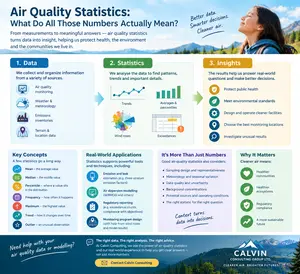
Air Quality Statistics: What Do All Those Numbers Actually Mean?
Sep 21, 26 12:00 AM
 How are air quality statistics used to understand pollution, design monitoring programs, estimate emissions and make environmental decisions?
 -
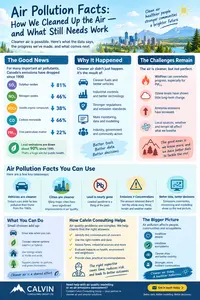
Surprising Air Pollution Facts: It's Not All Bad News!
Sep 17, 26 06:14 PM
 Trying to improve air quality has been a priority. Here are some air pollution facts to show you how far we've come.
 -
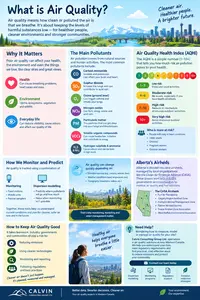
What is air quality and how can we fix it?
Sep 16, 26 11:19 AM
What is air quality? How do you define good air quality? It's just the opposite of air pollution.
Do you have concerns about air pollution in your area??
Perhaps modelling air pollution will provide the answers to your question.
That is what I do on a full-time basis. Find out if it is necessary for your project.
Have your Say...
on the StuffintheAir facebook page
Other topics listed in these guides:
The Stuff-in-the-Air Site Map
And,
Thank you to my research and writing assistants, and the author remains responsible for the content.
Most Popular Pages on this Website:
Pictures of Global Warming
- See photos, cartoons, charts, graphs and a few surprises.
Clouds
- Don't know a cumulus from a stratus? Check here.
Causes of Global Warming
- It's not always obvious.
Calgary Alberta Weather
- Example of Canadian Goodness.
Thermometers
- Our favourite weather instrument.
- Home
- Contact Us
- Free E-zine Back Issues
- Privacy Policy
- Site Map - I'll help find something good.

By Barry Lough, P.Met., EP (Environmental Professional)
Text copyright © 2003-2024 Stuff in the Air.com
BACK TO TOP - Hit your 'Home' Key