Biomes
by erica
(Brantford)


Canadian Prairie Biome
Global Neighborhood War: Biomes - Everything you thought you knew about rainforests, oxygen, and climate science is about to be challenged, and you might just be able to invent a whole new future for this planet.
What's up, Erica? Biomes are amazing. There are all sorts, Tundra, Dessert, Aquatic, Grassland, Forest and the Rainforest. They are located all over the world and have different species for each biome. Each one is different; the animals, what the weather and climate are. EVERYTHING. They are so beautiful and I hope you post this on your site.Thank you.
Barry's Response - Glad to, Erica.
Scientists categorize biomes by the similarity of climate and other elements of nature, ecosystems, within a geographical region. The distinguishing factors include plant and leaf types, plant density.
In general, a biome is a biological community, filling a specific region. On land we use the names you mentioned, like desert, rainforest, grassland or tundra and others, and aquatic ones are distinguished by freshwater and saltwater for example.
Terrestrial biomes of the world have simple names we can relate to. The major ones are:
- Tropical Rainforest - Found in Africa, South America and Asia (including NE Australia and the islands in between)
- Tropical Savannah - in Africa, South America, Asia and Australia again
- Desert - found mainly in interior, mid-latitude regions of all continents
- Chaparral - Mediterranean shrubland found in California, Australia and the Mediterranean area
- Grassland - mostly dry regions of all continents
- Temperate Forest - Found in coastal regions of all temperate continents.
- Boreal Forest - straddles the Arctic circle around the globe
- Tundra - high mountains and moderately high latitudes
- Permanent ice cap - Greenland and Antarctica
Most of these have been modified by humans for agricultural purposes.
Search this site for more environmental information now.
Are Biomes a Prison or the Ultimate Adventure?
Hey, Erica, and anyone else who thinks Earth Science is boring, think again. I gave you the textbook list for Biomes. That's sweet. What's the real question? Are we stuck in these zones, or are they the planet's ultimate challenge, waiting for someone to shake things up?Vibe Check: What Are Biomes?
Don't worry about the boring dictionary definition. Biomes are just big, global neighborhoods. It's where the climate - the long-term, bossy weather patterns - decides who lives there. Grasslands and tundra are defined by their plants, which shout, "This is a Grassland!" or "Welcome to the Tundra!".I mentioned all the majors above. These are the Global Hotspots of Life and Liberty:
- Teenagers from tropical rainforests are hot, humid, overachieving, and drama-filled.
- Desert: The stoic, minimalist survivor.
- Aquatic: The massive, mysterious elder brother who holds all the secrets (and 97% of the planet's water).
Why Biomes Exist (A Meteorologist's Hot Take)
⛈️ Do you want to know how the dialog fulfills your search intent? There's more to it than trees. It's all about sunlight and air circulation. That's why a Rainforest is next to a Desert.Air doesn't just hang out; it circulates.
- The sun slams the equator with energy. Hot, moist air rises like a rebellious teen. It cools as it rises and dumps all its water -- BAM! Tropical Rainforests have endless rain. The Intertropical Convergence Zone (ITCZ) is Earth's biggest, loudest weather party.
- Dry, cool air is pushed away, traveling about 30° latitude north and south. Finally, it sinks back down. It's dried air. CRUNCH! It hits the ground and absorbs every bit of moisture it can find. Desert Biomes are vast and dry.
Rainforest Rant (and Skeptic's Clapback)
💚 The article is obsessed with tropical rainforests, calling them the "Pulsing Heart." I get it! Let's challenge this:The most popular view: "Rainforests are oxygen factories and carbon sinks! Save them or we all die!" The data shows these forests sequester huge amounts of carbon in their biomass (trees). Through evapotranspiration (they sweat), they help regulate local climate.
Counter - Narrative: Let's try some intellectual freedom!
- Yes, trees make oxygen, but over 50% of it comes from phytoplankton, microscopic life in the Aquatic Biomes (the ocean). Why are we freaking out about 6% of land when the ocean's the real oxygen champ? It's important to respect the ocean's size and resilience.
- Continuing onwards: Some believe in responsible dominion -- that God gave humans the brains to manage the Earth, not just freeze it. Isn't it better stewardship to use a small portion of the land for feeding people or lifting them out of poverty, then innovate solutions like reforestation or high-tech agriculture (agroforestry, which the text briefly mentions)? It's not just complaining about a problem, it's inventing a solution!
Size matters in aquaculture
🌊 There's barely any mention of the Aquatic Biomes in the article. Oceans are skeptical conservatives - they're big, powerful, and don't bend easily. The carbonate buffer system holds 50 times more carbon dioxide than the atmosphere. People often underestimate the sheer volume and chemical complexity that makes the ocean a world-class regulator when they worry about its pH.Let's stop treating the ocean like a fragile glass of water. It's a huge chemical powerhouse. Our focus needs to be less on panic and more on understanding its massive natural regulatory capacity.
Geo-Art and Controlled Biomes: My Revolutionary Proposal
💡 Want some new ideas? I'm an inventor, not a status quo keeper. Let's flirt with the desert instead of fighting it. Geo-Art Biomes are my idea.My Atmospheric Moisture Harvesters (AMHs) are giant, aesthetically pleasing structures that look like desert sculptures but pull tiny amounts of water from the air using cutting-edge materials science and ancient wisdom (like the Nabataean, an ancient Arab civilization, trick of harvesting atmospheric moisture).
- Creating "green belts" (new, small biomes!) that act as buffers and local food sources, slightly pushing back the boundary of the Grassland Biome.
- It appeals to our love of sustainable greening as well as our love of innovation, technology, and economic enterprise. Rather than being passive victims of climate change, we become active inventors of our biomes. With science, we can turn scarcity into resource, expressing our ability to think.
Don't just read. Take action.
Think about it. What's the ocean like? Is it fragile or powerful? Is human innovation a problem or a solution? Comment below and let's start the Biomes Brawl!Recent Articles


-
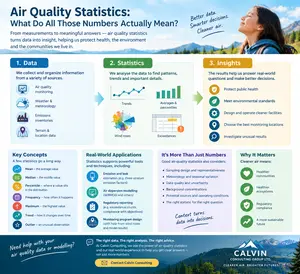
Air Quality Statistics: What Do All Those Numbers Actually Mean?
Sep 21, 26 12:00 AM
 How are air quality statistics used to understand pollution, design monitoring programs, estimate emissions and make environmental decisions?
 -
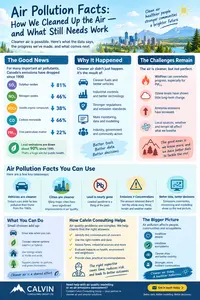
Surprising Air Pollution Facts: It's Not All Bad News!
Sep 17, 26 06:14 PM
 Trying to improve air quality has been a priority. Here are some air pollution facts to show you how far we've come.
 -
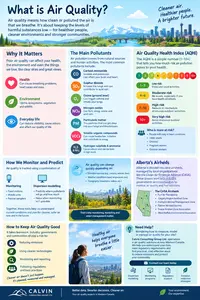
What is air quality and how can we fix it?
Sep 16, 26 11:19 AM
What is air quality? How do you define good air quality? It's just the opposite of air pollution.
Do you have concerns about air pollution in your area??
Perhaps modelling air pollution will provide the answers to your question.
That is what I do on a full-time basis. Find out if it is necessary for your project.
Have your Say...
on the StuffintheAir facebook page
Other topics listed in these guides:
The Stuff-in-the-Air Site Map
And,
Thank you to my research and writing assistants, and the author remains responsible for the content.
Most Popular Pages on this Website:
Pictures of Global Warming
- See photos, cartoons, charts, graphs and a few surprises.
Clouds
- Don't know a cumulus from a stratus? Check here.
Causes of Global Warming
- It's not always obvious.
Calgary Alberta Weather
- Example of Canadian Goodness.
Thermometers
- Our favourite weather instrument.
- Home
- Contact Us
- Free E-zine Back Issues
- Privacy Policy
- Site Map - I'll help find something good.

By Barry Lough, P.Met., EP (Environmental Professional)
Text copyright © 2003-2024 Stuff in the Air.com
BACK TO TOP - Hit your 'Home' Key