Classic Volcano Experiment
by Parul Ghosh
(India)


That was a Good One!
Nature's ultimate rule-breakers are volcanoes - Do you ever wonder why adults call you naughty for making a mess when the Earth keeps itself alive by making a mess? Discover how the planet actually controls the air you breathe with a little bit of fizz.
Parul tells us this: I had made a volcano using some clay material. Inside that mountain I had fixed a bottle. Then for the color of lava I had put some red color in it which was mixed with baking soda. This was the initial arrangement.In a glass I had a sufficient amount of vinegar ready. I explained everything to the member of jury. Then to explain the working of volcano about how would it look like when the lava comes out of the volcano I poured the vinegar inside the bottle present inside the mountain. Then a reaction occurred which seemed very much like that of volcano.
Barry's Response Aaah, the good old Classic Volcano Experiment. What science fair would be complete without one?
I hope you had fun with it. What did you learn? You could talk about the analogy, how the flow from the device you created resembles volcanic flow, or you could elaborate on the chemical experiment that prompted your flow to begin with.
Understandably, that's not the point of the experiment, but if a half-dozen other kids are doing the same thing, at least that approach would have made your presentation unique. Sometimes that counts for as much as anything.
One more thing to note: This activity shown in the photo above looks more like a diet-coke-menthos experiment. A little more dramatic, equally as fun. Try it sometime.
Search this site for more information now.
Fiery breath of the Earth
Imagine holding a tiny, sleeping giant in a clay mountain. One splash of vinegar triggers a chemical war that mimics our planet's breath.Eruptions: Anatomy In the Classic Volcano Experiment, you mix vinegar with baking soda. When they wrestle, they release carbon dioxide gas (CO2). Real volcanoes melt rocks deep underground, trapping gases like water vapor, sulfur dioxide, and carbon dioxide. The mountain exhales when the pressure peaks.
This exhale changes everything in real life. Volcanoes are like Earth's air quality control system. Unlike car exhaust, a massive eruption can release more sulfur into the stratosphere than years of factories. Sulfur creates a sunscreen effect, reflecting sunlight away and cooling the planet. Sometimes the world warms, then a volcano screams, and the world chills.
A Rebellious Scientist's View Most people say humans are the only ones changing the climate. As a debater and inventor, I want you to think for yourself. Scientists and skeptics look at the history of the aquatic environment and see that underwater volcanoes (seamounts) heat the oceans. According to them, these massive safety valves cycle heat and minerals.
Could the consensus ignore how much the Earth regulates itself? Mother Nature needs to be protected, but we shouldn't fear her. We're stewards of the sea and the sky. Your volcano project proves that gas drives the world, if you care for the our great garden or just think it's common sense.
It's all about air quality Air quality consultants look at particles, not just smoke. Glass shards make up volcanic ash. Pompeii's air quality index would be off the charts! This isn't just cool lava; it's a lesson in how the atmosphere works.
The Venting Network: A Revolutionary Idea
Wouldn't it be cool if we measured real air instead of clay models? What if every student who did the Classic Volcano Experiment also set up a CO2 sensor? How Earth breath moves through our neighborhoods could be mapped. Every day, we'd see the invisible lava of gases flowing around us!Expansion of the Scientific Odyssey
Let's be honest, the Classic Volcano Experiment is the participation trophy of science fairs. Do you want to win? Let's not talk about vinegar anymore. Let's talk about the Coriolis Effect. Let's talk about how the ocean floor hosts thousands of smokers that feed strange creatures at night.Pouring vinegar isn't just a mess. You simulate a planet degassing. With high-quality science equipment, like a barometer, you'd see that the pressure inside your bottle spikes as the gas surges. That's physics!
Don't believe anyone who tells you science is settled. There's a cage match between ideas in science. You haven't seen the 500 million years of volcanic history if you think climate change is a human problem. We live on a living, breathing, sometimes exploding masterpiece. Take a look. Take a look at it. Don't let boring stuff get you down.
How do you feel about it?
Is Earth just a big, predictable machine, or is it a wild, self-cleaning artist we still don't fully understand? Do you get to ask dangerous questions in science class? Tell us about the messiest thing that happened during your Classic Volcano Experiment!
Comments for Classic Volcano Experiment
|
||
|
||

Recent Articles


-
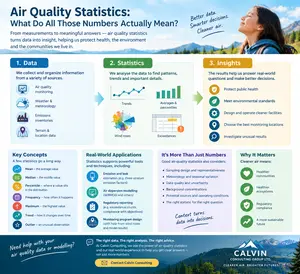
Air Quality Statistics: What Do All Those Numbers Actually Mean?
Sep 21, 26 12:00 AM
 How are air quality statistics used to understand pollution, design monitoring programs, estimate emissions and make environmental decisions?
 -
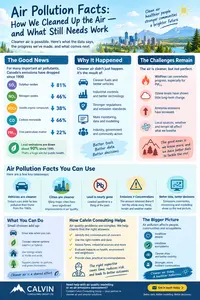
Surprising Air Pollution Facts: It's Not All Bad News!
Sep 17, 26 06:14 PM
 Trying to improve air quality has been a priority. Here are some air pollution facts to show you how far we've come.
 -
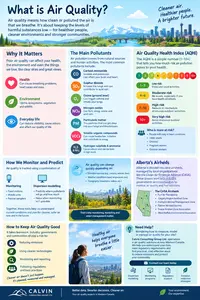
What is air quality and how can we fix it?
Sep 16, 26 11:19 AM
What is air quality? How do you define good air quality? It's just the opposite of air pollution.
Do you have concerns about air pollution in your area??
Perhaps modelling air pollution will provide the answers to your question.
That is what I do on a full-time basis. Find out if it is necessary for your project.
Have your Say...
on the StuffintheAir facebook page
Other topics listed in these guides:
The Stuff-in-the-Air Site Map
And,
Thank you to my research and writing assistants, and the author remains responsible for the content.
Most Popular Pages on this Website:
Pictures of Global Warming
- See photos, cartoons, charts, graphs and a few surprises.
Clouds
- Don't know a cumulus from a stratus? Check here.
Causes of Global Warming
- It's not always obvious.
Calgary Alberta Weather
- Example of Canadian Goodness.
Thermometers
- Our favourite weather instrument.
- Home
- Contact Us
- Free E-zine Back Issues
- Privacy Policy
- Site Map - I'll help find something good.

By Barry Lough, P.Met., EP (Environmental Professional)
Text copyright © 2003-2024 Stuff in the Air.com
BACK TO TOP - Hit your 'Home' Key