effects of air pollution
by kainen unser
(florida)


How are we affected?
Air Pollution's Hidden Impact on Plants - In addition to humans, plants need air to survive - and yet, air pollution silently suffocates them, with devastating results for our ecosystem.
Kainen says: While humans have been producing exponentially increasing amounts of pollution since antiquity and they now account for the majority of pollutants released into the air under the misguided beliefs that their actions are for the sake of their future generations, people fail to realize that by indiscriminately using natural resources they may have deprived their cherished ones of the chance to generate even more air pollution.Most people think that air pollution is a problem that only tree-huggers or other environmentalists worry about, but the sad fact is, it is a reality that we all have to face. We cause more problems every day than we come up with solutions for in ten years.
See https://en.wikipedia.org/wiki/Air_pollution#Economic_effects for an elaboration on this.
Barry's Response - nice job, Kainen. Thank you very much.
When we conduct air quality dispersion modelling in Alberta, we most often deal with the concentrations of particulate matter, sulphur dioxide and nitrogen dioxide at ground-level in the vicinity of an industrial facility. These are the most abundant species contained in emissions. They are what the government is concerned about in most cases. They are what the public should and would focus on...and do, when they understand.
Sulphur dioxide has important impact on human and especially children's health. It makes survival tough for flora and fauna and leads to acid rain. It leads to respiratory problems and can be deadly. That's why some parts of the world have strict regulations for operating gas flares, which put a lot of SO2 into the air, and for predicting their impacts.
Nitrogen dioxide, which comes from heaters and engines, is another poisonous gas to inhale, as it also leads to respiratory problems and perhaps Sudden Infant Death Syndrome. NO2 also reacts with other chemicals in the air to produce undesirable components, such as ozone.
Breathing in particulates is breathing in dirt. It leads to respiratory diseases, asthma, cancer, heart problems, birth defects and death in some cases. The smaller the dust particles, the bigger the problem, as they can get deeper into the system.
Keep an eye out for these three. They affect our generation and will be a problem for others well into the future.
'Effects of air pollution' seeks to understand how air pollution affects human health, the environment, and overall well-being. Air pollution causes, consequences, and mitigation strategies are discussed in the article and conversation.
Search this site for more air quality information now.
Here's what air pollution does:
- Asthma, chronic obstructive pulmonary disease (COPD), and other respiratory problems can be caused by air pollution.
- Poor air quality increases the risk of heart attacks, strokes, and other cardiovascular diseases.
- There's a link between air pollution and cognitive decline, dementia, and mental health problems.
- Air pollution hurts crops, wildlife, and ecosystems, contributing to climate change.
Who's the most affected?
- Older adults and kids
- People with pre-existing conditions
- Communities with low incomes and marginalized groups (?)
How can we help?
- Industrial and vehicle emissions should be reduced
- Make clean energy and sustainable transportation a priority
- Protect air quality with policies
- Educate the community and raise awareness
This discussion and article has a purpose to provide valuable insight into air pollution, emphasizing the need for collective action to mitigate it. Why? Together, we can create a healthier, more sustainable future by understanding air pollution's causes and consequences.
It's your turn now! - What do you want to know about air pollution?
Comments for effects of air pollution
|
||
|
||

Recent Articles


-
Expert Judgement: How do You Apply it to Air Quality?
Oct 11, 26 12:55 AM
 More and more model input decisions require expert judgement as models get more complex. A primer on some of CALPUFF's advanced variables
 -
Aermod Model and Environmental Breakthroughs.
Oct 09, 26 10:28 PM
 How the aermod model uses terrain and meteorological analysis (AERMAP and AERMET) to predict pollutant spread, and how ISC3 fails to do so.
 -
Gas Flare Output SO2 – How to control it.
Oct 04, 26 06:37 PM
 What's the best way to handle temporary flaring and its output SO2? In Directive 60, the Alberta Energy Regulator (AER) gives guidance.


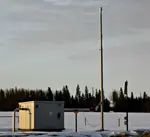
Do you have concerns about air pollution in your area??
Perhaps modelling air pollution will provide the answers to your question.
That is what I do on a full-time basis. Find out if it is necessary for your project.
Have your Say...
on the StuffintheAir facebook page
Other topics listed in these guides:
The Stuff-in-the-Air Site Map
And,
Thank you to my research and writing assistants, and the author remains responsible for the content.
Most Popular Pages on this Website:
Pictures of Global Warming
- See photos, cartoons, charts, graphs and a few surprises.
Clouds
- Don't know a cumulus from a stratus? Check here.
Causes of Global Warming
- It's not always obvious.
Calgary Alberta Weather
- Example of Canadian Goodness.
Thermometers
- Our favourite weather instrument.
- Home
- Contact Us
- Free E-zine Back Issues
- Privacy Policy
- Site Map - I'll help find something good.

By Barry Lough, P.Met., EP (Environmental Professional)
Text copyright © 2003-2024 Stuff in the Air.com
BACK TO TOP - Hit your 'Home' Key