environmental ethics
by Pooja Sharma
(Ladnun, Rajasthan, India)


Jain Vishva Bharati University
Nobody tiptoes around the climate conversation - You're in the right place if you've ever felt torn between wanting the plain truth about our environment and being exhausted by shouting matches. In this conversation, we dive straight into the real questions people ask, the doubts they carry, and the science that helps us understand the air we breathe.
Go ahead, Pooja: Hello Friends - We all are hearing a lot about our endangered environment. Much is being said about what to do to save our mother earth.We need to be conscious about our precious earth. The problem lies in our so-called development model which triggers more and more consumerism making all of us Antropocentric towards our mother.
Now the time has come when we rethink about our activities, our development model. The continuing degradation of environment and depletion of life supporting natural resources by exploding population and its reckless consumerism are matters of serious concern.
The air we breathe, the water we drink and the soil, which produces our food, are getting more and more polluted. In many cities air has become so much polluted by vehicular and industrial emission that people require masks and frequent oxygen intake.
The water in most of rivers and other surface and underground water bodies is so dangerously polluted by industrial household and other effluents that it is not safe even for bathing, much less for drinking. Experts fear that if population, pollution and consumerism continue to grow there will be fierce wars for water in future.
Because of over exploitation of underground water the water table is receding fast and has gone down at many places from few meters to hundred of meters. This has also increased the fluoride content in water at several places causing fluorosis.
Even in the largest water bodies, oil spills and the other wastes including the hazardous atomic wastes are polluting the seas surrounding the planet earth. Because of pollution and over exploitation of various products from sea, its fishes, corals, shells, minerals and others, the eco-systems so important for climate balance on earth, are being damaged dangerously.
The problem lies in our prevalent model of development, which has established consumerism as an index of development. Nation, societies and people are considered developed and even more civilized on the basis of their scale of consumption. This has triggered mad race for more and more consumerism in tendentious pursuits of insatiable sensuous pleasure ignoring the fundamental principal of sustainability, which has remained merely a slogan.
A development can be sustainable only if the consumption inter-Alia exploitation of resources is limited to their carrying capacity and renewablity. Ignorance of mankind has put the whole living fraternity in crisis of existence.
Now the peak time has come when it is mandatory to step forward to save our mother earth. Science and technology cannot be blamed for all this calamities of environment and ills of the societies. Much depends upon how we use them.
There have been saner, enlightened people, saints in all ages at different places in all societies, who have been cautioning against reckless consumerism for sensuous pleasure resulting in degradation of environment and its life supporting system. They analyzed the root causes triggering transgression on nature.
These are greed, ego, lust and infatuation for sensuous pleasure, which have no limits or points of satiety as more they are provided for more they increase and continue to multiply, ultimately eating away the very basic resources necessary for survival of all life forms including humans. They suggested us to adopt code of conduct to keep wants of people minimum so that demands or pressure on resources remain within the carrying capacity and renewability of resources and such societies and people under their influence lived in harmony with ambient environment in a given situation.
Every individual, young or old group of people, societies, nation big or small, high or low, rich or poor, educated or illiterate, strong or weak are responsible for environmental degradation.
Gone are the days when pollution at one place did not have significant adverse effect on other places. The degree of pollution now is so high that it is affecting everyone. It should therefore, be not only necessary but also mandatory for all to follow the fundamental principles for environment restoration and sustainable maintenance.
A universal holistic approach which draws from religious or cultural values and beliefs to environmental protection is imperative if we desire to give to ourselves and to future generations an opportunity to enjoy their lives in peace and harmony with nature.
Though, nature was not facing the calamities in contemporary times which it is suffering from today, yet our religions are full of environmental concern. We can find many scriptures and sayings, which can prove to be helpful in building a model of environmental ethics.
What is common among various great religious tradition with regard to ecology and environment will provide us the clue for identification and formulation of an appropriate code of conduct for environment protection, conservation and reconstruction.
Now the duty of mankind is to adopt a model of environmental ethics derived from the convergence of the perceptions of world religions. That model of ethics will involve stewardship of the living and non-living systems of the earth in order to maintain their sustainability for present and future, allowing development with forbearance and equity.
Barry's Response - Thank you Pooja.
Search this site for more information now.
Ethical considerations for the environment
If saving the planet wasn't homework, but more of a challenge run, puzzle, or even a weird family argument where everyone agrees the house is on fire, but still debating whose turn it is to find the bucket?Come on, pull up a chair. This will be solved in a way that lets you think freely, laugh a little, question everything, and maybe even invent something.
Why we talk about "environmental ethics"
Nature is often treated like a giant vending machine. You push a button, stuff comes out. Now the vending machine shakes, sparks, and sometimes spits back plastic bottles or fish with the wrong number of eyes. What's the right thing to do when the vending machine starts talking back?Scientists, engineers, activists, artists, farmers, Christians, skeptics, teenagers with attitude all feel something's off. Polluted rivers, shrinking aquifers, smoky summers, and oceans that act like giant trash bins. Instead of shouting “everything is ruined!” let's look at it scientifically and emotionally.
Science joins the story
We can track the trouble with meteorology and air quality science.- Pollution rises, sinks, and drifts based on wind shear, stability classes, surface heating, and nighttime inversions.
- The boundary layer spreads pollutants like gossip at lunch: fast, wide, and usually misunderstood.
- Pollutants move downstream in predictable ways.
- Like a whisper you hear three days later, groundwater slowly carries dissolved chemicals through soil.
Rebellion helps
Most young people care about the environment, but hate lectures. There's a lot of action, choice, freedom, even a little defiance. Here's a rebellious thought:It's not necessary to swallow every mainstream climate narrative whole to care about clean air, clean water, and healthy ecosystems. It's okay to believe solar cycles matter. Models can be questioned. It's okay to argue about policies. You can still plant trees, stop littering, bike more, study pollutant dispersion, and push industries.
Science-based rebellion beats blind obedience.
A place where ethics and faith meet
People created rules long before CO2 graphs existed - Hindu, Christian, Indigenous, Jewish, Muslim, Buddhist, Sikh, secular humanist:- Don't waste anything.
- Make sure you don't poison your neighbors.
- Don't act like the world is your snack drawer.
- Don't treat creation like a toy, treat it like a gift.
The idea of environmental ethics simply combines these instincts: You should take care of the world that takes care of you.
It's a tricky counter-narrative
(but still grounded in science) - There are some environmental messages that scare people more than they educate.Here's a bold idea: Maybe the planet isn't as fragile as people say. We've survived asteroid impacts, mega-volcanoes, ice ages, and continents colliding. When wildfire smoke rolls in, our comfort, our drinking water, our crops, our lungs are fragile.
The goal of environmental ethics isn't to save the earth. It's to save the stable conditions humans rely on. Planets can shake us off like dust. It's up to us not to shake each other off.
(Continued in my comment below)
Comments for environmental ethics
|
||
|
||
|
||
|
||
|
||


Recent Articles


-
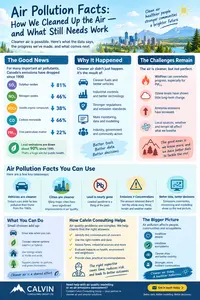
Surprising Air Pollution Facts: It's Not All Bad News!
Sep 17, 26 06:14 PM
 Trying to improve air quality has been a priority. Here are some air pollution facts to show you how far we've come.
 -
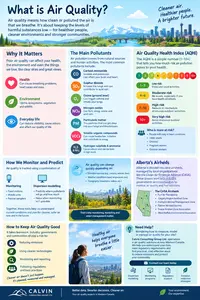
What is air quality and how can we fix it?
Sep 16, 26 11:19 AM
What is air quality? How do you define good air quality? It's just the opposite of air pollution. -
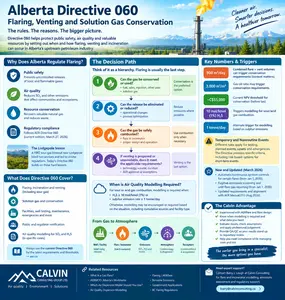
Energy and Environment: Persuading industry to care
Sep 15, 26 02:47 PM
 What's wrong with Alberta's energy and environment? International media criticize the province and its biggest industry almost every day. Here's the truth.
Do you have concerns about air pollution in your area??
Perhaps modelling air pollution will provide the answers to your question.
That is what I do on a full-time basis. Find out if it is necessary for your project.
Have your Say...
on the StuffintheAir facebook page
Other topics listed in these guides:
The Stuff-in-the-Air Site Map
And,
Thank you to my research and writing assistants, and the author remains responsible for the content.
Most Popular Pages on this Website:
Pictures of Global Warming
- See photos, cartoons, charts, graphs and a few surprises.
Clouds
- Don't know a cumulus from a stratus? Check here.
Causes of Global Warming
- It's not always obvious.
Calgary Alberta Weather
- Example of Canadian Goodness.
Thermometers
- Our favourite weather instrument.
- Home
- Contact Us
- Free E-zine Back Issues
- Privacy Policy
- Site Map - I'll help find something good.

By Barry Lough, P.Met., EP (Environmental Professional)
Text copyright © 2003-2026 Stuff in the Air.com
BACK TO TOP - Hit your 'Home' Key