The Science of Meteorology Online
Fraser Island Rainforest


Dense, lush forest
In Northern Australia, I visited Fraser Island, which is World Heritage Listed due to the many different habitats that are available on the island.
To get to the rain forest, we were in a 4WD vehicle, and our tour leader was giving us information. He told us all about how they used to log the forests, and at one point eucalyptus trees meet the rain forest, which was done as an experiment. However, this is very harmful, because eucalyptus trees poison the ground around them to fight off competing trees for the soil, and rain forests use their shading to fight off competitors. Therefore, the eucalyptus trees are potentially causing damage to the rain forest in either not allowing it to expand or in keeping it contained to the area it already is and possibly making it smaller.Rain forests are so few and far between, and there are many plant and animal species that have yet to be discovered, and may never be discovered if we keep treating them like we are currently. We should be preventing them from drying out or being invaded by other species and working with them to increase the life that is already contained in them.
Barry's Response - environmental catastrophe? It seems so, but maybe not. I'm sure we've seen one species take over another many times in the history of the world before mankind came around to observe it.
Just my own thought. Thanks for you story.
Search this site for more information now.
A Miracle on Sand: Fraser Island Rainforest
You feel like you're surfing on a planet that shouldn't exist when you drive a 4WD across Fraser Island. There's pure quartz sand beneath you - the kind that drains water faster than a sieve - but towering above are ancient rainforests. How do trees that need rich soil survive on sand? There's a riddle on Fraser Island, and it's not just biological - it's meteorological, chemical, and spiritual.Fraser Island (K'gari) sits off Australia's east coast, catching the warm, moist trade winds. Those air masses hit the island's high dunes, rise, cool, and release rain. A microclimate built on humility - a perfect miniature weather engine. Through evapotranspiration, leaf chemistry, and an uncanny knack for balancing sunlight and shade, the forest invites the rain.
It's a delicate balance. Trees like eucalyptus don't play well with others. Their turf is protected chemically - they release compounds that suppress competitors. Invading rainforest edges is like dropping a bad roommate into a monastery. Nature's grand experiment is also succession, adaptation, and regeneration.
Remember that ecosystems are ancient improvisers before we panic about "catastrophe." Before spreadsheets and satellite data, nature mixed species like a jazz musician - a few missteps, a few miracles. Ecosystems change - they always do - but whether our interventions respect that rhythm is the question.
Nature's Engineering Degree: Air, Water, and Sand
This is where meteorology meets soil chemistry. Fraser's rainforest exists because of sand that acts like a sponge. Organic matter from decaying plants filled the pores of the dunes over millennia. From there, cloud forests and rainforests built themselves, cycling moisture between them.This system is a biological scrubber. Volatile organic compounds (VOCs) from trees form aerosols that scatter sunlight and seed clouds. Haze can form in a polluted city, but here it's part of a cooling, cloud-forming feedback loop. It's the kind of self-regulating pattern engineers envy - and one reason environmental consulting borrows heavily from meteorological models.
The Counter-Narrative: Fragile or Fierce?
Rainforests are often described as fragile - like glass domes on the verge of collapse. Maybe we underestimate their toughness. Since before humans named them, forests have burned, drowned, and regrown. Could resilience be the truer story of creation than fragility?That's not a denial of responsibility - it's a call to humility. In this, Christians (for instance) can see the Creator's quiet engineering: not delicate perfection, but durable grace. Stewardship means working with the design, not overwriting it.
Let's monitor pollutants, regulate logging, and map every chemical reaching groundwater - but let's also admit that ecosystems often heal in nonlinear, surprising ways. The greatest contribution we can make is knowing when to intervene and when to watch.
Smiles of defiance
Between the eucalyptus roots and the rain-heavy canopy, scientists, poets, and teenage rebels can all agree: the world doesn't fit neatly into our models.The sense of reverence you feel when standing under a Fraser Island fig tree that's been drinking rainwater since before the Roman Empire has nothing to do with measuring VOC fluxes, soil carbon, or ozone formation.
It's the quiet third option in climate discourse: complex, alive, and utterly uninterested in our panic.
Maybe that's what freedom of thought really means - standing among these trees and realizing that resilience isn't just about policy. It's a miracle you don't see.
What do you think?
What if we designed urban forests that mimic Fraser's natural air filtration system? Would it be a good idea to consult meteorologists before expanding runoff basins near coasts? Would soil microbiomes be our next great "carbon capture" tech if we listened to them?Let me know what you think. It doesn't matter if you're a scientist, a student, or just someone who likes rain on warm sand. We'll tie it all together - air, water, faith, and science - one curious comment at a time.
Comments for Fraser Island Rainforest
|
||
|
||
|
||
|
||
|
||

Recent Articles


-
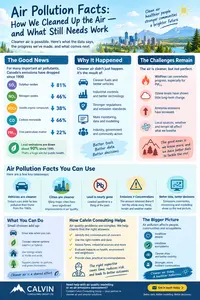
Surprising Air Pollution Facts: It's Not All Bad News!
Sep 17, 26 06:14 PM
 Trying to improve air quality has been a priority. Here are some air pollution facts to show you how far we've come.
 -
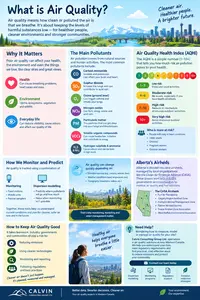
What is air quality and how can we fix it?
Sep 16, 26 11:19 AM
What is air quality? How do you define good air quality? It's just the opposite of air pollution. -
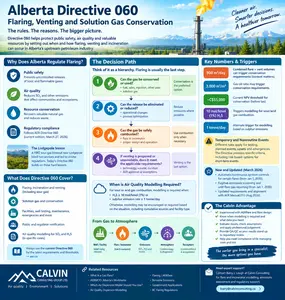
Energy and Environment: Persuading industry to care
Sep 15, 26 02:47 PM
 What's wrong with Alberta's energy and environment? International media criticize the province and its biggest industry almost every day. Here's the truth.
Do you have concerns about air pollution in your area??
Perhaps modelling air pollution will provide the answers to your question.
That is what I do on a full-time basis. Find out if it is necessary for your project.
Have your Say...
on the StuffintheAir facebook page
Other topics listed in these guides:
The Stuff-in-the-Air Site Map
And,
Thank you to my research and writing assistants, and the author remains responsible for the content.
Most Popular Pages on this Website:
Pictures of Global Warming
- See photos, cartoons, charts, graphs and a few surprises.
Clouds
- Don't know a cumulus from a stratus? Check here.
Causes of Global Warming
- It's not always obvious.
Calgary Alberta Weather
- Example of Canadian Goodness.
Thermometers
- Our favourite weather instrument.
- Home
- Contact Us
- Free E-zine Back Issues
- Privacy Policy
- Site Map - I'll help find something good.

By Barry Lough, P.Met., EP (Environmental Professional)
Text copyright © 2003-2024 Stuff in the Air.com
BACK TO TOP - Hit your 'Home' Key