Grow a Balloon
by Keli Back
(Versailles, KY, USA)


Bumper Crop
Inflating the sky's secrets - Think balloons are just for birthdays? You're missing out on the chance to control a mini storm. We're going to turn bubbles into a secret weapon that reveals how the planet breathes.
Keli tells us...The purpose of my science fair project was to demonstrate how matter can change state. In this case I used a chemical reaction to change a liquid into a gas.
I added 1 cup of vinegar to a small plastic flask. Next, I filled a round balloon with baking soda and stretched the opening around the opening of the flask. When I tipped the balloon up, the baking soda dropped into the vinegar, creating a foamy substance and gas, blowing up the balloon.
I set up the demonstration multiple times for the many people who visited my project at the science fair. Most of the time it was successful, but a few times I ripped the balloon when trying to stretch it around the opening of the flask. Regardless, my demonstration was always a hit with the audience. I would definitely do it again.
Today I am an elementary science teacher and I believe strongly that science fairs are an incredible learning experience for students as young as 3rd grade. People often argue that parents do all the work, but doing research, conducting experiments, and collecting/analyzing data with or without help teaches children how to 'do' science. As they get older, the scientific method and process skills start to make better sense because they have these science fair experiences in their background.
Barry's Response - What's good for the children is good for society. Thank you, Keli, for your detailed description and for being good for the children. I'll bet you still use this demonstration whenever appropriate.
Search this site for more information now.
Flask to firmament
Keli's experiment isn't just about making foam. It shows how powerful gas expansion is. Those bubbles fight for space against the rubber when they erupt. That's exactly what happens in our atmosphere.What do you mean by weather balloons?
That's right! Think bigger. Thunderstorms are triggered by bubbles of warm air.We study air parcels in meteorology. Think of an invisible balloon of warm air. As the sun heats up the Earth, this parcel gains energy, its molecules dance faster, and it rises. Like Keli's balloon, the parcel expands as the surrounding pressure drops. It's called the Adiabatic Process. Eventually, the moisture inside that balloon condenses, and you've got a cloud. It observes the the ideal gas law.
P x Delta-V = n x R x Delta-T
Keli was basically creating a mini-storm in a flask, right?
Yes, exactly! Let's stir it up. Keli inflates her project with Carbon Dioxide (CO2). CO2 is treated like a comic book villain today. But look at that balloon. In the world of Global Greening, many skeptics and scientists point out that higher CO2 levels actually help forests. The Earth acts like a giant, self-inflating garden. Some worry about the greenhouse effect, but others notice the planet's getting greener.
It's important to celebrate the complexity of the aquatic environment too. CO2 dissolves in the ocean, but it doesn't just disappear; it participates in a huge chemical dance that builds shells and feeds algae.
Sounds defiant to the standard climate crisis narrative.
Science requires defiance. If we don't question the consensus, we're just parrots. Prove everything; hold fast what's good. To protect the planet or our industrial freedom, you need the same thing: Honest Experiments.What if Keli's logic revolutionized Air Quality Consulting? Rather than just measuring smog, we could deploy Micro-Balloons made of biodegradable proteins that catch pollutants as they expand. We could literally grow a filter in the sky that tracks wind currents and cleans the air. Like a smart-lung for the city.
Here's why your balloon matters
Keli, your experiment ignites my mind. By tipping that baking soda, you don't just change state, you liberate energy.Don't just look at the balloon, students. Take a look at the flask. Isn't it cold? It's an endothermic reaction. To break their bonds, the chemicals steal heat from the room. Everything in meteorology is about energy exchange. Whether it's a hurricane sucking heat from the ocean or a mountain pushing air upward, it's all about energy.
Growing a balloon means commanding molecules to move. You're like a microscopic architect.
- You overcome the rubber's tension.
- Chemistry: You create CO2 from kitchen stuff.
- It's all about seeing what's invisible.
Do you think CO2 is just a waste gas, or is it the hidden fuel that makes the world green? Would you inflate a balloon with any gas in the universe? Let's blow this topic up in the comments.
How would it make you feel?
Awe and intellectual bravery are appealed to. Specifically, it targets the "I can do this" feeling of a student and the "wait, let me think about that" feeling of a skeptic. This is for kids who want to feel like they're part of something bigger and more controversial.
Comments for Grow a Balloon
|
||
|
||
|
||
|
||

Recent Articles


-
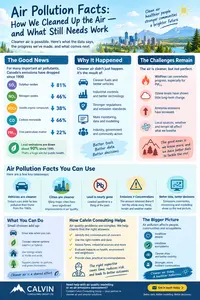
Surprising Air Pollution Facts: It's Not All Bad News!
Sep 17, 26 06:14 PM
 Trying to improve air quality has been a priority. Here are some air pollution facts to show you how far we've come.
 -
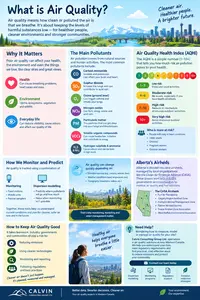
What is air quality and how can we fix it?
Sep 16, 26 11:19 AM
What is air quality? How do you define good air quality? It's just the opposite of air pollution. -
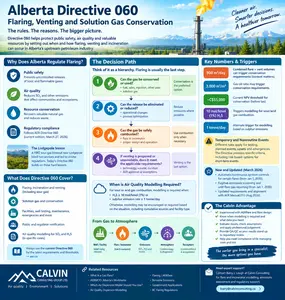
Energy and Environment: Persuading industry to care
Sep 15, 26 02:47 PM
 What's wrong with Alberta's energy and environment? International media criticize the province and its biggest industry almost every day. Here's the truth.
Do you have concerns about air pollution in your area??
Perhaps modelling air pollution will provide the answers to your question.
That is what I do on a full-time basis. Find out if it is necessary for your project.
Have your Say...
on the StuffintheAir facebook page
Other topics listed in these guides:
The Stuff-in-the-Air Site Map
And,
Thank you to my research and writing assistants, and the author remains responsible for the content.
Most Popular Pages on this Website:
Pictures of Global Warming
- See photos, cartoons, charts, graphs and a few surprises.
Clouds
- Don't know a cumulus from a stratus? Check here.
Causes of Global Warming
- It's not always obvious.
Calgary Alberta Weather
- Example of Canadian Goodness.
Thermometers
- Our favourite weather instrument.
- Home
- Contact Us
- Free E-zine Back Issues
- Privacy Policy
- Site Map - I'll help find something good.

By Barry Lough, P.Met., EP (Environmental Professional)
Text copyright © 2003-2024 Stuff in the Air.com
BACK TO TOP - Hit your 'Home' Key