How do plants grow in different conditions
by Katie
(Honolulu)


Plant growth experiment
How to hack your garden and the sky with Root Rebels - Plants are actually tiny green geniuses who know how to hack the atmosphere and use chemistry to survive. You're ready to see the world like a secret inventor if you've ever wondered why some plants thrive while others fail.
Katie tells us: For my elementary school (fourth grade) science fair, I did an experiment about plant growth. I took baby spider plants, cut from one adult plant, and subjected them to different conditions. One grew in water, another in water with a little bit of sugar, another in water with more sugar, and one in salt water. The latter two died. The one in a lot of sugar grew mold. The first did OK and was the control. The plant with a little sugar in its water grew better.The project went well. I was happy to see how sugar and salt affected plant growth. I really enjoyed seeing my peers' projects at the fair. I would definitely do it again. In fact, I pursued research in college and enjoyed sharing that with my peers!
Barry's Response - Kind of reflects how our diets affect our own health, doesn't it? I wonder what your later research projects were about. Thanks for your input, Katie.
Search this site for more information now. Or follow along in this hypothetical conversation...
Puzzles, plants, and power
Katie might have told Barry, you're onto something with the diet thing, but let's turn it up. Katie's spider plants weren't just growing, they were doing high-stakes math.What do I say? I thought they just needed a watering can and some sun.
She says that's wrong! Katie broke the plant's osmotic pressure when she added salt. It's like a tug-of-war. When the salt outside the roots pulls water out of the plant, it dehydrates even if it's sitting in a puddle. It's a brutal lesson in physics.
My world of air quality consulting sees this too. We worry about pollutants, but we forget that plants breathe what we throw away. CO2 is called a pollutant, but to a spider plant, it's like going from a snack bar to an all-you-can-eat buffet. Throughout history, during Greenhouse Earth periods, plants grew into giants because the air contained more food.
That sounds a little controversial to me. Doesn't more CO2 hurt the planet?
She could have added Life loves a challenge. Consider the Green Revolution. You might argue that human ingenuity and a little extra carbon actually greened the planet more than any government mandate. Meanwhile, my friends might worry about salt runoff from roads killing our ponds' lungs. There's a piece of the puzzle for both sides.
By adapting or dying, plants show how they grow in different conditions. If the violins (water) and the drums (nutrients) don't sync, the music stops. Perhaps we should tend the garden, but we shouldn't be afraid of the weather. It's not a fragile glass ornament, it's a self-correcting masterpiece.
The Aero-Garden Theory Revolutionizes the Field
Put away the pots and soil. What if we manipulated local air quality, not by removing things, but by enriching the micro-climates around our crops with specific trace gases? By changing the flavor of the air, we could grow forests in deserts.I then ask, "You're a mad scientist, right?"
"Barry, I'm an inventor! Where others see dirt, I see patterns. It's all one big, beautiful game, whether it's the math of a protein or the physics of a storm."
Here's why it matters
Science may look like a set of rules, but it's better compared to a toolkit. Understanding how plants grow in different conditions gives you the power to change your environment. For your own little patch of Earth, you can be a consultant.- Check out how your plants react to the morning mist (meteorology!).
- What's up with that sad plant in the corner? Do you think the air is too dry?
- Break things (safely) to see how they work instead of just following the guide.
Comments for How do plants grow in different conditions
|
||
|
||
|
||
|
||
|
||
|
||
|
||
|
||


Recent Articles


-
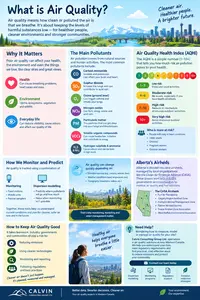
What is air quality and how can we fix it?
Sep 16, 26 11:19 AM
 What is air quality? How do you define good air quality? It's just the opposite of air pollution.
 -
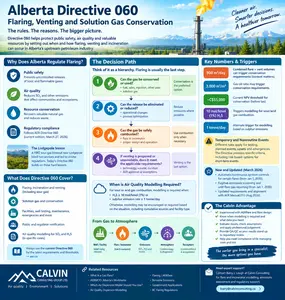
Energy and Environment: Persuading industry to care
Sep 15, 26 02:47 PM
 What's wrong with Alberta's energy and environment? International media criticize the province and its biggest industry almost every day. Here's the truth.
 -
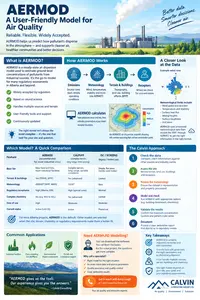
AERMOD Air Quality Modelling in Alberta
Sep 14, 26 05:58 PM
Can you tell me which air quality model works best for most Alberta Air Quality Model Guideline regulatory modeling? AERMOD. It's easy, versatile, and recognizable.
Do you have concerns about air pollution in your area??
Perhaps modelling air pollution will provide the answers to your question.
That is what I do on a full-time basis. Find out if it is necessary for your project.
Have your Say...
on the StuffintheAir facebook page
Other topics listed in these guides:
The Stuff-in-the-Air Site Map
And,
Thank you to my research and writing assistants, and the author remains responsible for the content.
Most Popular Pages on this Website:
Pictures of Global Warming
- See photos, cartoons, charts, graphs and a few surprises.
Clouds
- Don't know a cumulus from a stratus? Check here.
Causes of Global Warming
- It's not always obvious.
Calgary Alberta Weather
- Example of Canadian Goodness.
Thermometers
- Our favourite weather instrument.
- Home
- Contact Us
- Free E-zine Back Issues
- Privacy Policy
- Site Map - I'll help find something good.

By Barry Lough, P.Met., EP (Environmental Professional)
Text copyright © 2003-2024 Stuff in the Air.com
BACK TO TOP - Hit your 'Home' Key