My climate/weather thoughts
by Bobby Pine
(Knoxville,TN,USA)


this is what TN snow looks like; wimpy. It melts while it accumlates weird.
My fight for local truth and digital air power - Your backyard holds the biggest secrets about climate, and the official weather map doesn't tell the whole story. What's with the crazy snow totals and the math behind our weather models if the planet's warming?
Comment from Bobby: I do believe the climate is getting warmer and I think the weather is becoming much more severe because of this.Climate and weather are different. The more moisture in the atmosphere means higher precip totals liquid or frozen.
I also think the planet goes through cycles and we are coming back to a cold snowy climate here in the past few years.
I live in Knoxville Tennessee and it doesn't snow much but the past two years; its been colder and snowier here. We haven't seen this since the late 70's and early 80's. December 2010, we have had 3 snow events, not heavy accumulations but each storm it snowed lightly for 2-3 days each with snow depth ranging from 6-10" on the plateau to 4-8" in the valley and 15-40" in the smoky mountains. This is unusual for this time of year.
Our temperatures have been running in the mid 30's for highs to teens for lows. This is 10-15 degrees colder for this time of year. January is our coldest and snowiest month. We usually have a 2 week stretch of sub freezing temps.
In '09 (January), we had 2 weeks of temps in the 20's for highs and lows -1 to 10 above and the rivers froze enough to walk on. In 20 years I never seen this happen.
I'm expecting this January to be even worse and I think sometime before the warm up in March we will get that storm we been dreaming of. Personally, I'd like to see a storm of 6-12" or more hit us. This would be great; I haven't seen snow like that since I left New York in 1990.
I think it's coming and so far this year has the most promising forecast yet. I won't get excited 'til it happens.
Barry's Response - An advocate for huge snowfalls and wintery weather. I like it.
Search this site for more information now.
Why Snow Doesn't Care About Global Warming🌬️
Hey! You clicked My climate/weather thoughts because you saw the title and maybe you know the official narrative, but your own eyes tell a different story. That makes sense. I use advanced Fluid Dynamics calculations to predict a six-inch snowstorm. I'm watching Knoxville, Tennessee, get frostier than a forgotten smoothie in a freezer, and I'm wondering: What's going on?Atmosphere isn't a math problem, it's a chaotic masterpiece
Here's where the raw, real science starts. The atmosphere is a non-linear dynamic system. The foundation of theoretical meteorology is this. It's like a beautiful, terrifying machine where a tiny change today can have a huge impact weeks later. Forecasting beyond about ten days is a dice roll, and projecting a century of global climate change requires humility and dissent.The colder, snowier winters in Knoxville aren't wrong, they're dictated by massive regional atmospheric hiccups called Teleconnections.
- Polar Vortex Case Study. Whenever the Polar Vortex, the big wind pattern encircling the Arctic, wobbles (a meteorological term, seriously! ), it pushes ice cold air south, sometimes all the way to Tennessee. An uneven heating of the Arctic can lead to this, which, ironically, some cutting-edge research attributes to the very warming trends we talk about! Warming doesn't mean everyone gets warm all the time; it can rearrange the cold. Here's an example of a counter-narrative that uses the data to support a different, but credible, scientific conclusion.
Stewardship over statues: The Aquatic Debate
The pushback from conservatives and skeptics on the aquatic environment often makes a crucial point: The oceans have colossal natural variability. It's true that deep-ocean circulation cycles like the Atlantic Meridional Overturning Circulation (AMOC) and Pacific Decadal Oscillation (PDO) affect global heat transfer a lot. It's hard to track these cycles because they move heat, not create it.Here's my fusion of principles - a heartfelt appeal to both sides:
- Let's embrace "stewardship" instead of "saving" the planet. We're responsible for the corner of the universe we inhabit. We don't need climate models to agree that dumping pollution is a moral and economic mistake, whether it's industrial effluent or plastic waste. Oceans and rivers keep us alive. It's a Logical Planner's job to protect their clarity and health.
The Air Quality Rebellion revolutionizes the field
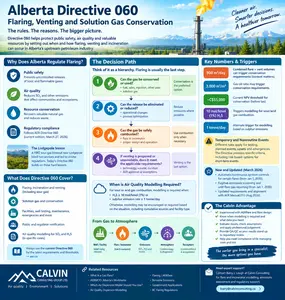
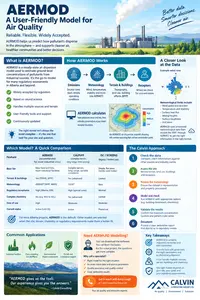
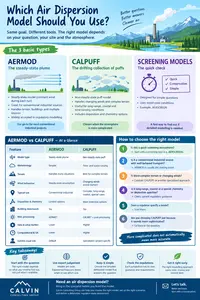
If you read the article about air quality consulting jobs - the kind where you need to run software like AERMOD and CALPUFF to ensure industrial emissions are compliant. It's good, but it's reactive. This is like studying a fire after it's already started.Here's my controversial new idea: Scrap the compliance model. By making the data unassailable and universal, we can increase the chance of a good use of knowledge.
- Atmospheric Sentinel Network: I want to build a global, decentralized network of inexpensive, resilient sensors that collect hyper-local air and weather data. The data would be verified on a Blockchain-style ledger, generating a real-time 3D Atmospheric Tomography.
- Data gatekeeping is shattered. Instead of arguing over complex, black-box models, we democratize air quality. This forces constant optimization for industry, not just compliance, and gives citizens a non-negotiable right to know about their environment. As a result, the discussion changes from who's wrong to what we can do to fix it.
Get involved and explore more
🤩 It's my hope that this deep dive into my climate/weather thoughts has sparked your inner inventor! Our discussion covered the non-linear math behind the Polar Vortex and proposed a revolutionary way to handle air quality data.Do you think a decentralized Atmospheric Sentinel Network makes sense, or do you think big government models are the only way to deal with climate change? Let's debate in the comments!
Comments for My climate/weather thoughts
|
||
|
||
|
||

Recent Articles


-
Energy and Environment: Persuading industry to care
Sep 15, 26 02:47 PM
 What's wrong with Alberta's energy and environment? International media criticize the province and its biggest industry almost every day. Here's the truth.
 -
AERMOD Air Quality Modelling in Alberta
Sep 14, 26 05:58 PM
 Can you tell me which air quality model works best for most Alberta Air Quality Model Guideline regulatory modeling? AERMOD. It's easy, versatile, and recognizable.
 -
Air Dispersion Model - What's an air model?
Sep 14, 26 02:13 PM
How do we help a factory control air pollution? Provide design feedback ahead of time using an air dispersion model.
Do you have concerns about air pollution in your area??
Perhaps modelling air pollution will provide the answers to your question.
That is what I do on a full-time basis. Find out if it is necessary for your project.
Have your Say...
on the StuffintheAir facebook page
Other topics listed in these guides:
The Stuff-in-the-Air Site Map
And,
Thank you to my research and writing assistants, and the author remains responsible for the content.
Most Popular Pages on this Website:
Pictures of Global Warming
- See photos, cartoons, charts, graphs and a few surprises.
Clouds
- Don't know a cumulus from a stratus? Check here.
Causes of Global Warming
- It's not always obvious.
Calgary Alberta Weather
- Example of Canadian Goodness.
Thermometers
- Our favourite weather instrument.
- Home
- Contact Us
- Free E-zine Back Issues
- Privacy Policy
- Site Map - I'll help find something good.

By Barry Lough, P.Met., EP (Environmental Professional)
Text copyright © 2003-2024 Stuff in the Air.com
BACK TO TOP - Hit your 'Home' Key