presentation on my science project
by gugu
(zalau)


An institution in itself
How to win first place at science fairs - It's like you're standing under a ton of weight and you don't even feel it. It's a great way to see how real science can actually challenge the world if you're tired of boring school projects.
What does Gugu tell us? i remember when i had to make a presentation on my science project.. i was on the 5th grade.. and it was about a volcano...hehh.. Good job with the posting.Barry's Response - Gugu, the good old volcano. It remains popular because kids love its relative easy way to make a "presentation on my science project".
So how does someone build this classic from scratch and demonstrate it proudly? Prepare yourself a cone using paper mâché or clay. Make sure there is a crater at the top, a hole for fluid elements to flow from. Place a container in the hole and secure it in place with a seal so that a flow of liquid does not damage the volcano.
Place a good dose of baking soda into the container. Prepare a good supply of vinegar; add red food colouring to give it that special effect.
Have a brief explanation of what occurs in a real volcano ready for the moment of demonstration. Hit the high points with your talk, make it interesting and factual and rehearse it well. Pour the vinegar into the spout at the perfect moment, the dramatic high-point of your talk and watch the effects.
Every science fair has at least of one of these demonstrations. They are quite easy and show the point very well. Make a good point.
Here's what's really important with this one. You will score better if you can make it unique. How? Enticing speech is one thing. Music might be another. Extra eruption power might attract attention. Maybe try Coke and Mentos instead. That might be fun.
Search this site for more information now.
Manifesto for my science project presentation
You lose if you show up to the gym with a papier-mâché volcano and just mumble about vinegar. It doesn't matter if you're in 5th grade or 11th; if your presentation lacks soul, it's just a mess.Science isn't a set of rules. Science is the art of asking, "Is that actually true?". It's the ultimate expression of freedom of thought.
- Breathing (and carrying) - According to the article, a square foot of air weighs a ton. Take a look at that. Every day, you walk through an ocean of gas. So-called climate experts want you to fear the air. Plants literally crave CO2 to grow, while they ignore the massive, complex cycles of the Sun and the ocean. Build a Barometer to disrupt the status quo.
- Show how pressure dictates life, not just how pressure changes
- We're told the earth is fragile, like a glass ornament about to shatter. I'm with you. Mother Nature or God's Design, this planet handles more pressure than a fifth grader on presentation day.
- Volcano debate - The volcano was mentioned above. It's easy, but let's make it dangerous. That's not "call the fire department" dangerous, that's intellectually provocative.
- Present it as an air quality study instead of just an eruption.
- What's the counter-narrative? Did you know a single volcanic eruption can spew more aerosols into the air than years of human activity? It doesn't mean we should litter, but it reminds us that humans aren't always the main characters.
- Stewardship matters. The aquatic environment and the breath of life (the atmosphere) are gifts, not something to be feared.
- Presentation Tips - Follow these steps to make sure you don't just participate, but conquer when you present my science project:
- Take command of the room: Don't read your poster. You can move; the poster stays still.
- Try using music. When the vinegar hits the baking soda, drop a heavy bass line. Why? Rhythm mimics the earth's heartbeat.
- Answer a judge's question with data, but leave room for mystery. Scientists who admit We don't know everything yet are the smartest.
- You don't have to say your project is cool - Start saying your project shatters expectations, illustrates atmospheric weight, defies the standard narrative, and incites curiosity.
- Principle of the Seashell - If you feel like everyone is demanding you pick a side - Left or Right, Green or Greed - take a deep breath. Take care of your project like a seashell. It's your truth. You get to look at the data and decide what it means.
It's your turn now.
How did your last science project go? Does the climate conversation ignore the invisible ton of natural air pressure? Are we just shouting into the wind?
Comments for presentation on my science project
|
||
|
||
|
||


Recent Articles


-
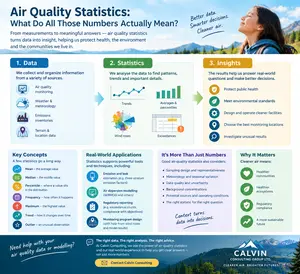
Air Quality Statistics: What Do All Those Numbers Actually Mean?
Sep 21, 26 12:00 AM
 How are air quality statistics used to understand pollution, design monitoring programs, estimate emissions and make environmental decisions?
 -
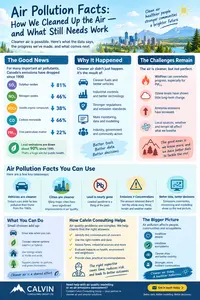
Surprising Air Pollution Facts: It's Not All Bad News!
Sep 17, 26 06:14 PM
 Trying to improve air quality has been a priority. Here are some air pollution facts to show you how far we've come.
 -
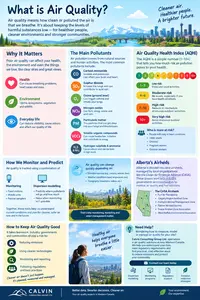
What is air quality and how can we fix it?
Sep 16, 26 11:19 AM
What is air quality? How do you define good air quality? It's just the opposite of air pollution.
Do you have concerns about air pollution in your area??
Perhaps modelling air pollution will provide the answers to your question.
That is what I do on a full-time basis. Find out if it is necessary for your project.
Have your Say...
on the StuffintheAir facebook page
Other topics listed in these guides:
The Stuff-in-the-Air Site Map
And,
Thank you to my research and writing assistants, and the author remains responsible for the content.
Most Popular Pages on this Website:
Pictures of Global Warming
- See photos, cartoons, charts, graphs and a few surprises.
Clouds
- Don't know a cumulus from a stratus? Check here.
Causes of Global Warming
- It's not always obvious.
Calgary Alberta Weather
- Example of Canadian Goodness.
Thermometers
- Our favourite weather instrument.
- Home
- Contact Us
- Free E-zine Back Issues
- Privacy Policy
- Site Map - I'll help find something good.

By Barry Lough, P.Met., EP (Environmental Professional)
Text copyright © 2003-2024 Stuff in the Air.com
BACK TO TOP - Hit your 'Home' Key