Robotic Future
by Gowtham
(India)


Machine at Play
Ghosts, gears, and gasses in the Robotic Future - The truth feels weirder than a movie about robots taking over the world. Some machines don't just sit on desks because we need them to breathe through sensors and watch the sky to see where the wind blows.
Gowtham tells us... My Science Project was to provide a Robotic statue which does the house hold stuff.I acted as a robot with all the costumes made up of cardboard and stickers. It was very fun and interesting. My Friends helped me to do it.
Science education is a most important thing. The world is revolving around our scientific inventions. Whether they are good or bad, it was always fantastic and useful and a part of every humans life.
As some one said "Necessity is the Mother of Invention," science inventions should not stop. I favour it.
Barry's Response - Ever heard of the mechanical Turk? It was a phony robot that played chess. Audience members believed that this automaton could actually play well when it was on display over 200 years ago. Actually a champion chess player hid inside the contraption and operated it. And beat many challengers at the game.
Amazon.com took this idea and created a task marketplace in which people outsource simple assignments for small bits of money. Their slogan says it all. "Artificial Artificial Intelligence."
Thanks for the description, Gowtham.
Search this site for more information now.
Robots with soul
I love that cardboard Gowtham. The Mechanical Turk reminds me of that 18th-century chess-playing automaton that actually hid a tiny genius inside. We do the same thing today. It's called The Cloud, but millions of humans teach programs like ChatGPT how to sound like us. It's like we're ghosts in a machine.But let's talk about the Robotic Future that matters - the one involving our atmosphere. To maintain clear thought, we need our own data. I don't trust the consensus that says we should fear the weather. Let's use robots to monitor Air Quality brutally.
Weather is more than just predicting rain; it's about understanding how the sun heats the ground to create thermal plumes that carry dust. Let's call them Atmospheric Janitors - a swarm of tiny, solar-powered drones. They wouldn't just study the air; they'd use electrostatic charges to clump fine particulate matter (PM2.5), scrubbing the sky above your school.
The skeptics - including friends of mine - rightly worry about the Aquatic Environment. If we build billions of robots, where do the batteries go? Do they end up in whales' bellies? We should probably guard the Earth, not just greenwash it. Biodegradable circuits and salt-water batteries are the key to a Progressive robotic design.
It's a dynamic system
...so it changes — of course it does. Let's start engineering solutions that don't make us poor. Math can be used to optimize wind flow in cities, creating wind canyons that naturally remove smog.The Robotic Future belongs to inventors who see the sky as a lab, not a crime scene. It belongs to kids who realize that Artificial Intelligence just reflects our own brilliance and mistakes. Grab some cardboard, sure, but then learn the math of wind. Someone's gotta be clever enough to hack the atmosphere.
Our Robotic Future Depends On It
We're on the cusp of a new era where machines help us breathe cleaner air and understand our planet better. Whether you value independence or championing the environment, we can all agree that better data is better. Instead of being scared, we leverage technology.'Robotic Future' isn't about machines replacing us, it's about using our cleverness to protect the world we inherited.
Is Jenish (see below) right that we need to be more realistic, or is the 'cardboard stage' where the real magic happens? Comment with your most unrealistic invention idea - let's see if we can figure it out!
Comments for Robotic Future
|
||
|
||
|
||
|
||
|
||
|
||


Recent Articles


-
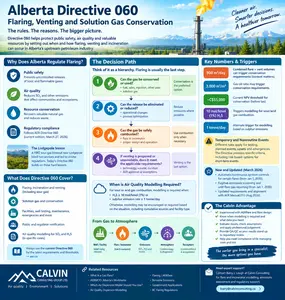
Energy and Environment: Persuading industry to care
Sep 15, 26 02:47 PM
 What's wrong with Alberta's energy and environment? International media criticize the province and its biggest industry almost every day. Here's the truth.
 -
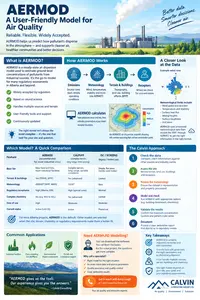
AERMOD Air Quality Modelling in Alberta
Sep 14, 26 05:58 PM
 Can you tell me which air quality model works best for most Alberta Air Quality Model Guideline regulatory modeling? AERMOD. It's easy, versatile, and recognizable.
 -
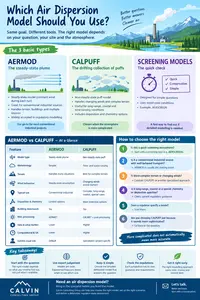
Air Dispersion Model - What's an air model?
Sep 14, 26 02:13 PM
How do we help a factory control air pollution? Provide design feedback ahead of time using an air dispersion model.
Do you have concerns about air pollution in your area??
Perhaps modelling air pollution will provide the answers to your question.
That is what I do on a full-time basis. Find out if it is necessary for your project.
Have your Say...
on the StuffintheAir facebook page
Other topics listed in these guides:
The Stuff-in-the-Air Site Map
And,
Thank you to my research and writing assistants, and the author remains responsible for the content.
Most Popular Pages on this Website:
Pictures of Global Warming
- See photos, cartoons, charts, graphs and a few surprises.
Clouds
- Don't know a cumulus from a stratus? Check here.
Causes of Global Warming
- It's not always obvious.
Calgary Alberta Weather
- Example of Canadian Goodness.
Thermometers
- Our favourite weather instrument.
- Home
- Contact Us
- Free E-zine Back Issues
- Privacy Policy
- Site Map - I'll help find something good.

By Barry Lough, P.Met., EP (Environmental Professional)
Text copyright © 2003-2024 Stuff in the Air.com
BACK TO TOP - Hit your 'Home' Key