Solar Power and Atmospheric Conditions
by Louis
(Armstrong)


Solar Power
The War for Light: Solar Power and Atmospheric Conditions - It's a massive fusion reactor in space, but the air around you wants to steal its power before it touches your panels. Learn how the sky actually works against us if you want to stop being a follower.
Louis tells us: I did a project in Middle School about how various environmental conditions effected the efficiency of Solar Panels.To do this I obtained a solar panel from a calculator, and a volt meter. I set up in a dark room a light setup so that the lighting conditions and temperature were regulated. I read the output of the panel at normal conditions (room temperature). I then changed the thermostat to both colder and hotter in increments of 3 degrees, and measured the temp for accuracy, then read the output of the panel. Finally I introduced fog (from a fog machine) and did the same temperature tests.
I thought this project was very interesting, but it was the one that I was assigned from my teacher at the time. To be honest I got the results I expected, and it was a really boring project.
I wouldn't explore this area further, but I might have tried to improve the efficiency of the panel in all conditions (in other words improve the design), and I think that would have been more interesting. I would not recommend this project for other kids as it is pretty lame, and will not teach the child much, nor gain any scientific respect for the child when it is presented.
Ideally you should do a project that has a neat effect, something that's flashy and still teaches something useful. That's my opinion at least.
Barry's Response Louis:
I think if my scientific company were to hire you, it would be in marketing. You seem to have a knack. Thanks for you description.
Search this site for more information now.
Atmospheric Conditions and Solar Power: The Sky Isn't Your Friend
Let's be real. Solar panels are treated like magic wands at science fairs. Point them at the sun, and poof, electricity. Louis hit a wall when he realized Solar Power and Atmospheric Conditions are always at war.Physicists explain the Choke Point
Sunlight doesn't just pass through our atmosphere. Collides...- Nitrogen and oxygen molecules scatter blue light (Rayleigh scattering), which is why the sky is blue but your panel isn't.
- Infrared energy is absorbed by water vapor and CO2.
- Aerosol Attack: This is where it gets messy. Air Quality Consulting looks at particulates like smoke, dust, and sea salt. Solar efficiency is smothered by these tiny invaders. If you live in a city with heavy smog, your clean energy might not work because the air itself is too dirty.
Reality check for you
Solar is pushed as a total solution, but skeptics raise a valid point: Reliability. Aside from the sun, God designed a world that experiences Dark Calms - periods when the wind stops and the clouds settle in for weeks. For a civilization that needs hospitals running 24/7, relying on a system that faints when a fog machine (or volcano) turns on is a risky bet. A true stewardship means using all the tools we've got - gas, nuclear, and sun - to make sure no one goes hungry.Bring the design to the next level
Louis was right: measuring efficiency drops is lame. The glory is in fixing it.- Surfaces that self-heal: Like a lotus leaf, we need panels that shake off dust.
- Light bounces off snowy ground in snowy regions. Why aren't we building vertical, double-sided panels that harvest snow glare?
- An Air Quality sensor adjusts the panel's angle based on the type of haze in the air to catch the most scattered photons.
It's a heartfelt defiance
The science of Solar Power and Atmospheric Conditions isn't settled. It's just getting started. In a shifting, moody atmosphere, we're trying to power a digital world with a fusion reactor 93 million miles away. It's a miracle it works.Inventors don't follow instructions; they shatter them. Cool the panel with rainwater if it overheats. Find the frequency that pierces the fog. It's not about being right—it's about being relentless.
Is it time to build a more rebel-proof energy system or should we trust the clouds? Let me know what you think! Tell me your craziest idea for a solar panel that works in a storm. I'll read them all.
Recent Articles


-
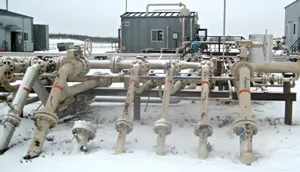
Natural Gas Leak Detection: Does YOUR Facility Need it?
Sep 28, 26 08:40 AM
 It's important for industries, especially in the energy sector, to have a natural gas leak detection program. It's often required by law.
 -
Computers in Meteorology | How Would they Help You?
Sep 26, 26 09:40 PM
 Computers in meteorology help us keep track of atmospheric data and make predictions.
 -
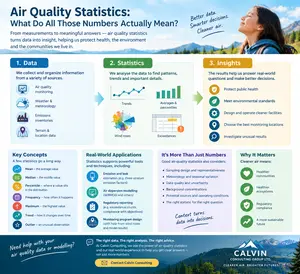
Air Quality Statistics: What Do All Those Numbers Actually Mean?
Sep 21, 26 12:00 AM
 How are air quality statistics used to understand pollution, design monitoring programs, estimate emissions and make environmental decisions?
Do you have concerns about air pollution in your area??
Perhaps modelling air pollution will provide the answers to your question.
That is what I do on a full-time basis. Find out if it is necessary for your project.
Have your Say...
on the StuffintheAir facebook page
Other topics listed in these guides:
The Stuff-in-the-Air Site Map
And,
Thank you to my research and writing assistants, and the author remains responsible for the content.
Most Popular Pages on this Website:
Pictures of Global Warming
- See photos, cartoons, charts, graphs and a few surprises.
Clouds
- Don't know a cumulus from a stratus? Check here.
Causes of Global Warming
- It's not always obvious.
Calgary Alberta Weather
- Example of Canadian Goodness.
Thermometers
- Our favourite weather instrument.
- Home
- Contact Us
- Free E-zine Back Issues
- Privacy Policy
- Site Map - I'll help find something good.

By Barry Lough, P.Met., EP (Environmental Professional)
Text copyright © 2003-2024 Stuff in the Air.com
BACK TO TOP - Hit your 'Home' Key