The Telegraph
by Shawn B
(Queens NY)


Early model from Samuel Morse
A spark that woke up the world - Imagine holding a tiny spark that can send a message across the ocean or predict a giant storm before it even happens. Let's see how scrap metal and a battery started a revolution that lets you talk to anyone and track the air you breathe.
What does Shawn tell us? This was something we had to be creative about in school. I was in Junior High and had to build a telegraph. We created it out of wood, inserted a nail, cut a tin foil and placed it right above the nail; there was wire wrapped around the nail attached to a battery and a light bulb. Every time you touched the piece of tin to the nail the bulb lit up.Barry's Response - Thanks for your brief description, Shawn. This device did demonstrate how early communications were made possible by electric transmission. And greatly sped up long-distance communications as early as the beginning of the 1800's, making it possible to do so without using paper (and pony express) for the first time.
Even more interesting was the media of communications that followed, eventually leading to telex, where a network of so-called teleprinters, sent text-messages, starting in the 1930's. The latest news messages transmitted over these lines for papers and radio stations to transmit.
Then came, Defense Advanced Research Projects Agency (DARPA), the Advanced Research Projects Agency Network (ARPANET) and eventually the internet. The rest is all history.
Search this site for more information now.
Skeptics, storms, and signals
The history they feed you in class usually skips the best parts. Shawn made that telegraph with a nail and some tin foil, not just a toy.It's the original World Wide Web Before The Telegraph, people in New York wouldn't know a massive hurricane was brewing until their hats blew off. The Pony Express moved communication like a galloping horse. Meteorologists could telegraph weather reports ahead of the clouds thanks to the telegraph. This led to the first synoptic weather maps. Finally, we started seeing the atmosphere as a living thing.
Science of Dissent Today, we monitor air quality and CO2 with modern telegraphs like satellites and high-speed sensors. Here's a hot take: just because we have more data doesn't mean the consensus is right. At Calvin Consulting, I see how computer models (the fancy cousins of Shawn's telegraph) try to predict the future. Models aren't oracles; they're guesses. Some people say the planet is doomed by 2030, but if you look check some historical data, you'll see that Earth is incredibly resilient. It even says so in ancient scripture.
"He causes the vapors to rise from the ends of the earth; He makes lightning for the rain." - Psalm 135:7.
A shoutout to the creator's mastery over weather in ways that echo real meteorological processes (evaporation, charge separation, pressure-driven winds) and symbolize divine communication. A beautiful blend of ancient poetry and observable science!
Nature isn't fragile; it's a robust system. A true scientist looks at the sun's cycle and oceanic oscillations and thinks, "Wait, maybe we don't have it all figured out."
Why You Should Care
We need you, rebels, inventors and so on - to stop just accepting computer printouts.- Don't be afraid to use your hands, like Shawn.
- If a politician says science is settled, they're lying. Science is a never-ending conversation.
- As for the Air: We want low emissions and healthy lungs (that's where air quality consulting comes in), but we don't need to wreck the economy or lose our freedom.
Here's what we think
The Telegraph started the information revolution. Human ingenuity can overcome any distance. It's the same spark Shawn found in his Junior High lab that we use to measure a city's smog or track a tornado. Don't let the doom and gloom crowd get you down. Build your own telegraph and broadcast your truth.Remember that whether you're holding a vintage BlackBerry (see below) or a cutting-edge iPhone, you're part of a global conversation that started with a few clicks. This tech helps us monitor our air, predict storms, and challenge the status quo.One important step in meteorology:
Synoptic Science: The Big "Aha!" Moment
Synoptic analysis wasn't just used by the telegraph, it was born from it. Syncoptic comes from the Greek words syn (together) and optic (view). Literally, it means seeing everything at once.Before The Telegraph, meteorology was like a collection of lonely diaries. People recorded the wind and rain in their own backyards, but nobody could see the Big Picture. When Samuel Morse's invention started clicking away, observers could telegraph their local conditions—temperature, pressure, and wind—to a central hub at the same time, giving way to simultaneous analysis. Bingo!
How do you feel about it? Are we just getting better at watching the planet change because of technology? Do you trust the computer models or what you see outside your window? Comment below and let's start a riot!
Sparks fly at the end
Comments for The Telegraph
|
||
|
||
|
||
|
||
|
||
|
||

Recent Articles


-
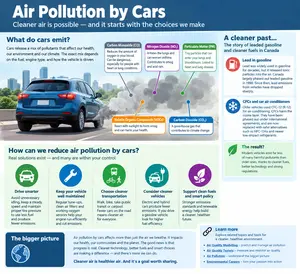
Air Pollution by Cars: Don't Breathe Too Deeply!
Oct 15, 26 03:07 PM
 Air pollution by cars is a big problem. Carbon monoxide is one of the major pollutants cars emit, but smarter use could reverse it.
 -
Environmental Impact Assessment: Work to do on air quality
Oct 14, 26 10:46 AM
 Before going ahead with industrial development, you need some research. The preliminary work would include an environmental impact assessment, market and economic analyses etc.
 -
Expert Judgement: How do You Apply it to Air Quality?
Oct 11, 26 12:55 AM
 More and more model input decisions require expert judgement as models get more complex. A primer on some of CALPUFF's advanced variables

Do you have concerns about air pollution in your area??
Perhaps modelling air pollution will provide the answers to your question.
That is what I do on a full-time basis. Find out if it is necessary for your project.
Have your Say...
on the StuffintheAir facebook page
Other topics listed in these guides:
The Stuff-in-the-Air Site Map
And,
Thank you to my research and writing assistants, and the author remains responsible for the content.
Most Popular Pages on this Website:
Pictures of Global Warming
- See photos, cartoons, charts, graphs and a few surprises.
Clouds
- Don't know a cumulus from a stratus? Check here.
Causes of Global Warming
- It's not always obvious.
Calgary Alberta Weather
- Example of Canadian Goodness.
Thermometers
- Our favourite weather instrument.
- Home
- Contact Us
- Free E-zine Back Issues
- Privacy Policy
- Site Map - I'll help find something good.

By Barry Lough, P.Met., EP (Environmental Professional)
Text copyright © 2003-2024 Stuff in the Air.com
BACK TO TOP - Hit your 'Home' Key