Climate Change and Our Duty
by Pooja Sharma
(Jain vishwa bharti university, ladnun)


Dire Consequences
Why We Argue About Our Planet: Climate Messages, Real Feelings - Talking about climate always hits a nerve, doesn't it? Some of us want facts, some want action, and some just want everyone to stop yelling and explain what's really going on. Here's where emotion, science, and a bit of friendly chaos collide, and you might just see your own thoughts reflected back at you.
Take it away again, Pooja: Climate change and global warming are defining issues of our time. Hardly a minute passes without a newspaper or a broadcast (or politician) making one or more references to the threats it presents and the importance of taking action quickly to limit the effects adapt to the transformations that are sure to come.For climate change is here, more or less, and the problem is likely to stay. But is changing it in our power? As individuals, businesses, communities and governments, to affect just how serious the problem will become?
We have the option how to act, but the effect we need to make on our own. We can make a difference by allowing the transition to a climate benign world. So we just need to start marching towards the answer.
Barry's Response - Thank you for this message, Pooja. It carries an important, if very familiar, message.
Thanks for your input.
Search this site for more information now.
It's our duty to fight climate change
Have you noticed how every weather app says "unprecedented" these days? The planet keeps telling us to study more, except now it's wildfire smoke, stalled heat domes, and rivers acting like moody teenagers during spring melt. Let's talk about it honestly, with a little courage, a little humour, and a lot of curiosity.We're living in a hot world. This isn't a left-wing plot or a right-wing conspiracy—it's a measurement. It's tracked by satellites. It's tracked by weather balloons. It's tracked by thermometers. We're ratted out even by tree rings. Atmosphere acts like a giant physics experiment, and Earth keeps submitting the same homework assignment with red correction marks.
Here's the thing
Understanding climate change isn't just about CO2. As well as meteorology, pollutant transport, chemical reactions in sunlight, and even the chaotic dance between oceans and skies. Here's an example:- Sulphate aerosols scatter sunlight and cool the surface.
- Black carbon absorbs sunlight and heats up the atmosphere.
- Methane leaks don't just warm the planet, they also affect the ozone layer.
- Wildfire smoke plumes are controlled by wind shear.
- Heat domes are created by high-pressure systems.
"Climate Change and Our Duty" shouldn't mean bowing to slogans. Think bravely with real questions. You know, like:
- What's the percentage of warming caused by humans vs. natural cycles?
- Is it possible to separate signals if natural variability (like ENSO and solar cycles) has always shaped climate?
- Why do some policies hurt poor families more than wealthy ones?
- Why do some solutions involve megaprojects rather than simple community-scale stuff?
- Why do people argue about climate change while ignoring plastic in rivers and nitrogen pollution in lakes?
This isn't a "denier" question
They're scientific questions. It sharpens our minds and gives us the freedom to think, which every democracy needs.Conservatism brings valuable points too: stewardship rooted in responsibility, caution about unintended economic consequences, and a desire to protect communities. We can add something else, too: the idea of taking care of Earth, not owning it. Don't trash what you're entrusted with. It's yours.
What's our actual duty?
It's not perfection. It's not politics. Don't panic. Science-based awareness + action is our duty.Understand how dispersion works so you know why wildfire smoke blankets one town and spares another. Understand why to avoid flushing chemicals down storm drains by learning what groundwater needs. You'll learn how nitrogen runoff contributes to dead zones. Don't get hypnotized by slogans, learn how energy works.
Then act. In real life, not in a performative, social-media way:
- Methane is produced by landfills, so reduce waste.
- Use public transit when possible because NOx and VOCs cause ground-level ozone.
- Freshwater ecosystems may collapse long before the climate does.
- Support innovations that work -- new materials, carbon-efficient manufacturing, better insulation, cleaner combustion.
Always ask questions. Make your own decisions. Don't let the message sound rehearsed. When the science is clear, push forward. Bring new ideas rooted in geology, physics, and freedom of thought to stale climate arguments.
You don't protect the planet by repeating yourself. By understanding it, you can protect it.
That's the real point of this title - Climate Change and Our Duty - not guilt, but responsibility born of knowledge. With a little courage, a little creativity, and a lot of curiosity, we can keep this world running.
We can make climate change easier
...by connecting real science with our daily choices. Share your thoughts about how weather patterns, air pollution, water systems, or energy use shape our future. Maybe your comment will spark the next big idea.What's your favorite part of this topic? Drop your question or thought below - every comment helps build a smarter, more curious community and signals search engines that people want clear, honest discussions about climate change.
Comments for Climate Change and Our Duty
|
||
|
||
|
||
|
||
|
||
|
||

Recent Articles


-
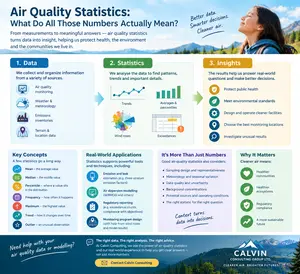
Air Quality Statistics: What Do All Those Numbers Actually Mean?
Sep 21, 26 12:00 AM
 How are air quality statistics used to understand pollution, design monitoring programs, estimate emissions and make environmental decisions?
 -
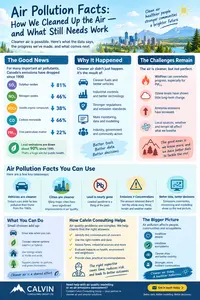
Surprising Air Pollution Facts: It's Not All Bad News!
Sep 17, 26 06:14 PM
 Trying to improve air quality has been a priority. Here are some air pollution facts to show you how far we've come.
 -
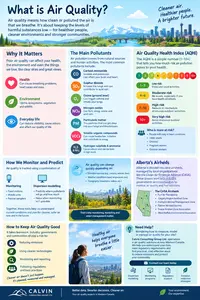
What is air quality and how can we fix it?
Sep 16, 26 11:19 AM
What is air quality? How do you define good air quality? It's just the opposite of air pollution.
Do you have concerns about air pollution in your area??
Perhaps modelling air pollution will provide the answers to your question.
That is what I do on a full-time basis. Find out if it is necessary for your project.
Have your Say...
on the StuffintheAir facebook page
Other topics listed in these guides:
The Stuff-in-the-Air Site Map
And,
Thank you to my research and writing assistants, and the author remains responsible for the content.
Most Popular Pages on this Website:
Pictures of Global Warming
- See photos, cartoons, charts, graphs and a few surprises.
Clouds
- Don't know a cumulus from a stratus? Check here.
Causes of Global Warming
- It's not always obvious.
Calgary Alberta Weather
- Example of Canadian Goodness.
Thermometers
- Our favourite weather instrument.
- Home
- Contact Us
- Free E-zine Back Issues
- Privacy Policy
- Site Map - I'll help find something good.

By Barry Lough, P.Met., EP (Environmental Professional)
Text copyright © 2003-2024 Stuff in the Air.com
BACK TO TOP - Hit your 'Home' Key