Communication - the mediums, their advantages and disadvantages
by DilipKr Das
(Durgapur,West Bengal, India)
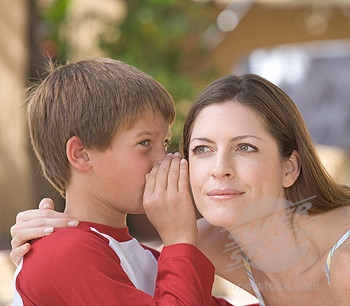

communication
How We Talk to the World: Voices in the Wind - Ever wonder how your voice travels through thin air or why a radar dish looks like it's shouting at the sky? We're diving into the high-tech world of communication to see how humans, animals, and even the weather communicate.
DilipKR Das (DD) tells us this: The project was related to communication. The task of the project was:1. Giving a brief outline of communication. What is meant by the term? How do we communicate?
2. Give the name and picture of each medium/devices of communication. Phone, Postal mails/Snail mails, fax machines, telegraph,e-mail, cellphone, internet, Television, Radio,Hoardings, Banners, Leaflets, Cinema etc.
3. For each of such devices/mediums brief description was to be given.
4. Their specific advantages and disadvantages are to be explained in brief.
5. A conclusion is to be drawn by giving the 'Evolution and changes in the method of communication.'
Barry's Response - Good one, DD. What was the conclusion?
It's interesting to see how these communications have been used in weather reporting. Examples include the transfer of satellite and radar signals.
With the internet we see, now, more new ones over and above those listed. Most of these fall under the category - Voice over Internet Protocol (VOIP). Here, voice communications, with or without video, travel over the internet.
Providers include Skype, MagicJack, FaceTime and over a hundred others listed on this page - https://en.wikipedia.org/wiki/Category:VoIP_companies
Examples, please...
As technology advances, weather communication methods are getting better. Here's what's new:- Weather alerts: Text messages sent to mobile phones in severe weather. They provide info on weather events, their severity, and how to stay safe.
- Meteorologists and weather organizations use social media platforms like Twitter and Facebook to share weather information. Through social media, users can interact with meteorologists and other experts.
- Weather apps: You can use weather apps to get up-to-date weather info, like temperature, humidity, wind speed, and direction. You can also get radar imagery, weather alerts, and forecasts.
- Using television and radio to disseminate weather info is broadcast meteorology. Weather forecasts and safety info are provided by broadcast meteorologists during severe weather.
- The Automated Weather Station (AWS) collects weather data using sensors and other technology. Forecasts and alerts are created using the data.
- Satellite imagery gives you a real-time look at weather conditions around the world. It's especially good for tracking hurricanes and tornadoes.
- We use weather balloons to collect data on atmospheric conditions, like temperature, humidity, and pressure. Forecasts and alerts are made using the data.
- Sensor networks: Weather data is collected by sensors all over the place. Data is analyzed at a central location to create weather forecasts and alerts.

Those are just a few ways weather information gets into the forecast system and out to the public. There's only a matter of time before we see even more advanced methods. Here are some other ways to spread the word about the weather:
- Models with high resolution: Advanced computer models give you detailed weather info. Forecasts are made using satellites, weather balloons, and other sources.
- Internet of Things (IoT) devices: Weather sensors and smart home devices can collect weather data and provide real-time updates. This info can be used to create custom alerts and forecasts.
- Mobile notifications: Weather apps and services send personalized notifications based on your location. Get alerts about severe weather, changes in weather, and more.
Search this site for more information now.
How We Talk No-Filter
Pay attention. People talk about Communication - the mediums, their advantages and disadvantages like it's a boring business meeting. Communication is the only thing keeping us from being lonely islands in a vast, silent ocean. Our ideas are carried by the wind.Snail and Spark (The Old School)
- Imagine writing a letter by mail. It's like committing your soul to paper, licking a stamp, and waiting. Like a glacier moving across a valley, it's slow.
- It's physical. Ink smells good.
- The only downside is that it takes forever. Your letter might end up in a soggy ditch if the weather turns bad. - In the Telegraph days (up until ~1960), dots and dashes were sent using pulses of electricity, the same stuff that powers thunderstorms.
Modern Atmosphere (VoIP Revolution) Remember VoIP? Your voice gets turned into digital packets and flies through the internet.
- We can see faces from thousands of miles away with Skype and FaceTime.
- It's instant and free (most of the time).
- But it might turn into a glitchy mess of pixels if your internet connection is cloudy or your bandwidth drops.
We've got the weather These tools aren't just for gossiping. We need them to survive. Satellites and radar signals tell meteorologists when a hurricane is coming. It's communication at its most vital. We don't know when to hide from the heat if the radar can't talk to the weather station.
How about the contentious counter-narrative:
Is digital better? Here's a thought that might make your teachers sweat: Is the internet ruining our internal air quality? We use less paper on the internet, so it's green. Think about the massive data centers that cool thousands of servers every second. They pump out heat and chug electricity. A digital carbon footprint replaced paper letters.Also, consider the intellectual freedom. When we use the same five apps, do we start thinking the same way? Biodiversity (lots of different plants and animals) keeps an ecosystem healthy. We need thought diversity in communication. Don't let the algorithm pick your words. Think like a defiant teenager: stay quirky, stay original, and sometimes, just talk to a tree. It won't text you back, but its medium (oxygen) is the most important thing.
Final thoughts
We've come a long way from whispering in ears. We've gone from ink to electrons. The goal is the same whether you use a 3G cellphone or a hand-painted banner: to be understood.What do you think? How would you tell your best friend a secret if the internet went down tomorrow? Mail, telegraph, or megaphone from your roof? Let's start a riot of ideas!
Comments for Communication - the mediums, their advantages and disadvantages
|
||
|
||

Recent Articles


-
learn about air quality
May 07, 26 12:44 AM
 Your Plan to Save the Planet - Let's say you're a hero who protects an invisible shield that keeps the world safe. By learning the secrets of the air we
 -
Ways to stop global warming
May 01, 26 08:28 PM
 The Great Car Debate - Depending on our choices, every car on the road could save the planet or slowly destroy it. Let's look at the facts and decide if
 -
Stop The Habits of SMOKING
Apr 30, 26 11:25 PM
Fresh Air and Clean Water - Just by uncovering a hidden poison, you could protect every fish in the ocean and every asthmatic. See how one tiny habit affects
Do you have concerns about air pollution in your area??
Perhaps modelling air pollution will provide the answers to your question.
That is what I do on a full-time basis. Find out if it is necessary for your project.
Have your Say...
on the StuffintheAir facebook page
Other topics listed in these guides:
The Stuff-in-the-Air Site Map
And,
Thank you to my research and writing assistants, ChatGPT and WordTune, as well as Wombo and others for the images.
OpenAI's large-scale language generation model (and others provided by Google and Meta), helped generate this text. As soon as draft language is generated, the author reviews, edits, and revises it to their own liking and is responsible for the content.
Most Popular Pages on this Website:
Pictures of Global Warming
- See photos, cartoons, charts, graphs and a few surprises.
Clouds
- Don't know a cumulus from a stratus? Check here.
Causes of Global Warming
- It's not always obvious.
Calgary Alberta Weather
- Example of Canadian Goodness.
Thermometers
- Our favourite weather instrument.
- Home
- Contact Us
- Free E-zine Back Issues
- Privacy Policy
- Site Map - I'll help find something good.

By Barry Lough, P.Met., EP (Environmental Professional)
Text copyright © 2003-2024 Stuff in the Air.com
BACK TO TOP - Hit your 'Home' Key