Effects of laundry soap with and without phosphates
by Bridget
(Fort Wayne, IN USA)


The leader of the pack?
The Dirty Secret to Getting Clean: Bubble Trouble - Find out how your washing machine bubbles can actually suffocate a whole lake. Here's why getting a grape juice stain out of your favorite shirt might be starting a war.
Give us the dirt, Bridget: My science project was seeing the effects of phosphates in laundry soaps. I used standard laundry equipment Speed Queen and the boxes of soap purchased in a laundry for individual washes.I used one box per load with only cloth in each run of the washer. I dried as normal. I tested various laundry soaps on various cotton wash cloths. I used all the same brand of white cotton cloths and the same stain of grape juice (2 tablespoons) poured on each cloth and let set over night.
I tested the results of a washing with the soap comparing which did a better job of removing the stain.
I did these 30 years ago during the last "green" revolution and it is now appearing again as a news maker. Phosphate has been shown not great for the lakes but it also is wonderful for removing stains. The best laundry soaps out there do contain any form of phosphates.
My results showed TIDE was the worst performance WITHOUT phosphates. The best performer was WISK with phosphates. I did this with 5 different soaps at the time using 5 with and 5 without phosphates. I presumed back then that a company would arrive at a solution to the stains. There are very few current substitutions to phosphates that do not endanger lakes streams and fish.
Barry's Response - It's strange that there has been so little effective, official research into this area. Thanks for you input, Bridget.
Search this site for more information now.
Phosphates and the Aquatic Rebellion: The Dirty Truth
Let's get into the suds. Phosphates are plants' superfood. They soften water and help soap grab dirt in your washer. Once they hit the lake, they act like a massive dose of vitamins for algae.- Algal blooms An algae party happens when there's too much phosphate in a pond. They grow so fast they cover the surface in green.
- It's called Eutrophication.
- When algae die, they sink and rot. All the oxygen in the water gets consumed by bacteria eating dead algae.
- As a result, the fish literally suffocate because they can't breathe underwater.
- Is your washing machine a weather station? It might seem like your laundry has nothing to do with the sky, but everything is connected! As an air quality consultant, I watch chemicals move around.
- Cold water works better with high-phosphate soaps. We'd burn more electricity if we switched to phosphate-free soaps that require boiling water.
- Increased electricity often means more power plants burning fuel, which changes our air quality. When you tilt one part (the soap), the whole picture (the environment) changes!
- Freedom to Choose: A Heartfelt Counter-Narrative According to many green movements, the only way to save the planet is to ban everything. Let's take a look at another side. What if we ban phosphates, but the replacement chemicals are even worse?
Skeptics say we should focus on better water treatment plants - the filters of our civilization - rather than telling people to wear stained clothes. It's a good idea to care for the least of these, which includes fish in the stream, but also hardworking parents who can't afford to replace ruined clothes every week. - Making washing better What's the point of sticking with old solutions? It's time for a New Wave of thinking. Imagine designing a soap molecule that cleans perfectly but self-destructs more when it hits a lake. Solar power can make ozone-infused water that cleans clothes without soap!
Here's why your science project matters:
Bridget, your experiment from 30 years ago is a masterpiece of citizen science. You didn't just listen to a commercial; you grabbed 30 washcloths and proved Tide struggled without its phosphate muscles.There's still a lot to figure out about laundry soap with and without phosphates. The mainstream view of phosphates is that they're bad, but your data shows they're really good. Today, we use things like Zeolites and Citrates. As you noticed, they don't always win the war against grape juice.
Let's keep encouraging the youth to push these boundaries. Don't just accept that green means better. Show it! Check your backyard with an outdoor thermometer. Check out the suds in your local stream after a rainstorm.
Rather than list rules, the purpose of science is to find the truth. You can experiment, you can ask questions, and you can invent something better, whether you're worried about Air Quality, the Aquatic Environment, or just getting your favorite shirt clean.
So What do YOU think?
Is it better to ban chemicals that work well if they hurt the environment, or spend our money on better technology? What bothers you more, a stained shirt or a green pond? Comment below and let's stir it up!
Comments for Effects of laundry soap with and without phosphates
|
||
|
||
|
||
|
||
|
||

Recent Articles


-
Natural Gas Leak Detection: Does YOUR Facility Need it?
Sep 28, 26 08:40 AM
 It's important for industries, especially in the energy sector, to have a natural gas leak detection program. It's often required by law.
 -
Computers in Meteorology | How Would they Help You?
Sep 26, 26 09:40 PM
 Computers in meteorology help us keep track of atmospheric data and make predictions.
 -
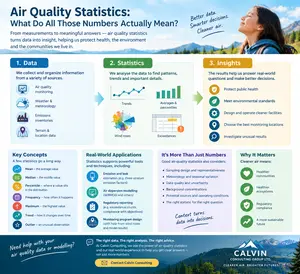
Air Quality Statistics: What Do All Those Numbers Actually Mean?
Sep 21, 26 12:00 AM
 How are air quality statistics used to understand pollution, design monitoring programs, estimate emissions and make environmental decisions?

Do you have concerns about air pollution in your area??
Perhaps modelling air pollution will provide the answers to your question.
That is what I do on a full-time basis. Find out if it is necessary for your project.
Have your Say...
on the StuffintheAir facebook page
Other topics listed in these guides:
The Stuff-in-the-Air Site Map
And,
Thank you to my research and writing assistants, and the author remains responsible for the content.
Most Popular Pages on this Website:
Pictures of Global Warming
- See photos, cartoons, charts, graphs and a few surprises.
Clouds
- Don't know a cumulus from a stratus? Check here.
Causes of Global Warming
- It's not always obvious.
Calgary Alberta Weather
- Example of Canadian Goodness.
Thermometers
- Our favourite weather instrument.
- Home
- Contact Us
- Free E-zine Back Issues
- Privacy Policy
- Site Map - I'll help find something good.

By Barry Lough, P.Met., EP (Environmental Professional)
Text copyright © 2003-2024 Stuff in the Air.com
BACK TO TOP - Hit your 'Home' Key