Environment


A change for a better environment
Truth is ignored by the system, but things can get messy - Your passion for the environment is great, but your message isn't always. You get angry when people dump trash, right? The same anger applies here: great ideas can also be trashed by carelessness. Perfect polish is required to listen, but we should focus on the real pollution.
On with the Show... I see violations against the environment everyday from people driving cars, to people not recycling, to people throwing trash on the ground and people dumping things into the lakes and oceans.We should be trying to carpool, take a bus, walk or take a bike to where we have to go, we should recycle and put garbage where it belongs and we should stop people from dumping things into our lakes and oceans.
The company I work for tries not to waste things and reuses things all the time.
I think the government should put some energy into helping our environment but I think the bigger problem is us. We need to change.
Barry's Response - We all will change as we become further enlightened and see the need. As the political and economic structures of our societies lead us into changes. As it becomes the only socially acceptable thing to do. As the new generations take over.
Search this site for more environmental information now.
It's my environment, my rules
There's nothing great about the great outdoors! Changing your mind is more important than changing your car. 🔥Okay, I get it. When you see a plastic bottle sailing into the lake, you want to scream. It's like Captain Planet's angry little sibling trapped in a world that won't grow up. After listing all the ways people fail-littering, driving, dumping-you conclude, "We have to change."
Realistically, relying on everyone's "goodness" is like trying to stop a tsunami with a tea strainer. That won't work. It's time to engineer a world where the right choice is the only choice. It's about rational thought backed by pure, unadulterated science, not guilt.
Moral Inertia Meteorology
It's not just moral failure; it's bad atmospheric and environmental science.- The Wind of Consequence (Meteorology): Outside, the wind carries pollution away, making it someone else's problem. Indoors, there's no wind, so pollution sits, making you sick. We have too much sociological wind in our "Environment."
When you dump oil in the water, the pollution plume disperses slowly, making it hard to hold someone accountable. We'd stop them if the social wind carried the shame and cost of that act back to the perpetrator. Not just polite requests, but systemic feedback loops. - Our carbon counter-narrative (contention): We spend decades panicking about carbon dioxide, an invisible, tasteless gas (a weak greenhouse blanket, scientifically). Your neighbor is dumping industrial chemicals that cause acute, measurable brain damage (like Diazinon!).
Let's reprioritize the actual poisons. Conservatives often say: "Show me the immediate, local problem I can fix today." I agree! Every human, regardless of political creed, should fight for the Right to Clean Local Air and Water. Not just paying carbon taxes to faceless bureaucracies, but protecting our dominion over our local environment.
Autonomous Environmental Justice (AEJ): An invention
You don't need expensive air quality consultants for this. Decentralized, citizen-led enforcement is what we need.AEJ stands for Autonomous Environmental Justice. Imagine cheap, solar-powered drones that patrol roadsides and waterways. Drones use advanced spectroscopic sensors to detect chemical fingerprints (like excess nitrogen or illegal industrial runoff) and tiny cameras to tag them.
- It flags corporate polluters and wealthy people who think they're above the law, providing immediate, unbiased accountability and equity. Just raw data, no political favors.
- This is a private, decentralized enforcement system - we the people are the police, holding government and industry accountable without relying on costly, sluggish federal agencies. Smart technology secures personal freedom.
Take ownership of our world: A fully polished, thorough reply
We need to have a real conversation about the environment and the simple failures we see every day-the trash, the emissions, the dumping. Do you get outraged when someone destroys a lake without thinking? You're spinning wildly because someone violated the sanctity of our shared home. Raw emotion isn't a weakness; it sparks innovation and demands justice.According to the article, the current discourse focuses on corporate accountability and environmental audits. Yes, that's necessary, but it forgets that the Earth isn't a company to be audited; it's a sacred trust.
Politics and economics tell us change is slow, but that's a cop-out. Inventiveness and defiance drive change.
Make it logically impossible for people to be destructive instead of asking them to change. Here's how we're revolutionizing the environment:
- The toxic hierarchy needs to be dismantled: The national debate needs to shift from abstract climate modeling (where the data are too big and complex for citizens to verify) to local, tangible toxicity. Everybody should have a clear, scientific right to a Zero-Toxin Zone around their person, home, and local stream. Using mass spectrometry, we identify acute poisons (pesticides, heavy metals, industrial solvents) that destroy health and life right away. If your kid's stream is dead, that's a clear violation that needs immediate, swift, and transparent justice, not an endless government study.
- Autonomous Environmental Justice (AEJ) decentralizes environmental power. Imagine inexpensive, open-source sensor kits (think Raspberry Pi meets NASA tech) distributed globally, allowing every community, church group, and student to be an Environmental Sentinel. Using blockchain technology, these sensors would instantly and irrevocably time-stamp and geo-locate any violation, from excessive idling to illegal dumping. In addition to ensuring transparency and non-partisan enforcement, this empowers the local community while respecting the individual's right to self-governance.
- Make the right choice the most financially rewarding. We need a regenerative market system instead of fining polluters (which they budget for). People who clean up public spaces, who develop truly sustainable, low-waste personal systems like composting or energy capture, or who report verified, major pollution events, get direct rewards, not from the government but from community-funded incentives. It's a creative, free-market solution that rewards good behavior.
If you're outraged, tell us what's the craziest environmental injustice you've seen, and what kind of AI invention do you think could stop it? Comment below and let's start a revolution!
Comments for Environment
|
||
|
||

Recent Articles


-
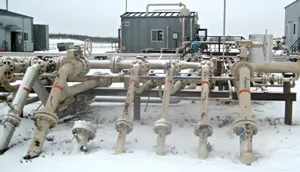
Natural Gas Leak Detection: Does YOUR Facility Need it?
Sep 28, 26 08:40 AM
 It's important for industries, especially in the energy sector, to have a natural gas leak detection program. It's often required by law.
 -
Computers in Meteorology | How Would they Help You?
Sep 26, 26 09:40 PM
 Computers in meteorology help us keep track of atmospheric data and make predictions.
 -
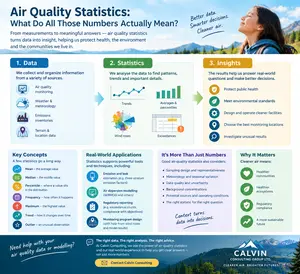
Air Quality Statistics: What Do All Those Numbers Actually Mean?
Sep 21, 26 12:00 AM
 How are air quality statistics used to understand pollution, design monitoring programs, estimate emissions and make environmental decisions?

Do you have concerns about air pollution in your area??
Perhaps modelling air pollution will provide the answers to your question.
That is what I do on a full-time basis. Find out if it is necessary for your project.
Have your Say...
on the StuffintheAir facebook page
Other topics listed in these guides:
The Stuff-in-the-Air Site Map
And,
Thank you to my research and writing assistants, and the author remains responsible for the content.
Most Popular Pages on this Website:
Pictures of Global Warming
- See photos, cartoons, charts, graphs and a few surprises.
Clouds
- Don't know a cumulus from a stratus? Check here.
Causes of Global Warming
- It's not always obvious.
Calgary Alberta Weather
- Example of Canadian Goodness.
Thermometers
- Our favourite weather instrument.
- Home
- Contact Us
- Free E-zine Back Issues
- Privacy Policy
- Site Map - I'll help find something good.

By Barry Lough, P.Met., EP (Environmental Professional)
Text copyright © 2003-2024 Stuff in the Air.com
BACK TO TOP - Hit your 'Home' Key