The world should revolve around me
by Alicia
(Sydney, Australia)


The World Should Revolve Around Me
I'm doing a maths investigation at the moment and I'm looking at how the speed of one complete rotation around the sun differs for each planet. I was wondering if you would be able to give me the formula in which you need figure this out?
Barry's Response - Good question, Alicia:
Depends on what you know about them. If you have the planet's year length, in days, and its average distance from the sun, in miles. Here's how it would go.
Speed = (approximately) pi (3.1415926) x distance from the sun (miles) x 2 divided by the number of days.
This will give a pretty good estimate in miles per day. Divide by 24 for miles per hour OR 86400 to get miles per second. If you prefer kilometres, you can then multiply the result by 1.609
It becomes more complicated if you consider the fact that these orbits are not perfect circles. For this exercise, you probably don't need to worry about that. It's a good way to estimate average speed.
The orbits of planets with low eccentricities, like Earth, are nearly circular, so they have relatively constant orbital speeds. High eccentricity planets have elliptical orbits and experience varying distances from the Sun, resulting in different speeds, and longer times to complete orbits because of extended periods in the slow-moving, distant part of the orbit.
Here's a list of relevant data you can use to calculate average speeds:
- - - - - - How Long - - How far (average)
Mercury: . . 88 days . 36,800,000 miles
Venus: .. . 225 days . 67,200,000 miles
Earth: .. . 365 days . 93,000,000 miles
Mars: . . . 687 days . 141,600,000 miles
Jupiter:. 4,333 days . 483,600,000 miles
Saturn:. 10,759 days . 886,500,000 miles
Uranus:. 30,687 days . 1,783,700,000 miles
Neptune: 60,190 days . 2,795,200,000 miles
Pluto: . . 2977 months 3,670,100,000 miles
Search this website for more information now.
Comments for The world should revolve around me
|
||
|
||
|
||
|
||
|
||
|
Click here to add your own comments Join in and write your own page! It's easy to do. How? Simply click here to return to Math rules!. |

Recent Articles


-
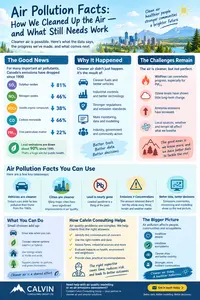
Surprising Air Pollution Facts: It's Not All Bad News!
Sep 17, 26 06:14 PM
 Trying to improve air quality has been a priority. Here are some air pollution facts to show you how far we've come.
 -
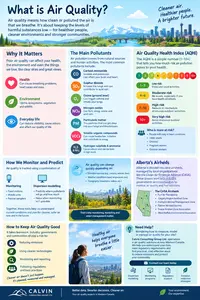
What is air quality and how can we fix it?
Sep 16, 26 11:19 AM
What is air quality? How do you define good air quality? It's just the opposite of air pollution. -
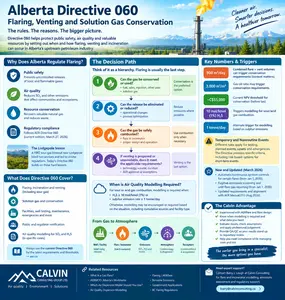
Energy and Environment: Persuading industry to care
Sep 15, 26 02:47 PM
 What's wrong with Alberta's energy and environment? International media criticize the province and its biggest industry almost every day. Here's the truth.
Do you have concerns about air pollution in your area??
Perhaps modelling air pollution will provide the answers to your question.
That is what I do on a full-time basis. Find out if it is necessary for your project.
Have your Say...
on the StuffintheAir facebook page
Other topics listed in these guides:
The Stuff-in-the-Air Site Map
And,
Thank you to my research and writing assistants, and the author remains responsible for the content.
Most Popular Pages on this Website:
Pictures of Global Warming
- See photos, cartoons, charts, graphs and a few surprises.
Clouds
- Don't know a cumulus from a stratus? Check here.
Causes of Global Warming
- It's not always obvious.
Calgary Alberta Weather
- Example of Canadian Goodness.
Thermometers
- Our favourite weather instrument.
- Home
- Contact Us
- Free E-zine Back Issues
- Privacy Policy
- Site Map - I'll help find something good.

By Barry Lough, P.Met., EP (Environmental Professional)
Text copyright © 2003-2026 Stuff in the Air.com
BACK TO TOP - Hit your 'Home' Key