WHAT ARE YOU PEOPLE DOING
by CHRISTOPHER
(NEBRASKA)


Got a lot to do!
The power of local action: Stop shouting, start shoveling 👊 - Tired of complaining about the environment? Find out why cleaning up your own neighborhood is the best scientific power move and how local action changes the planet faster than any global protest.
What you say, Christopher? SAVE THE FUKIN ENVIRONMENT MAKE A STAMENT PIN YOURSELF TO TREESPROTEST
Barry's Response - Well, I have a bridge to jump off first...
A website to build.
A Dispersion model to run.
A weather forecast to check.
A family to raise.
A business to direct.
A community to tend.
A gig to play.
A life to live.
A planet to save? Well, that's a little heavy. Might need some help. This is probably something we should do together, anyway.
Search this site for more information now.
Inventor's Rebellion and WHAT ARE YOU DOING?
Christopher, I hear you screaming! I'm feeling that hot, magnificent, revolutionary rage that makes you want to duct-tape yourself to a giant redwood. That makes sense. It should be a scream in the headline. But protests are ancient history. We're scientists and inventors; we don't protest problems, we engineer solutions.While you're protesting a tree, I'm designing a machine that eats pollution. What's the better use of a brilliant mind?
Applied science is my kind of activism
🧪 Want to "make a statement"? Patent it! This whole conversation and the article we referenced - the one about how industry and the environment balance - show that stopping things doesn't work. Better things are needed.- "Industry pollutes!" you shout.
- "Industry pays for pollution solutions!" I reply.
A Problem with Wicked Minds
(Meteorology and Morality) 💨ManiSha from Kathmandu says humans have a wicked mind. That's harsh, but it's the raw emotion we have to deal with. Externalized costs are the problem, not wickedness.Thanks to theoretical meteorology, when a factory releases particulate matter into the atmosphere, the wind carries that pollution away from the factory owner's nose. Air quality consulting is in high demand because of dispersion. It's not that they don't care; it's that the science of air quality makes it easy to move the problem around.
Technology forces accountability.
Building a better world with the ultimate counter-narrative
Here's my sassy, controversial take: We don't need to save the world; we need to upgrade it.- Instead of banning carbon, let's design a global CO2 (carbon dioxide) recycling economy. Excess CO2 gets pumped into massive greenhouses in the desert, where plants use it to grow food. Hunger and atmospheric balance are solved at the same time.
- Aquatic Argument: Skeptics say the ocean's size makes human waste irrelevant. Although the ocean is huge, I won't use that as an excuse to dump plastic. Let's invent autonomous, solar-powered Ocean Cleanup Drones that recycle plastic for a profit. Incentives solve the aquatic environment problem better than guilt ever could.
- Christopher, your protest should be in a lab, workshop, or server farm, designing scrubbers, filters, and catalysts that make pollution impossible.
Let's ask, "WHAT ARE YOU PEOPLE DOING NEXT?" instead of "WHAT ARE YOU PEOPLE DOING?"
Here's a question for you:
If you could invent one piece of technology right now to eliminate one pollutant, what would it be and why?
Comments for WHAT ARE YOU PEOPLE DOING
|
||
|
||

Recent Articles


-
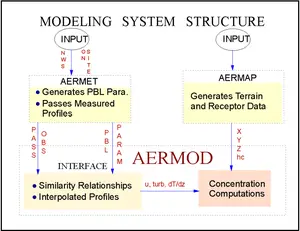
Aermod Model and Environmental Breakthroughs.
Oct 09, 26 10:28 PM
 How the aermod model uses terrain and meteorological analysis (AERMAP and AERMET) to predict pollutant spread, and how ISC3 fails to do so.
 -
Gas Flare Output SO2 – How to control it.
Oct 04, 26 06:37 PM
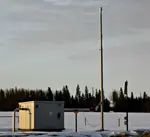
 What's the best way to handle temporary flaring and its output SO2? In Directive 60, the Alberta Energy Regulator (AER) gives guidance.
 -
Natural Gas Leak Detection: Does YOUR Facility Need it?
Sep 28, 26 08:40 AM
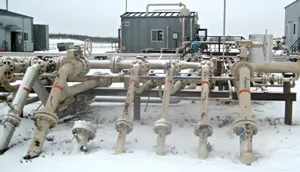
 It's important for industries, especially in the energy sector, to have a natural gas leak detection program. It's often required by law.
Do you have concerns about air pollution in your area??
Perhaps modelling air pollution will provide the answers to your question.
That is what I do on a full-time basis. Find out if it is necessary for your project.
Have your Say...
on the StuffintheAir facebook page
Other topics listed in these guides:
The Stuff-in-the-Air Site Map
And,
Thank you to my research and writing assistants, and the author remains responsible for the content.
Most Popular Pages on this Website:
Pictures of Global Warming
- See photos, cartoons, charts, graphs and a few surprises.
Clouds
- Don't know a cumulus from a stratus? Check here.
Causes of Global Warming
- It's not always obvious.
Calgary Alberta Weather
- Example of Canadian Goodness.
Thermometers
- Our favourite weather instrument.
- Home
- Contact Us
- Free E-zine Back Issues
- Privacy Policy
- Site Map - I'll help find something good.

By Barry Lough, P.Met., EP (Environmental Professional)
Text copyright © 2003-2024 Stuff in the Air.com
BACK TO TOP - Hit your 'Home' Key