Environmental Conservation through Living Jainism
by Pooja Sharma
( Jain Vishwa Bharti University, ladnun)


save our environment
We have an environmental problem because of our dominant model of development, which focuses on consumerism. Based on their consumption, nations, societies, and people are considered developed and even more civilized. As a result, there has been a mad rush for more and more consumerism, fueled by insatiable sensual pleasure, ignoring sustainability, which has remained a slogan, or an ideal job when people are looking for environmental jobs.
Sustainable development means limiting consumption, exploitation, and re-use of resources to their carrying capacity and renewability. We're in a crisis of existence because of mankind's ignorance. It's time to step up and save our mother earth now. Global ecological crisis can't be solved until spiritual relationship is established between humanity and the environment.
From its inception, Jainism has been a staunch protector of nature. Nature's religion, Jainism explains nature's utility and the importance of plants, worms, animals, and all kinds of creatures for maintaining ecological balance. According to Jainism, souls help each other.
Individuals are at the core of spirituality. Discipline and practice create collectivity.
There's an integral reality to everything in the universe. Through relativistic thinking, Jainism reconciled parts of reality with the whole. Some of the basic tenets of Jainism can help us understand spiritual relationships from an ecological perspective:
1) You can't injure creatures (Savve pana na hantavva),
2) Don't command anything,
3) I don't own any creature,
4) Don't hire anyone as a servant (save pana na pariggahetvva)
Spirituality and equality are the cornerstones of Jain ecology. Whether it's a plant or an animal, all life has inherent value.
Among Jain philosophers, the term for ecology might be Sarvodayavada, or raising up all life forms, as articulated by Samantabhadra (third century A.D.). According to philosopher Acarya Jinasena, the entire human world is one because all aspects of the human community are interconnected.
By seeing other people as connected to oneself, one develops a spiritual perspective that protects all life by following eco-principles. Religion's real job is to remove bitterness between people, races, religions, and nations.
The nature of religion has been discussed in various ways in Jain scriptures through non-violence (Ahimsa). You can summarize Ahimsa as: Aspire for yourself. Don't aim for others. Jainism is based on this principle.
Even though Jainism is part of Vedic tradition, it has a different philosophy about man and nature. According to Jainism, every soul is autonomous and independent, whether it's a man or an insect. Humans, animals, insects, and even inanimate things like water, air, fire, earth are believed to have souls, not just animate ones like humans, animals, and insects. In Jain literature, they're called 'Sthavar Jeev' (immobile).
Soul and matter don't coexist in Jainism. Any ability the soul has, whether it's speech, breath, or thought, comes from interacting with matter. Jainism makes people behave sensitively with living things and material things too.
In Jainism, even non-living things aren't to be exploited. Aside from the philosophy of 'Jeeva' (animate), Jainism is also known for its theory of nonviolence, which runs through the tradition like a golden thread. At every step in life, it involves avoiding violence of any kind, whether it's verbal or physical, and requiring reverence and compassion for all living things.
Knowing (and renouncing) the action against living things severally and alone. The wise one doesn't cause pain to these bodies above, below, or on the surface in any way.
Self-identity is created by non-violence. So Mahavira says, "Don't kill anything". Experiencing the consequences of one's own Karmas is essential (Anusamveya namappanenam, jam'ahantavvam'ti nabhipatthae).
This unitized experience proves souls exist. One who is afflicted with lust is bereft of knowledge and perception, Mahavira says. A person like that will always be baffled by the truth. He indulges himself in action, causing violence to beings of earth, water, fire and vegetable bodies. There's consciousness in these beings (Santi pana pudho siya).
Non-violence isn't just physical, but mental as well, actually more so in its mental aspect. According to Jain, violence shouldn't exist in the heart, mind, or brain. By showing concern and compassion for all life in nature, non-violence isn't just something you practice, it's something you think.
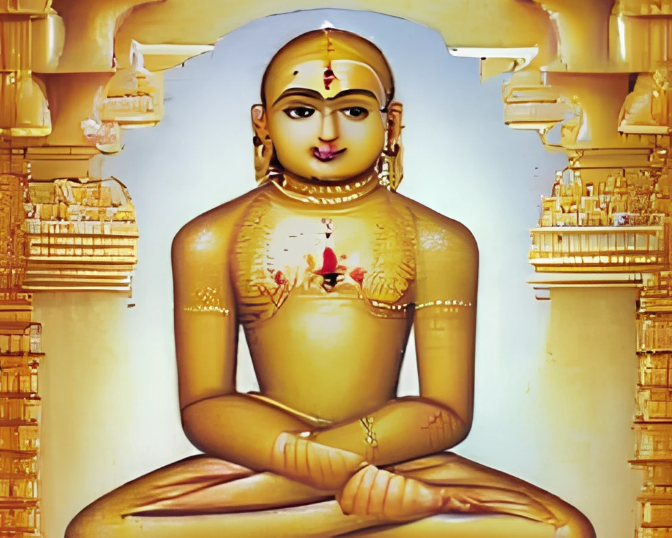
Besides non-violence, Jainism has other tenets that can inspire preservation and conservation of the environment like vegetarianism, controlled lifestyle, and ?aparigraha?. Nature conservation is based on these tenets.
Our mother earth is protected when these principles are practiced. Jains have been practicing these principles at least since the 6th century B.C. in India, and in settlements around the world.
In society, nonviolence is based on equality and equanimity. Even nonviolence can allow for caste, but based on deeds instead of birth.
Through humane and nonviolent approaches to everyday behavior, Jainism tries to shape our attitude toward nature. In contemporary discourse, Jainism would be known as the ecological perspective.
The Jainas still practice these principles and religious traditions today. Using its philosophy, ascetic practices, and narrative arts and architecture, Jainism and its leaders have created a society dedicated to love.
Since the Jainas have historically advocated against meat eating and animal sacrifice, and developed business areas that avoid overt violence, they're well-suited to reconsider their tradition in an ecological light. There are still some challenges, though. Tree planting is one way environmentalism expresses itself. In spite of the fact that Jaina laypeople might participate in such activities, their nuns and monks probably wouldn't because digging damages the ground.
Forest preserves have also been established around Jaina temples in India as an expression of environmentalism. In general, this requires blocking access to prevent peasants from collecting fodder, which further impoverishes them.
The extensive involvement of Jainas in heavy industries in India raises questions about appropriate economic activity and environmental health as well. It's hard to apply ecological principles in a religious context.
In Jainism, life forms are interconnected. Nonviolent ethics can easily be applied to earth ethics. Both traditions emphasize asceticism, which might discourage some people from valuing earthly matters too much, but, as we've seen, both have concepts that can improve core human-earth relationships.
Barry's Response - Quite a description, Pooja.
My research tells me Jainism is an old religion from India that teaches us to be kind and not hurt anything. It also teaches us that air is important and we should keep it clean.
Jains believe in the practice of non-violence, which includes not harming any living thing, including air-borne creatures. Jains believe that air is a form of life and should be respected and cared for. They practice special breathing exercises and follow a non-violent lifestyle to show respect for the air and all living beings.
Jains believe in non-violence and taking care of the environment. They practice fasting, which helps them to reduce air pollution and take care of the planet. They strive to protect the environment and its resources, like forests and wildlife, so that everyone can enjoy a healthy and happy life.
Search this site for more information now.
Let's flip the script on sustainability with conservation through Living Jainism!
According to Jainism, every breath, every leaf, every creature matters. It's not just about saving the planet; it's about seeing ourselves in everything.- Live Simply: Our consumer-driven world is challenged by the principle of aparigraha (non-possessiveness). More space for nature, less stuff.
- From vegetarianism to forest preserves around temples, Jainism inspires compassion. There are challenges, like balancing industry and ethics, but that's where the conversation starts.
- Tone is playful and simple.
- Introduces the title and sparks curiosity.
- Engages your audience with actionable ideas.
- Has relevant keywords (Jainism, sustainability, non-violence).
Comments for Environmental Conservation through Living Jainism
|
||
|
||
|
||
|
||
|
||
|
||
|
||

Recent Articles


-
What is air quality and how can we fix it?
Sep 16, 26 11:19 AM
 What is air quality? How do you define good air quality? It's just the opposite of air pollution.
 -
Energy and Environment: Persuading industry to care
Sep 15, 26 02:47 PM
 What's wrong with Alberta's energy and environment? International media criticize the province and its biggest industry almost every day. Here's the truth.
 -
AERMOD Air Quality Modelling in Alberta
Sep 14, 26 05:58 PM
Can you tell me which air quality model works best for most Alberta Air Quality Model Guideline regulatory modeling? AERMOD. It's easy, versatile, and recognizable.
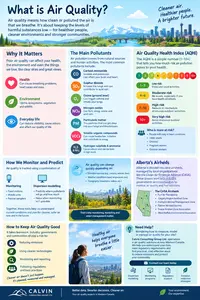


Do you have concerns about air pollution in your area??
Perhaps modelling air pollution will provide the answers to your question.
That is what I do on a full-time basis. Find out if it is necessary for your project.
Have your Say...
on the StuffintheAir facebook page
Other topics listed in these guides:
The Stuff-in-the-Air Site Map
And,
Thank you to my research and writing assistants, and the author remains responsible for the content.
Most Popular Pages on this Website:
Pictures of Global Warming
- See photos, cartoons, charts, graphs and a few surprises.
Clouds
- Don't know a cumulus from a stratus? Check here.
Causes of Global Warming
- It's not always obvious.
Calgary Alberta Weather
- Example of Canadian Goodness.
Thermometers
- Our favourite weather instrument.
- Home
- Contact Us
- Free E-zine Back Issues
- Privacy Policy
- Site Map - I'll help find something good.

By Barry Lough, P.Met., EP (Environmental Professional)
Text copyright © 2003-2024 Stuff in the Air.com
BACK TO TOP - Hit your 'Home' Key