Butt Out


Science Exhibit
Small science is actually big science - We're not just being sassy when we tell parents to "butt out." We're protecting the scientific method. It's not science if you don't do the work. Here's the math that could be used without even realizing it.
Let us take a look at the science experiments we have for the fifth grade class. Mr. Jenkins has a mobile of the planets. Mrs. Stevens has a volcano. What's this, Mr. Riley has a display that demonstrates what happens in a nuclear reactor. Hmm, who had the most help?
My experience during the science fair was great. I thought I had a really original exhibit. I demonstrated how the shape of a container dictated how fast hot water would cool when it was placed in it. Not the "sexiest" display in the cafeteria, but I found it interesting. Needless to say, the students discussing cellphones and the internet won. But I still like to think I held my own in my own low-tech way.
Barry's Response - This brings up the question of what judging criteria are used in the competitions. Do they prefer popular/sexy ones, hi-tech ones or ones where the student demonstrates a good deal of effort (especially in the research, principle formulation or data acquisition areas), regardless of whether (s)he obtained help from parents, teachers or otherwise? It should be about the spirit of learning.
My $0.02. Thanks for your concerns.
Search this site for more information now.
Helicopter parents, heat, and hype
#1: Let's be real, Barry. I felt like I was walking into a high-pressure system trapped under a thermal inversion. There was a heavy smell of vinegar volcanoes and parental desperation in the air. There was a kid with a display about Cold Fusion. Cold fusion? Are you in fifth grade? His mom probably spent three weeks soldering that in the garage while he played video games. That's why I say: Butt Out!#2: I think it ruins the curve. Do the judges just want to avoid an argument with the parents, or does the popular project always win?
#1: That's right! We have the same problem in climate science. Models that predict massive storms and fires grab headlines, so everyone chases them. What about my project? The shape of a bowl affects how fast water cools. It's just thermodynamics.
Do the math. Heat loss (Q) is heavily influenced by the surface (s) area (A) exposed to air:
Q = hA(Ts - Tair)
Where h is a Heat transfer constant.
What it means
Water molecules escape more easily when you increase the surface area. It's like how shallow ponds evaporate faster than deep lakes. We look at this a lot in my air quality consulting work. Cooling down a city isn't just about building a green skyscraper, for instance; it's about the albedo and ventilation corridors. It's the simple opportunities for heat to dissipate that make a difference.#2: You're saying the low-tech kid understands the planet better than the nuclear kid?
#1: Yes, in this case. Nuclear kid just followed a recipe. Watching water cool is like watching the spirit of the atmosphere. Pressure, temperature, and surface tension are what nature uses.
Sometimes mainstream environmentalists get so obsessed with high-tech solutions like carbon capture that they forget the basics - like how ocean-atmosphere interactions control temperature. Skeptics say the sun's cycles drive our weather more than CO2 volcanoes. We can look at the raw data and realize the Earth is a lot more resilient than a fifth-grade model says.
Test everything; hold on to what's good. That goes for your science project and the evening news. Someone may have cheated on a project if it looks too perfect.
Here's why you should keep your hands dirty
- Embrace the flaws: A messy poster board with real data beats a fake printout every time.
- You don't need a reactor to prove something. All you need is a thermometer and a little curiosity.
- Build a wind tunnel if everyone's building a solar oven. Go outside and measure the air quality if everyone says the sky is falling.
Science is a contact sport. You have to get in there, fail, get frustrated, and see the pattern. When parents take over, they steal the Aha! moment. It's like a trophy hunt instead of a journey of discovery.
To the parents: unless your kid is about to set the curtains on fire...Get your butt out. Should science fairs ban parental help completely, or is mentoring just a fancy word for cheating?
Comment below and let's start a debate!
Can someone show you how to set up a cooling experiment that proves your teacher's consensus wrong?
Comments for Butt Out
|
||
|
||
|
||
|
||
|
||


Recent Articles


-
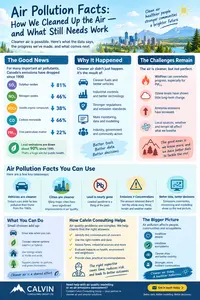
Surprising Air Pollution Facts: It's Not All Bad News!
Sep 17, 26 06:14 PM
 Trying to improve air quality has been a priority. Here are some air pollution facts to show you how far we've come.
 -
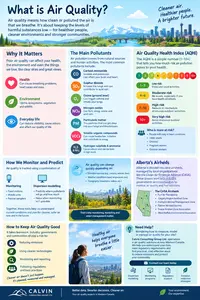
What is air quality and how can we fix it?
Sep 16, 26 11:19 AM
What is air quality? How do you define good air quality? It's just the opposite of air pollution. -
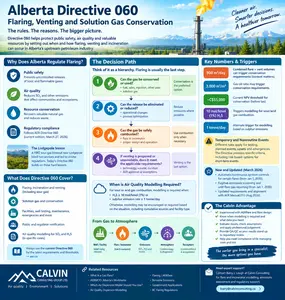
Energy and Environment: Persuading industry to care
Sep 15, 26 02:47 PM
 What's wrong with Alberta's energy and environment? International media criticize the province and its biggest industry almost every day. Here's the truth.
Do you have concerns about air pollution in your area??
Perhaps modelling air pollution will provide the answers to your question.
That is what I do on a full-time basis. Find out if it is necessary for your project.
Have your Say...
on the StuffintheAir facebook page
Other topics listed in these guides:
The Stuff-in-the-Air Site Map
And,
Thank you to my research and writing assistants, and the author remains responsible for the content.
Most Popular Pages on this Website:
Pictures of Global Warming
- See photos, cartoons, charts, graphs and a few surprises.
Clouds
- Don't know a cumulus from a stratus? Check here.
Causes of Global Warming
- It's not always obvious.
Calgary Alberta Weather
- Example of Canadian Goodness.
Thermometers
- Our favourite weather instrument.
- Home
- Contact Us
- Free E-zine Back Issues
- Privacy Policy
- Site Map - I'll help find something good.

By Barry Lough, P.Met., EP (Environmental Professional)
Text copyright © 2003-2024 Stuff in the Air.com
BACK TO TOP - Hit your 'Home' Key