finding level of pollution in a drainage system at different location in a town
by mohit pareek
(mumbai, maharahstra, india)


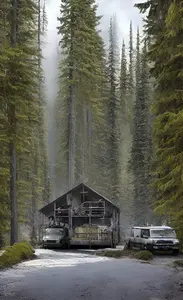
Example of a Drainage Pumping Station
A Rebel's Guide to City Sludge and Under the Pavement - You can't ignore the metal grates under your feet because they're a secret diary of your neighbors' bad habits. Let's see what happens when a little rain turns a quiet street into a high-stakes science experiment.
Mohit tells us this: This project was chosen by us to represent our school at a children science congress. We had to show our project to the judges when they come on a round to see all the projects.We collected dirty water at different locations from the drainage pool. Then we gave it in laboratory to find out the level of pollutants in the water. We found that the level of pollutants were increasing as the drainage pool was going deep in the city.
We had a successful project and we won 2nd prize at that event. This type of science projects try to give external exposure to students which is very good. I love to love to do this kind of project again and again...
Barry's Response - Sounds like the work of a hydrological engineer. Perhaps that's the field of study you should pursue, Mohit. There will never be a shortage of work. Thanks for your photo.
Search this site for more information now.
Drainage, Drains, and Defiance: The Urban Investigation
Urban Spies, listen up. We shouldn't keep science in sterile labs; it belongs in the mud. Mohit won second prize because he noticed a gradient - a change in levels. Pollutants surged into the city as the drainage pool descended.- Sky-water connection The rain cleans the atmosphere like a giant car wash.
A storm front doesn't simply wet the sidewalk when it hits the city. Dust and chemicals get sucked up by it.
We call it dry deposition when gunk settles on the road, and wet deposition when rain drags it down. The city's traffic and factories eventually stink up your drainage system. - Drain Anatomy Why did the pollution get worse in the city? Imagine a town as a funnel. Under the skyscrapers, small pipes merge into giant tunnels.
Each block adds its own flavor of filth such as oil from cars, soap from car washes and litter from the wind. A thousand streets weigh down the water by the time it gets to the city center. - Freedom to Think: The Forbidden Thought People are often treated like viruses that destroy. Let's think a bit here. What a triumph of engineering. Floods are prevented and our homes are protected.
Skeptics say we shouldn't just hate our cities; we should perfect them. Let's focus on Human Flourishing instead of climate change. We'll be able to enjoy our big cities and keep the fish happy if we invent better filters. Being in charge of Water quality means using our brains to build more than complaining with our voices. - Making sludge better What's the point of just finding pollution? It's time to harvest! Imagine a city where the drainage system uses Bio-filtration - giant underground lungs filled with mushrooms and plants that eat oil and heavy metals. Dirty water could become liquid gold for vertical farms.
Young Inventor's Polished Reply
You acted like a true hydrological engineer, Mohit. The truth was revealed because you identified the problem, gathered the lab receipts and then presented the evidence.Keep an eye on the weather forecast if you want to expand this project. Does the pollution spike after a flash flood, or does it sit and rot during a heatwave? You might find that a dusty week leads to a dirtie drain if you analyze the Air Quality data on the day you sample the water.
Science is more than just a list of facts...there's a battle of ideas. Whether you want to protect every leaf, or protect our right to build and grow, we all need clean water.
Get your sample jars. Don't listen to people who say you're too young to understand. There's a lot to learn about the drainage system.
So what do you think?
Is it better to fix the lungs of the city (the air) or the kidneys of the city (the drains)? Is there a spot in your town where the water looks extra murky? Tell us what you found in your local gutter in the comments.
Comments for finding level of pollution in a drainage system at different location in a town
|
||
|
||
|
||
|
||
|
||
|
||
|
||

Recent Articles


-
Ambient Air Monitoring Equipment Specifications
Oct 25, 26 05:01 PM
 Chapter 4 of Alberta's Air Monitoring Directive, specifying ambient air monitoring equipment and technical requirements for good air quality data.
 -
Alberta Air Monitoring Directive - AMD Compliance Guide
Oct 22, 26 03:21 PM
Understand the Alberta Air Monitoring Directive, monitoring requirements, quality assurance, audits and reporting. Practical guidance for industrial facilities. -
Weather Man | Do YOU Need One of These?
Oct 20, 26 06:47 PM
Take a look at some fresh ideas with interesting content, resources and guidance about meteorology and possible careers as a weather man.

Do you have concerns about air pollution in your area??
Perhaps modelling air pollution will provide the answers to your question.
That is what I do on a full-time basis. Find out if it is necessary for your project.
Have your Say...
on the StuffintheAir facebook page
Other topics listed in these guides:
The Stuff-in-the-Air Site Map
And,
Thank you to my research and writing assistants, and the author remains responsible for the content.
Most Popular Pages on this Website:
Pictures of Global Warming
- See photos, cartoons, charts, graphs and a few surprises.
Clouds
- Don't know a cumulus from a stratus? Check here.
Causes of Global Warming
- It's not always obvious.
Calgary Alberta Weather
- Example of Canadian Goodness.
Thermometers
- Our favourite weather instrument.
- Home
- Contact Us
- Free E-zine Back Issues
- Privacy Policy
- Site Map - I'll help find something good.

By Barry Lough, P.Met., EP (Environmental Professional)
Text copyright © 2003-2026 Stuff in the Air.com
BACK TO TOP - Hit your 'Home' Key