um no its the same as america!
by ryan
(dundas ontario canada)


Summertime in Canada
We have hot summers sometimes hotter than America. For example, in Ontario we have the same climate as Detroit. Some Americans are so undereducated and just downright dumb to think that we never have summers! But sometimes...um no it's the same as America!
Barry's Response - Right, Ryan. Also, we don't know a lot about their country.
If you're looking for a warm summer climate, some select locations in southern Ontario have a Dfa climate, which sometimes resembles many parts of the US Eastern Seaboard and Midwest.
For a short while, any spot in Canada may be warmer than many spots in the US due to temporal variations.
Search this site for more information now.
I would like to provide you with some additional factual information
Considering the fact that climate varies within regions, it is important to note that generalizing the climate of an entire country based on a few locations is not accurate. While it is true that Ontario and parts of the United States, like Detroit, share a similar climate zone, it is important to consider the range of climate variations within these areas as well.
It is true that summers in Ontario and parts of the United States can be extremely hot. Climate patterns are influenced by a number of factors, including latitude, proximity to water bodies, elevation, and atmospheric conditions. Understanding the overall climate patterns in different regions requires an examination of long-term climate data and trends.
There is a need to foster understanding and avoid making generalizations about people from different countries or regions. It is important to note that climate knowledge is not limited to a single nationality, and individuals from all backgrounds can be aware of different climates to varying degrees. Let's focus on sharing accurate information and promoting a respectful dialogue about climate-related issues.
We aim to provide factual information while emphasizing the importance of respectful communication and avoiding generalizations in our response.
Comments for um no its the same as america!
|
||
|
||
|
||
|
||
|
Click here to add your own comments Join in and write your own page! It's easy to do. How? Simply click here to return to Cold, eh?. |

Recent Articles


-
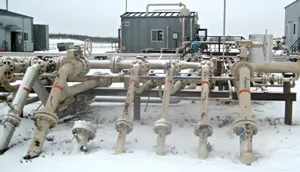
Natural Gas Leak Detection: Does YOUR Facility Need it?
Sep 28, 26 08:40 AM
 It's important for industries, especially in the energy sector, to have a natural gas leak detection program. It's often required by law.
 -
Computers in Meteorology | How Would they Help You?
Sep 26, 26 09:40 PM
 Computers in meteorology help us keep track of atmospheric data and make predictions.
 -
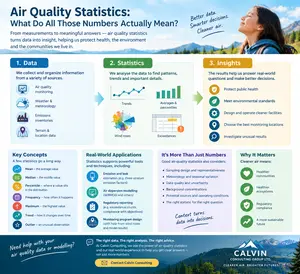
Air Quality Statistics: What Do All Those Numbers Actually Mean?
Sep 21, 26 12:00 AM
 How are air quality statistics used to understand pollution, design monitoring programs, estimate emissions and make environmental decisions?

Do you have concerns about air pollution in your area??
Perhaps modelling air pollution will provide the answers to your question.
That is what I do on a full-time basis. Find out if it is necessary for your project.
Have your Say...
on the StuffintheAir facebook page
Other topics listed in these guides:
The Stuff-in-the-Air Site Map
And,
Thank you to my research and writing assistants, and the author remains responsible for the content.
Most Popular Pages on this Website:
Pictures of Global Warming
- See photos, cartoons, charts, graphs and a few surprises.
Clouds
- Don't know a cumulus from a stratus? Check here.
Causes of Global Warming
- It's not always obvious.
Calgary Alberta Weather
- Example of Canadian Goodness.
Thermometers
- Our favourite weather instrument.
- Home
- Contact Us
- Free E-zine Back Issues
- Privacy Policy
- Site Map - I'll help find something good.

By Barry Lough, P.Met., EP (Environmental Professional)
Text copyright © 2003-2024 Stuff in the Air.com
BACK TO TOP - Hit your 'Home' Key