School project
by winetou1984
(cluj, romania)


Most popular School project
Invisible world hacking - There's a big science experiment hidden in your neighborhood and most people are too bored to see it. You're in the right place if you want to know the truth about the air you breathe and the water you drink.
winetou says: unfortunately i never made a school project. i do not know why.. bu tin my school nobody requested one.. but if i would have made one.. it had been an volcano.
Barry's Response - You can always rely on that volcano. That's for sure.
Search this site for more information now.
Rebooting Volcanoes - Because it mimics nature's raw power, Winetou is the "OG" of school projects. Look at the sky instead of making a mess with baking soda! Sulphur dioxide and ash are launched into the stratosphere when volcanoes erupt.
Scientist Hack: This ash acts like a giant umbrella. It cools the Earth by reflecting sunlight back into space. These natural stratospheric injections are cited by skeptics of mainstream climate models as proof that the Earth has its own cooling mechanism.
Get some math, calculate the shade provided by a dust cloud, and suddenly your cliché project challenges global warming. What's the point of waiting for a teacher to ask? Create a digital model that predicts how ash clouds move.
Comments for School project
|
||
|
||
|
||

I want to know about latest science project
by Mani
(Coimbatore)
I want to know about latest science project.
Barry's Response - Latest Science Project? If you happen to find out what it's about, please let me know too.
Especially if it has to do with weather or air quality.
Mani, if you want the latest, check out Citizen Science. The cutting edge is using cheap sensors to monitor your own air. In most air quality maps, big, expensive stations are used.
Don't wait for a textbook. Say, you're building a Low-Cost Particulate Matter (PM2.5) Sensor for the latest project. You might see how much dust enters your house when the wind blows from the city center. By doing this, you can verify if the official air quality reports match what you breathe. You'll be a local investigator as well as a student.
this website
by Han Thi Thet Lwin
(yangon,myanmar)


Are they looking at this website?
I am Han Thi and I'm attending in grade-5.
Barry's Response - Hi and Thank you Han Thi. Are you in this photo?
If you are interested in science, I am sure you will find many pages of interesting stuff on this website. Enjoy.
Do people look at this site? Yes, they do! Let us know how the monsoon feels in Yangon. There should be a global jam session where everyone plays an instrument. Your project is your perspective. Report, don't just read. How does the rain smell? Does it smell like the earth or like the city?
Search this site for more information now.
science in schools
by winetou1984
(zalau)


Typical Classroom
science in schools is very important. the children MUST learn a various number of things, so they can make a good decision of what they want to do in life.
Barry's Response - and science is one of many subject areas that will prepare the individual for the challenges of life. Humanities is equally important.
Without Humanities, Science is just a robot; without Humanities, it's just a dream. You need math and music together to enrich your mind. Whenever it feels like a list of facts to memorize, challenge it. It should feel like a debate where you bring the evidence and the charisma to win.
Urban Heat Island: The Master Project - If you're looking for "science in schools projects for you," try this: The Urban Heat Island Investigation.
Concrete traps heat in cities. By "cooking" smog, this changes local weather and makes air quality worse.
- Here's the logic: Use an infrared thermometer.
- Measure the temperature of a parking lot vs. a grassy park at 2:00 pm.
- The Twist: Compare your data to the airport's official temperature. Do you live in a hotter neighborhood than the official record? Why isn't the city planting more trees instead of more concrete?
Readers...What do you Think?
Is the "Volcano" still the king of school projects, or should we start hacking our own air quality sensors? Comment below and tell me about the project that made you feel smart!Recent Articles


-
Energy and Environment: Persuading industry to care
Sep 15, 26 02:47 PM
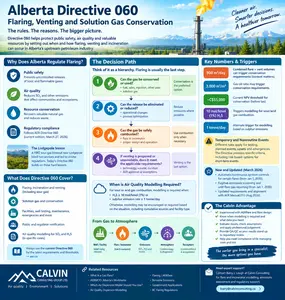
 What's wrong with Alberta's energy and environment? International media criticize the province and its biggest industry almost every day. Here's the truth.
 -
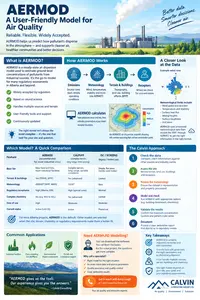
AERMOD Air Quality Modelling in Alberta
Sep 14, 26 05:58 PM
 Can you tell me which air quality model works best for most Alberta Air Quality Model Guideline regulatory modeling? AERMOD. It's easy, versatile, and recognizable.
 -
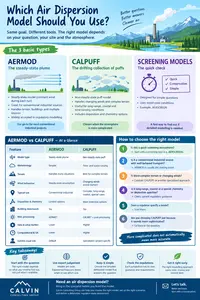
Air Dispersion Model - What's an air model?
Sep 14, 26 02:13 PM
How do we help a factory control air pollution? Provide design feedback ahead of time using an air dispersion model.
Do you have concerns about air pollution in your area??
Perhaps modelling air pollution will provide the answers to your question.
That is what I do on a full-time basis. Find out if it is necessary for your project.
Have your Say...
on the StuffintheAir facebook page
Other topics listed in these guides:
The Stuff-in-the-Air Site Map
And,
Thank you to my research and writing assistants, and the author remains responsible for the content.
Most Popular Pages on this Website:
Pictures of Global Warming
- See photos, cartoons, charts, graphs and a few surprises.
Clouds
- Don't know a cumulus from a stratus? Check here.
Causes of Global Warming
- It's not always obvious.
Calgary Alberta Weather
- Example of Canadian Goodness.
Thermometers
- Our favourite weather instrument.
- Home
- Contact Us
- Free E-zine Back Issues
- Privacy Policy
- Site Map - I'll help find something good.

By Barry Lough, P.Met., EP (Environmental Professional)
Text copyright © 2003-2024 Stuff in the Air.com
BACK TO TOP - Hit your 'Home' Key